

Disability and Impairment records
1. About this guide
This guide looks at the various records in our collections that relate to disability and impairment, including the records of organisations set up by and for people with disabilities. This is intended as an introduction to the kinds of records you will find and is by no means exhaustive.
Other major sources can be found within the local government administration records of the London County Council (LCC) and the Greater London Council (GLC), and also within some hospital records such as the Normansfield Hospital H29/NF. Documents concerning individual patients are likely to be closed under Data Protection Act regulations, which will be indicated as such on the catalogue.
2. Terminology
We are working to improve and contextualise language used in our catalogue and finding aids as part of a broader piece of work and you can find out more on our Inclusive Terminology page.
Traditionally, records about disabled people have often been written by people who do not have lived experience of disability or are imposed by a legislative framework.
The records we hold reflect the ongoing efforts and challenges faced by people with disabilities in their pursuit of full inclusion in society. The records often show the stigmatisation of disabled people but later there are records that can offer a view of disabled people’s agency.
3. What do I need to know?
In the nineteenth and early twentieth century there was little distinction between learning disabilities and mental disorders under the following Acts of legislation:
- 1845 Lunacy Act – This legislation was administered by Commissioners in Lunacy it stated that, 'Lunatic shall mean insane person or any person being idiot or lunatic or of unsound mind.'
- 1886 Idiots Act – This early legislation dealt with the educational needs of those with a learning disability. It made a clear distinction between ‘lunatics’ (with a mental health condition) on one hand and ‘idiots’ and 'imbeciles' (with a learning disability) on the other.
- 1890 Lunacy Act – Its intention was to create a legal framework for the reception, detention, and care of individuals with mental illness.
- 1913 Mental Deficiency Act – This further defined the use of the terms, 'idiot', 'imbecile', 'feeble-minded' and 'moral imbecile'. This led to many people being detained under this act for long periods of time.
Terminology as defined by the 1913 Mental Deficiency Act
You may come across these terms on our catalogue or within the documents:
- Idiots: Profound intellectual disability, unable to guard against physical dangers.
- Imbeciles: Severe mental defect, incapable of managing themselves or affairs.
- Feeble-minded: Lesser defect, needing supervision for protection or unable to benefit from normal schooling.
- Moral Imbeciles: Mental defect plus strong criminal or vicious tendencies resistant to punishment.
The following acts are also important to note:
- 1944 – The Disabled Persons (Employment) Act 1944. This aimed to support disabled people into employment, including vocational training and rehabilitation centres. You can find out more in the General papers – Disabled Persons Employment Act, 1944 which can be found under the reference code LCC/CL/ESTAB/01/159 on our collections catalogue.
- 1946 – National Insurance (Industrial Injuries) Act 1946. Those who became disabled through war or industrial accidents had a greater political profile than those that were born with disabilities or had become unwell in other ways. Find out more from the file on our collections catalogue, MCC/CL/CD/03/039 – National Insurance (Industrial Injuries) and sick pay schemes 1949-1964.
4. Local Authority Bodies
4.1. Board of Guardians
Various local authorities, including bodies like the Board of Guardians had been a source of support for people with a disability, but equally may have limited their quality of life when confined to the asylum for mental impairment, in some cases, for many years. Later, there are many instances of campaigns fought by charities for housing and accessible transport within the records of the Metropolitan Asylums Board (MAB), LCC, Middlesex County Council (MCC) and GLC.
4.11. Poor Law Authorities
Old age, illness, disability, unemployment, and bereavement led people to seek assistance from the Poor Law authorities (after 1834). This assistance might have taken the form of out relief (money, food or medical assistance provided while they continued to live in their own homes). Alternatively, people might have been admitted to the workhouse or treated for illness in the workhouse infirmary or county lunatic asylum. This may have been because of a disability which might not be immediately obvious from the records.
4.2. Metropolitan Asylums Board (MAB)
The MAB was a Poor Law related body set up in 1867 and was responsible for several areas: infectious diseases; remand homes; and mental health. It was also responsible for treatment and care of children and adults with learning disabilities. This included Darenth School which was implemented as an institution for 'imbeciles and a school for imbecile children' in 1878. Find out more in the Darenth School and Asylum sub-committee minutes MAB/0287 to MAB/0335 (1879 to 1930).
4.3. London County Council (LCC)
The LCC continued the work of the MAB from the period 1889 to 1965 in the fields of welfare, health and education with the establishment of special schools. LCC collections are useful when looking at the development of policy. The following series are useful starting points:
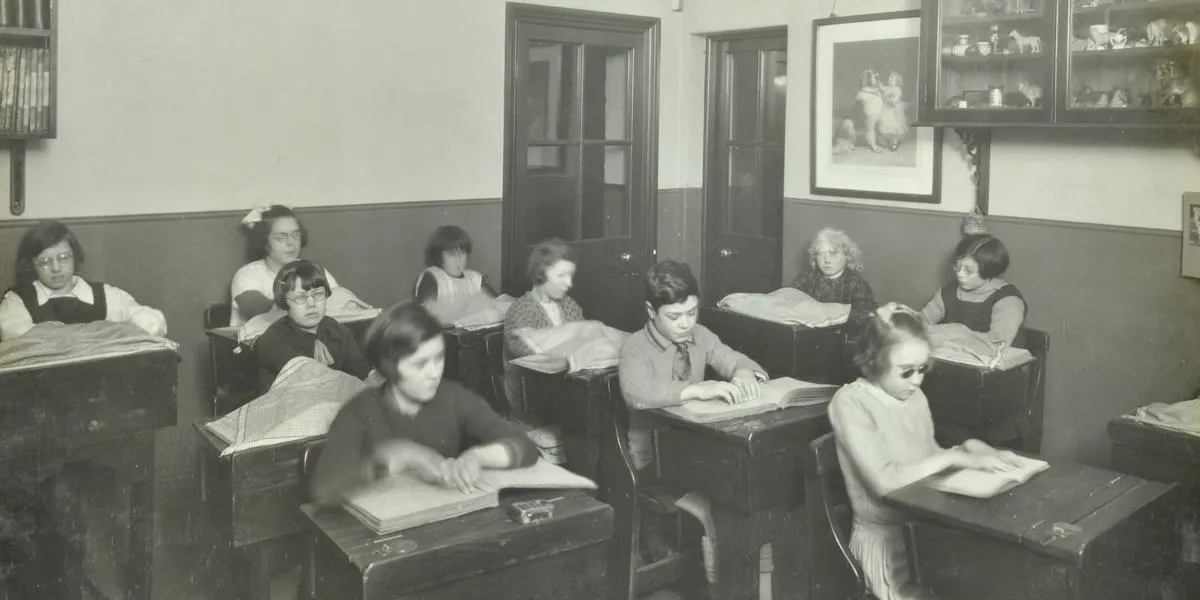
In addition, the London County Council was responsible for the welfare of blind people from the passing of the Blind Persons Act (1920) until 1948.
4.4. Middlesex County Council (MCC)
The MCC collections contains a range of policy related material regarding health, welfare and educational services from the period 1889 to 1965:
- MCC/HS/MH – files include material on learning disabilities but with Data Protection Act closures
- MCC/HS/MH/171 to 314 – photographs
- MCC/HS/SH – school health service files
4.5. Greater London Council (GLC)
The GLC collections broadly cover the period from 1965 to 1986. There are many useful printed publications in the 1980s within these collections, including:
- GLC/DG/PUB/01/194/U0496 – A record of change: GLC action on disability
- GLC/DG/PUB/01/158/U2659 – Breaking down barriers: GLC action on disability
- GLC/DG/PRB/35/046/852 – Disability no barrier to sport
- GLC/DG/PRB/35/050/1057 – Redesign Houses – GLC Backs Disability Charity
- GLC/MA – Medical Advisor’s departmental records include mental deficiency files (uncatalogued)
4.6. Inner London Education Authority (ILEA)
The ILEA continued the work of the LCC & MCC education departments. Responsible for the management of special schools and hospital schools for children with disabilities including:
- the blind
- partially sighted
- deaf
- partially hearing
- physically disabled
- autistic
- those with speech defects
- the 'educationally subnormal' (a phrase used at the time)
Please note that there are significant access restrictions within these collections, but its strengths include the development of policy.
5. Images and Audio-visual content
5.1. London Picture Archive
The LCC and GLC photograph collection spans the period from the 1880s to 1980s and contains a range of images of institutions. Some of these can be searched and viewed on the London Picture Archive.
Search the London Picture Archive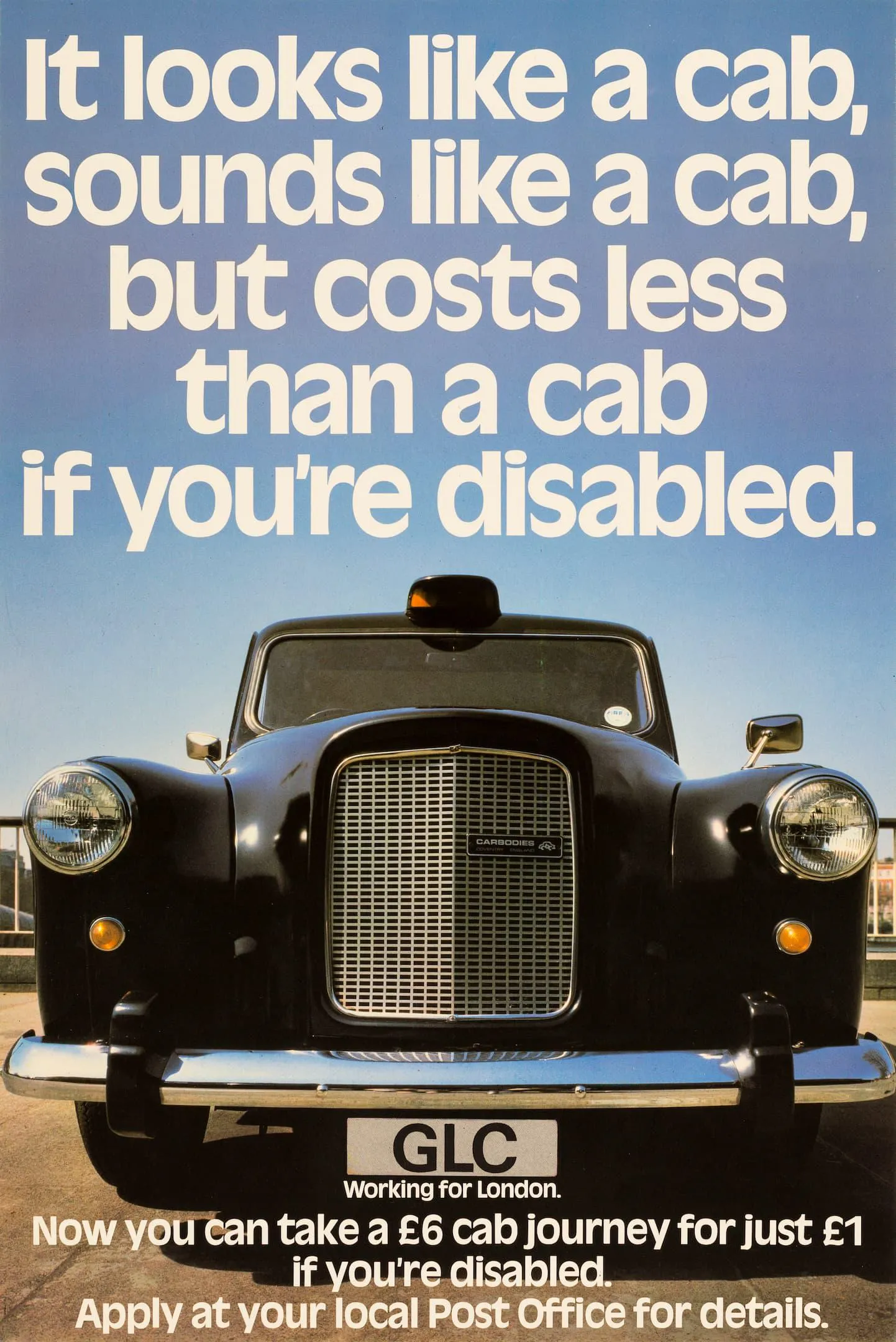
5.2. Films
Some films can be accessed on our YouTube channel. Please consult our Audio visual collections guide for information about accessing audio-visual collections that have not been digitised.
Some examples of films in the collection:
- ‘Ignorance’, 1995 (LMA/4305/08/035). This cinema advertisement publicises the prejudices faced by people with disabilities. The final text of the film reads, ‘Sadly, ignorance is still the most debilitating disease we face.’
- 'Can I Help You Sarah?' 1986 (LMA/4305/08/018/001). This is a publicity film for the John Grooms Association showing how a group of disabled people strive for and achieve greater independence.
6. Core Collections
We hold a variety of collections relating to charitable bodies which were set up for, and by, disabled people. We also hold the records of over 80 hospitals and many of London's Health Authorities, many of which include references to individual people with disabilities and policies relating to them.
Please browse our catalogue for further details on each collection:
| Title | Description | Catalogue Reference |
|---|---|---|
| John Grooms Association for disabled people (later Livability) | Charity set up in 1866 originally for disabled women and girls | LMA/4305 |
| London Boroughs Disability Resource Team | Formed in 1986 to secure collective provision of disability-related services | LMA/4713 |
| Pilgrim Trust | Grants for small charities | LMA/4450 |
| Greater London Association of Disabled People | Various circulars including 'London Disability News' | LMA/4475/04/06/012 |
| Gardner’s Trust for the Blind | Charity providing educational and other grants | ACC/3006 |
| Royal Association for Deaf People (RAD) | Large charity collection about the development of work with deaf people | LMA/4172 |
| Invalid Children’s Aid Nationwide (I CAN) | Charity for children with speech and language difficulties | LMA/4248 |
| Normansfield Hospital | Founded by Dr John Haydon Langdon-Down as a private home for children with learning disabilities | H29/NF |
| Queen Mary Convalescent Auxiliary Hospital | Hospital for sailors, soldiers and airmen who lost limbs in war service founded in 1915 | H02/QM |
7. Further Reading
A note on theory
We understand the following models of disability and look to these when writing descriptions for the catalogue, for interpretation panels in exhibitions, or in talks and document displays.
The underlying principle of the 'Social Model of Disability' is that social and environmental factors – which take little or no account of people’s impairment – disables people, instead of enabling them. The historical terms around disability disempower the individual. The 'Individual' or 'Medical Model' expected people to cope with impairment by adapting to society. Instead, the social model explained disability as a ‘public issue’. In our library, this can be further explored in:
- Disability and social policy in Britain since 1750 : a history of exclusion / Anne Borsay. Basingstoke : Palgrave Macmillan, 2005. (20.0 BOR)
- Forgotten lives : exploring the history of learning disability / by Dorothy Atkinson, Mark Jackson, Jan Walmsley. Kidderminster : BILD, c.1997. (22.54 ATK)
- Greater London Council. Women's Committee. Women and disability. GLC Women's Committee bulletin ; Issue 26 (January 1986). London : Greater London Council Women's Committee, 1986. (26.37 GLC)
- From caged birds to campaigners : 50 years of Greater London Action on Disability (GLAD) / researched and written by Diane Langford. London : Greater London Action on Disability, 2003. (20.29 GLA)