The real Dick Whittington
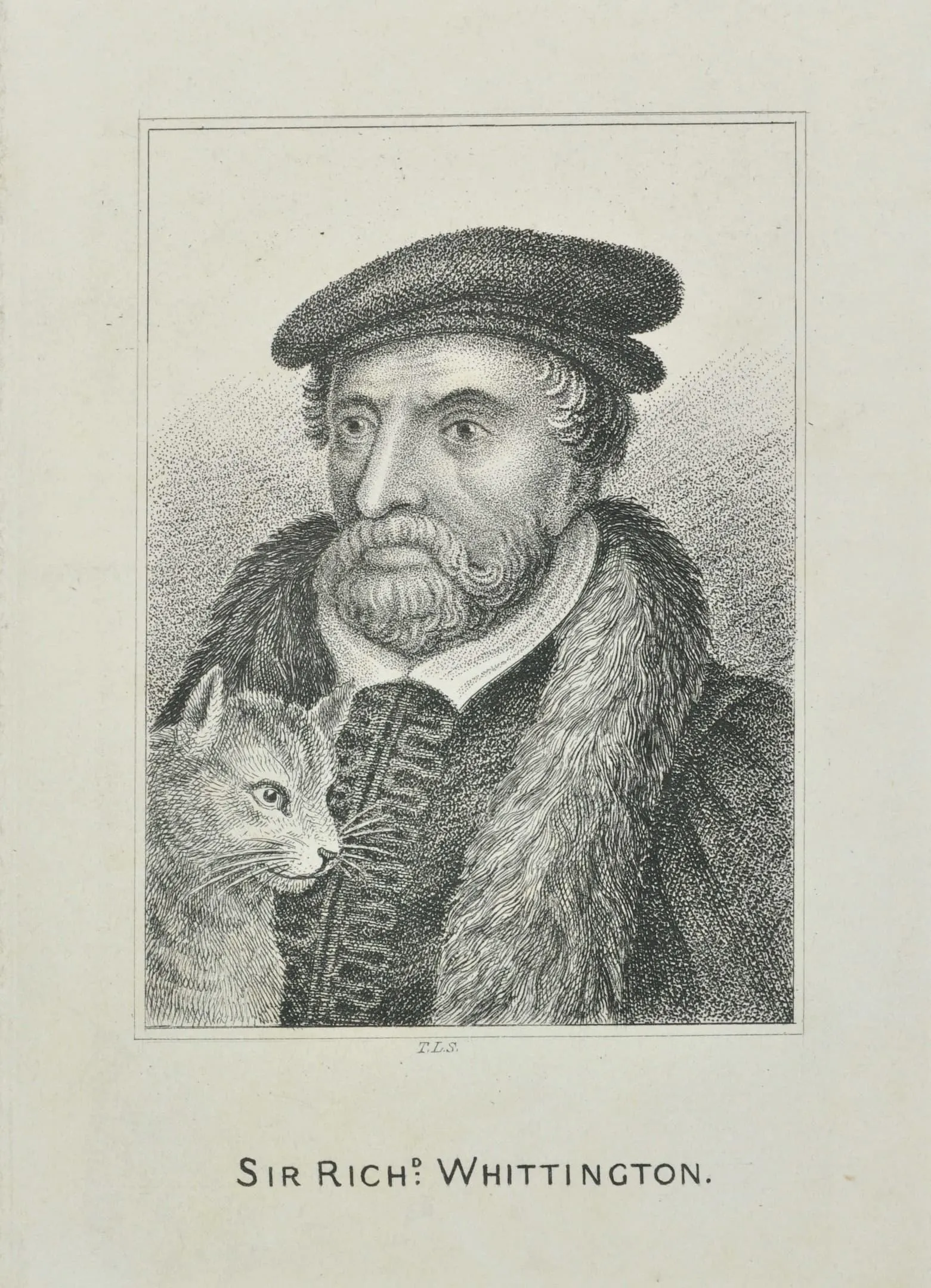
Richard (or Dick) Whittington was one of the major figures of medieval London and a formative influence on the development of the City of London (and its library at Guildhall) quite apart from becoming the stuff of popular legend.
The real Dick Whittington
The story of Whittington, the poor orphan who came to London to seek his fortune and who found it with the help of his cat and the sound of Bow bells recalling him, can be traced back at least as far as the early seventeenth century. It is wholly untrue, but Whittington himself was very real.
Born in Gloucestershire
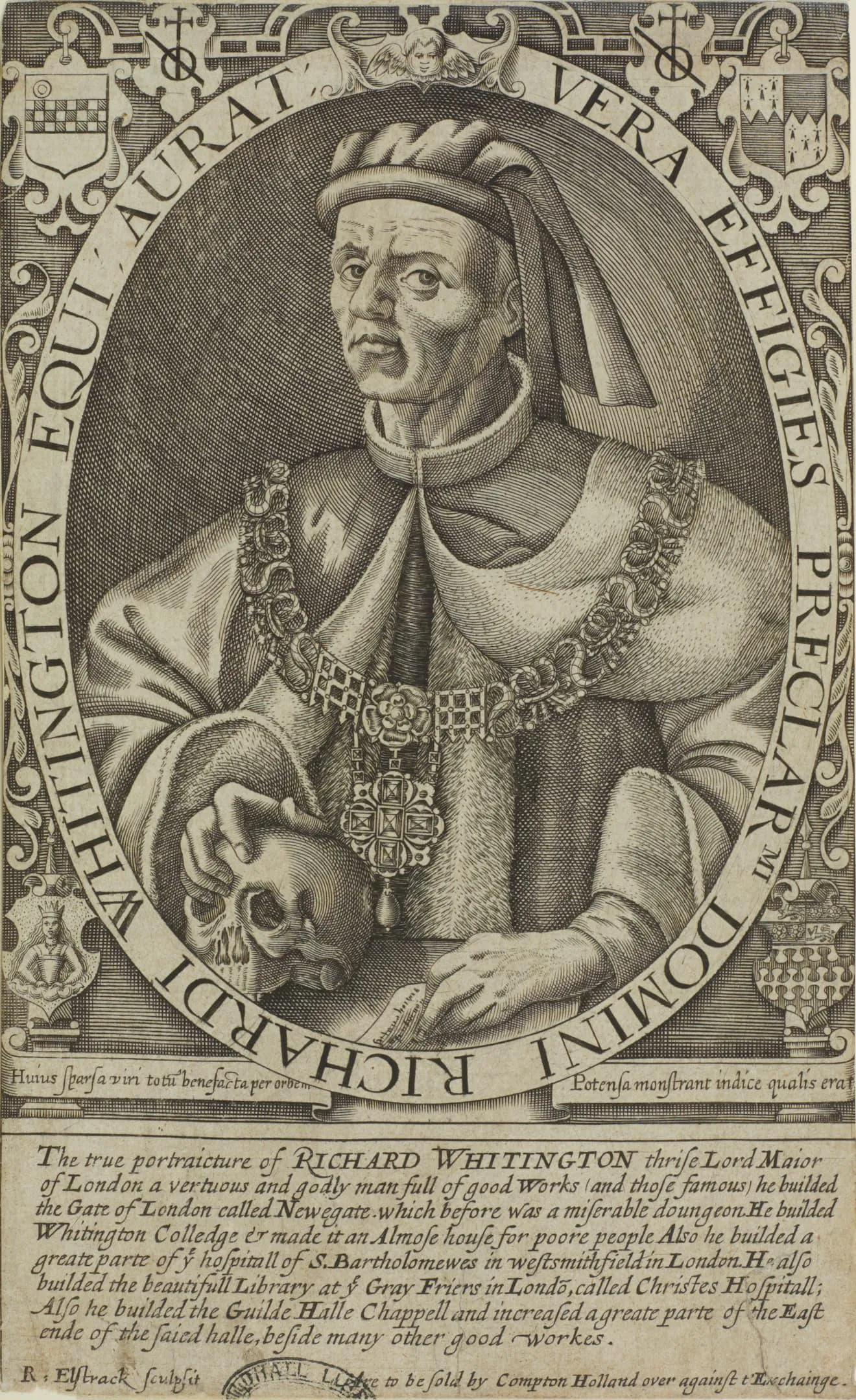
He was born in Gloucestershire around 1350, the son of a well-to-do landowner. He was apprenticed to a London mercer and thus entered one of the more upmarket trades of he time, dealing in wool, fine cloth, and the flourishing import-export trade in such materials. He became a successful mercer himself and during the 1380s and '90s was regularly supplying extensive orders for luxury fabrics to the royal court. The fortune he thus accumulated allowed him to diversify into what we would now call banking, and he made many loans to successive kings Richard II, Henry IV and Henry V.
Roles in the City
He became a common councilman of the City in 1384, an alderman in 1393 and Lord Mayor in 1398. The one true part of the pantomime story is the reference to his being three times mayor, as he did serve again in this capacity in 1406 and 1419. During the last of these terms his attempts to regulate the price of ale and to standardise its measures brought him into dispute with the brewers. The City Corporation's archives include numerous documents relating to Whittington, such as reference: CLC/521/MS02903 which is a receipt for the purchase of the manor of Oxhey in Hertfordshire dated 7 May 1402.
Guildhall Library
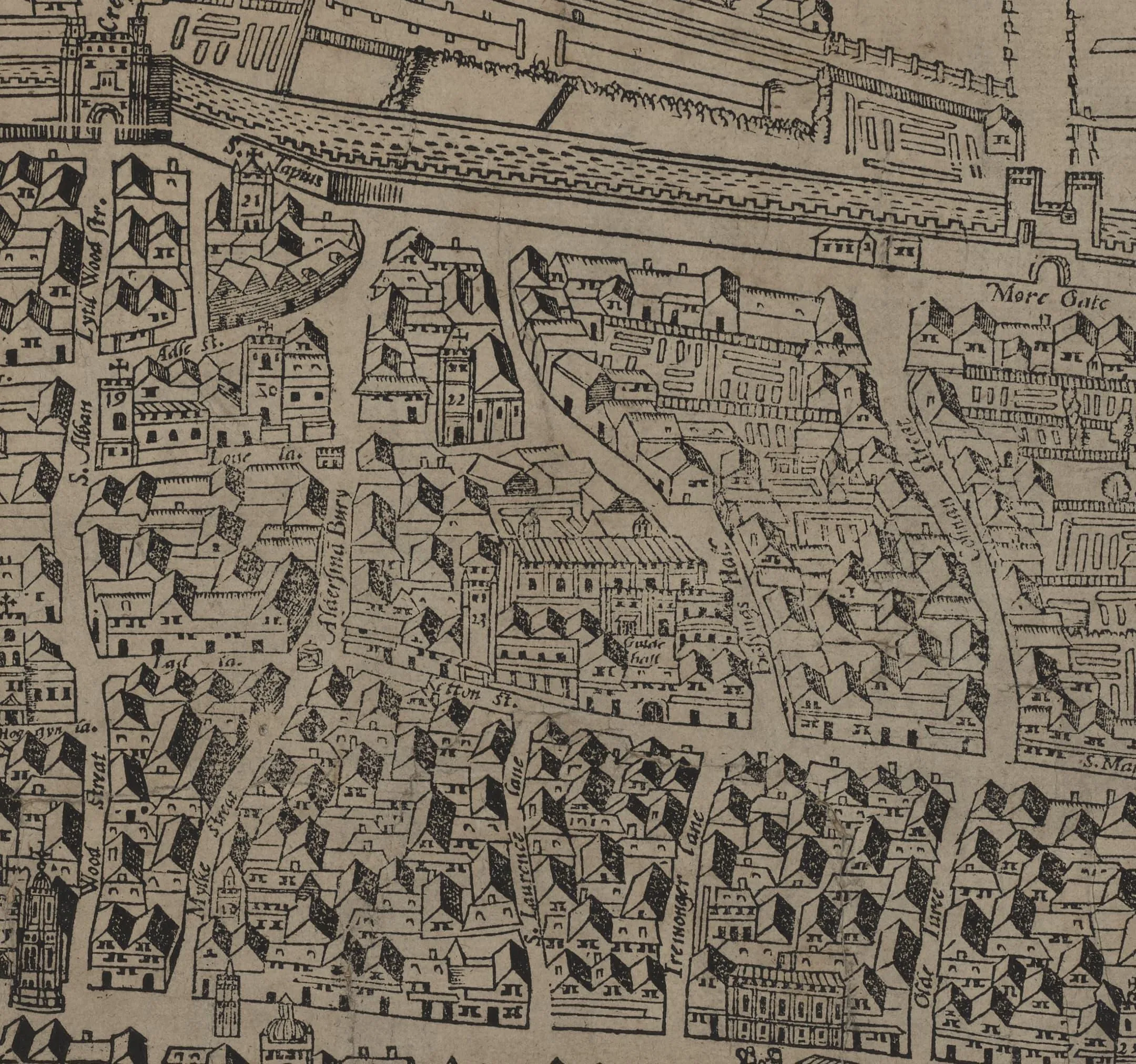
When he died, childless and a widower, in 1423, he left not only a reputation for probity but also a considerable fortune, all bequeathed to charity. Much of this was expended in benefits for the City, including the rebuilding of Newgate Prison and of the south gate of St Bartholomew's Hospital, the installation of public fountains and the creation of the first Guildhall Library.
The London Picture Archive
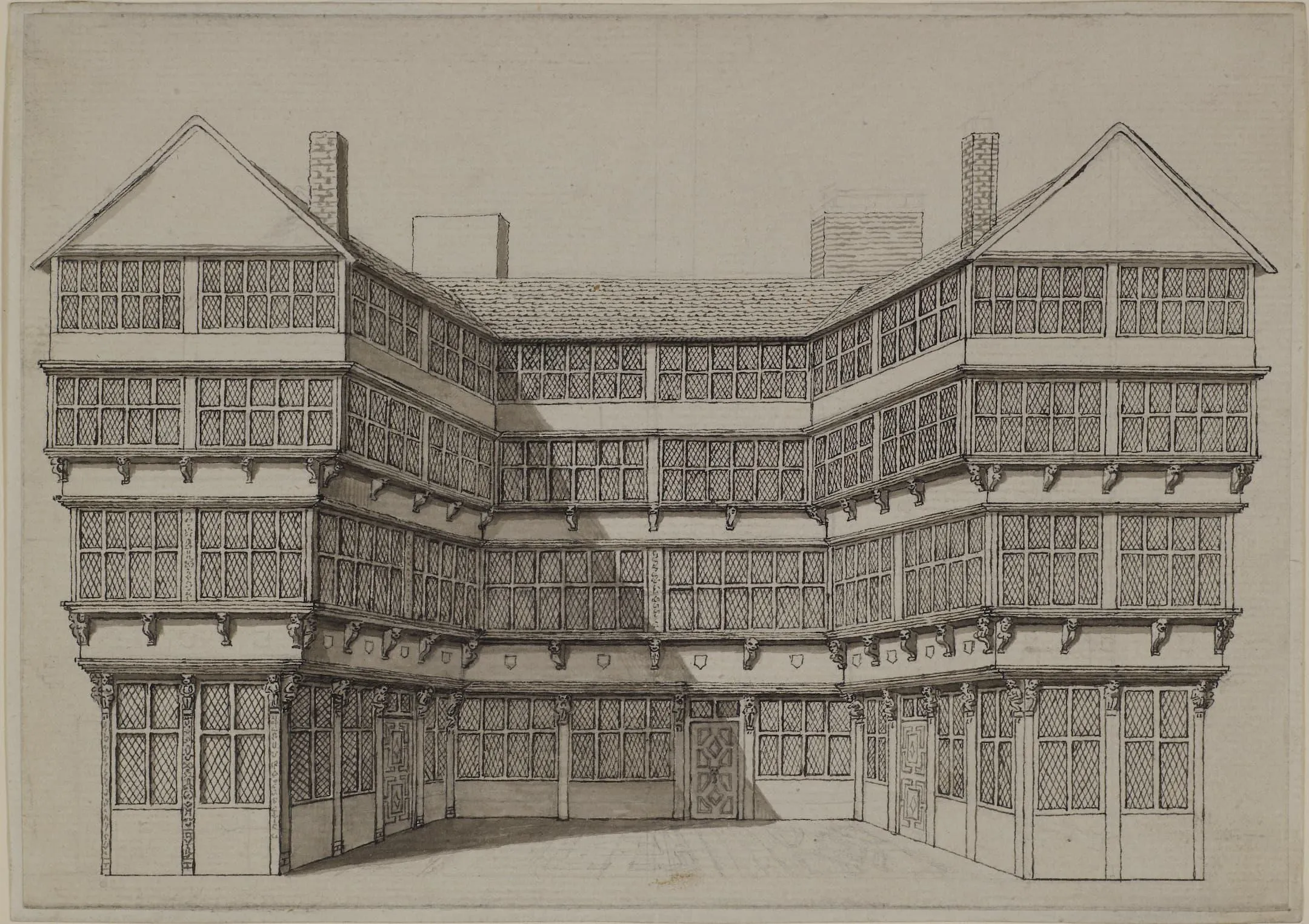
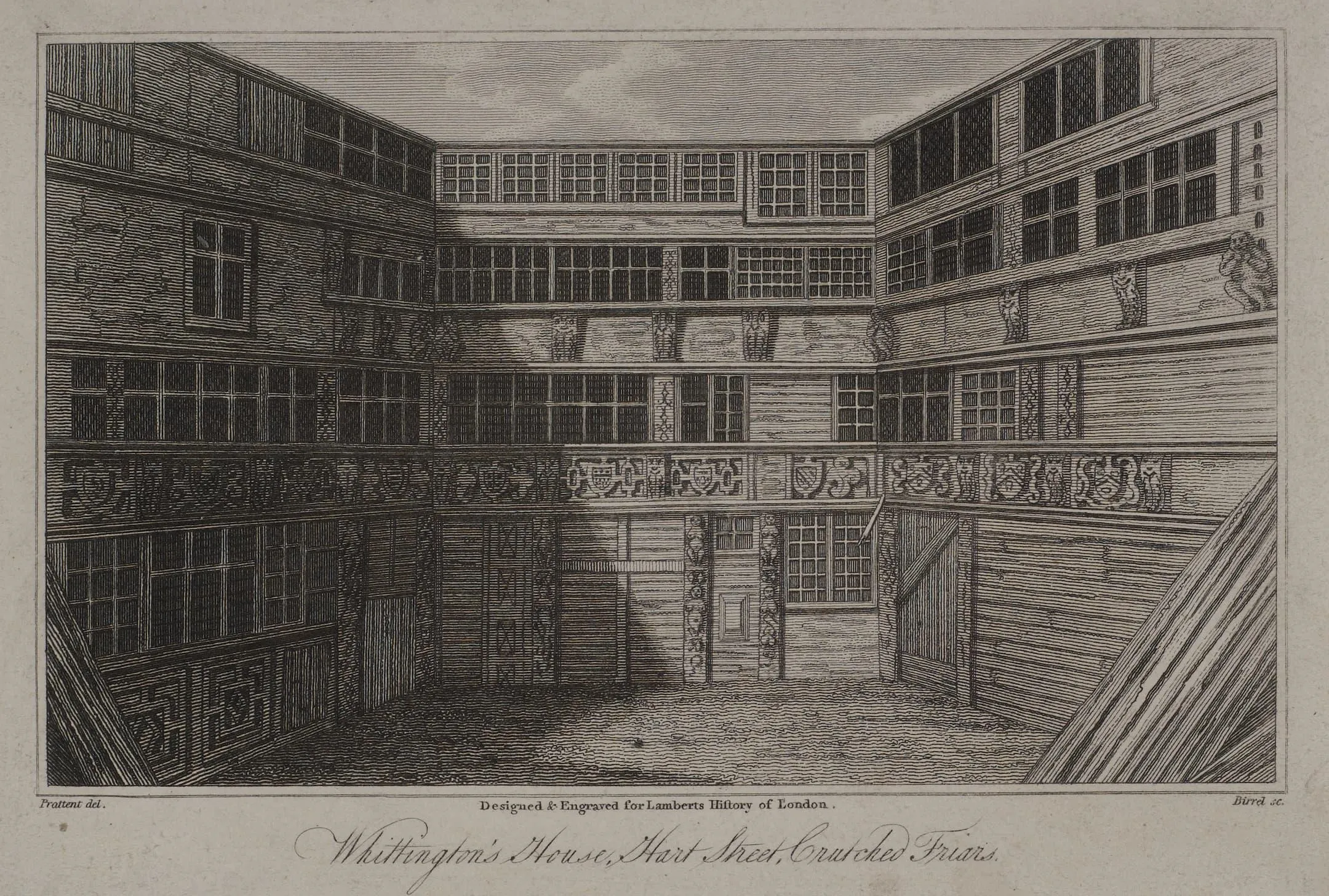
On the London Picture Archive you can find various images of property relating to Whittington.