Engravings and Printed Media of The Great Exhibition of 1851
On 1 May 1851 the 'Great Exhibition of the Works of Industry of all Nations' was opened by Queen Victoria in the Crystal Palace, Hyde Park.
The idea for a public exhibition, with the aim of encouraging international dialogue and promoting British products, had gained ground in the late 1840s and a Royal Commission was established in 1850 presided over by Prince Albert, the Queen’s husband. Monies were raised and a competition to design a building established. Following the rejection of hundreds of submissions, a design by Joseph Paxton, inspired by the conservatory at Chatsworth where he was head gardener, was approved. The design was realised by engineers Sir William Cubitt and Sir Charles Fox.
The glass building comprised 4,000 tons of iron and 400 tons of glass. It was filled with over 100,000 objects, half of which came from Britain and the empire and the other half from the rest of the world. The exhibits were arranged by theme and by place of origin.
By the time it closed on 15 October 1851, it had been visited by six million people and the decision was made to take down the Crystal Palace and re-erect it on land near Sydenham in south London.
Representations of the Great Exhibition
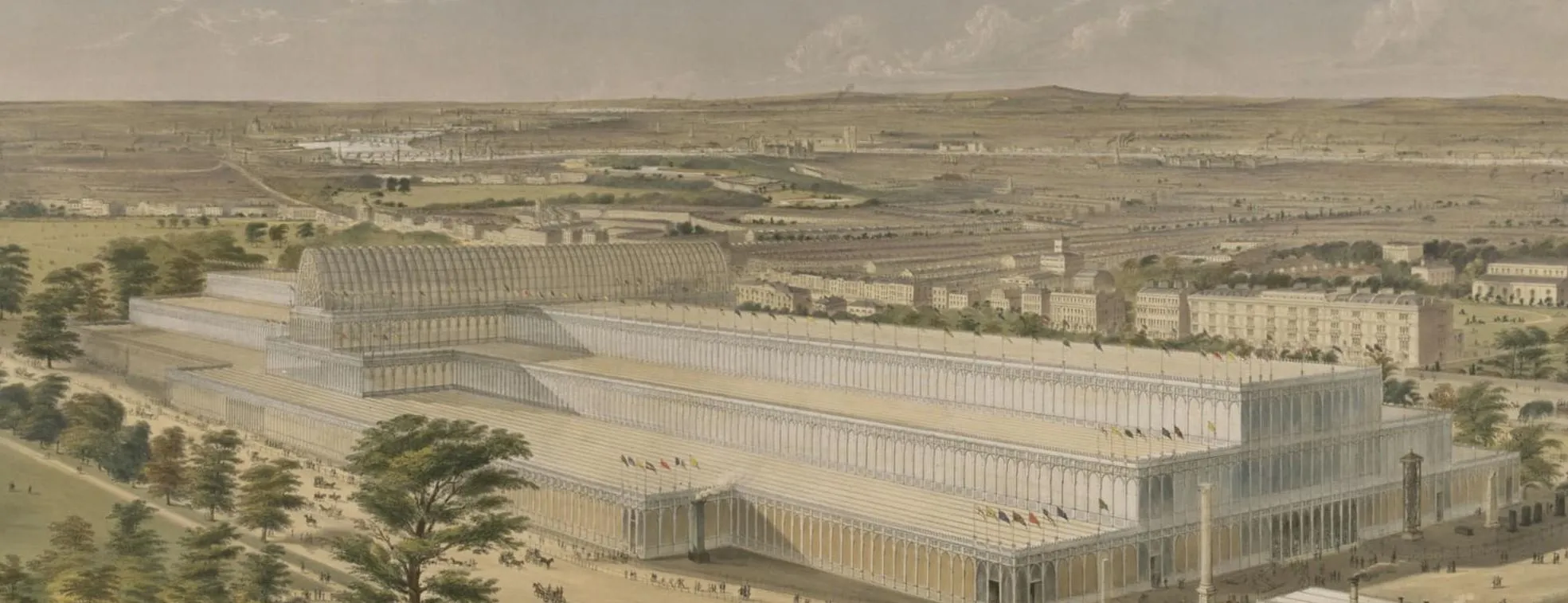
With so many visitors the Great Exhibition was an opportunity to produce images recording the exterior of the building and the exhibits. Souvenirs in many forms, including prints, ephemera and photographs, were produced to suit all budgets. TLA has many engravings of the exhibition, in colour and black and white. Some were contemporary while others were produced later.
As the exhibition was drawing to a close, advertisements for the 'Recollections of the Great Exhibition of 1851', engraved by Day & Son, of 17 Gate Street, Lincoln’s Inn Fields and published by Lloyd Brothers & Co, of 22 Ludgate Hill, and Simpkin, Marshall & Co. of Stationers’ Court, began to appear in the press. The work was a set of 25 lithographs available as a volume. The engravings were taken from original drawings made on site by several artists including John Absolon, C T Dolby, Henry C Pidegeon and W Goodall.
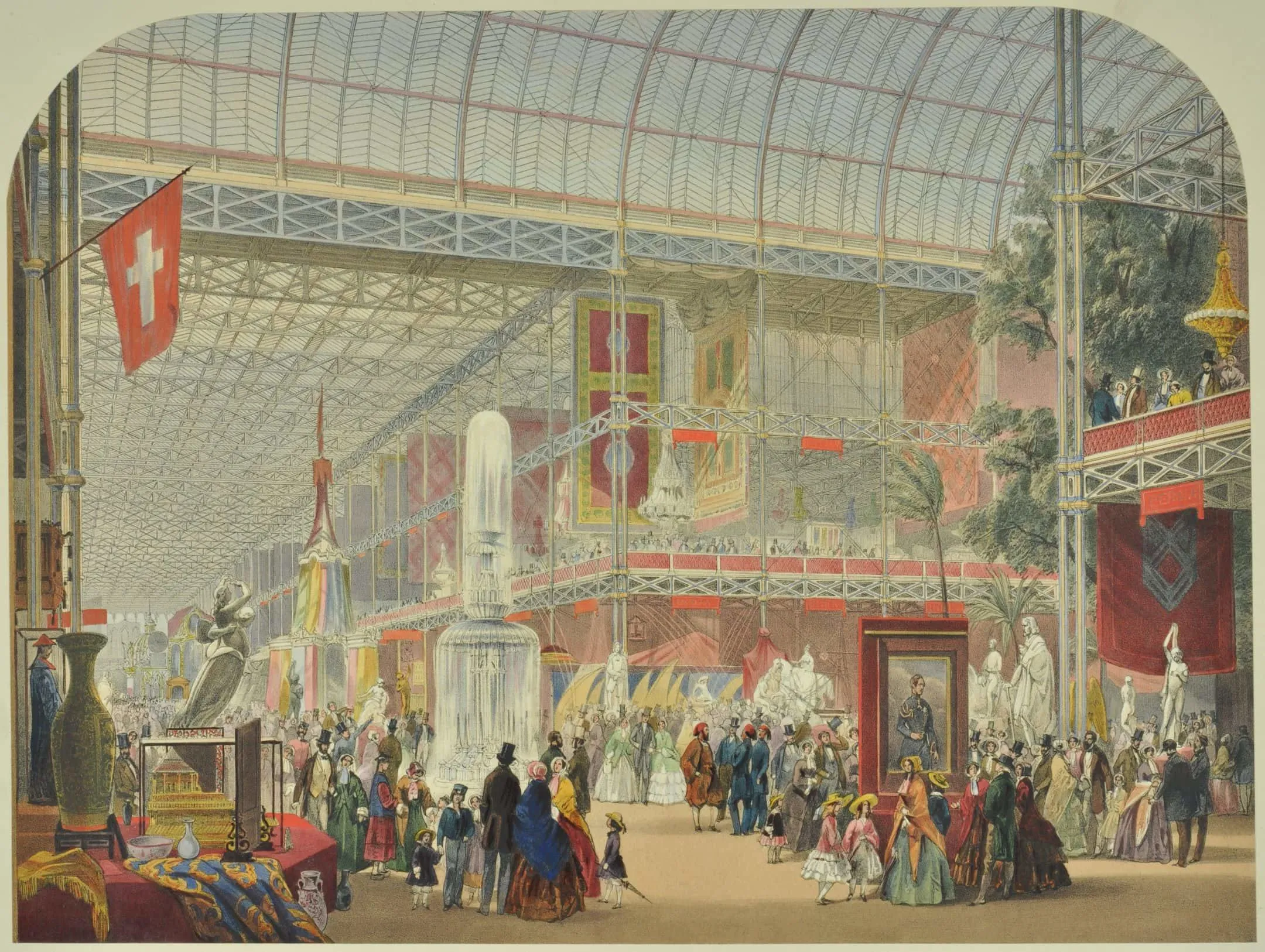
TLA holds a portfolio of these lithographs (reference: SC/PZ/WE/02/1464-1488) including a general view of the interior by the artists Telbin and Absolon which gives an idea of the scale of the building, shows the first floor galleries and also one of the trees around which the structure was built.
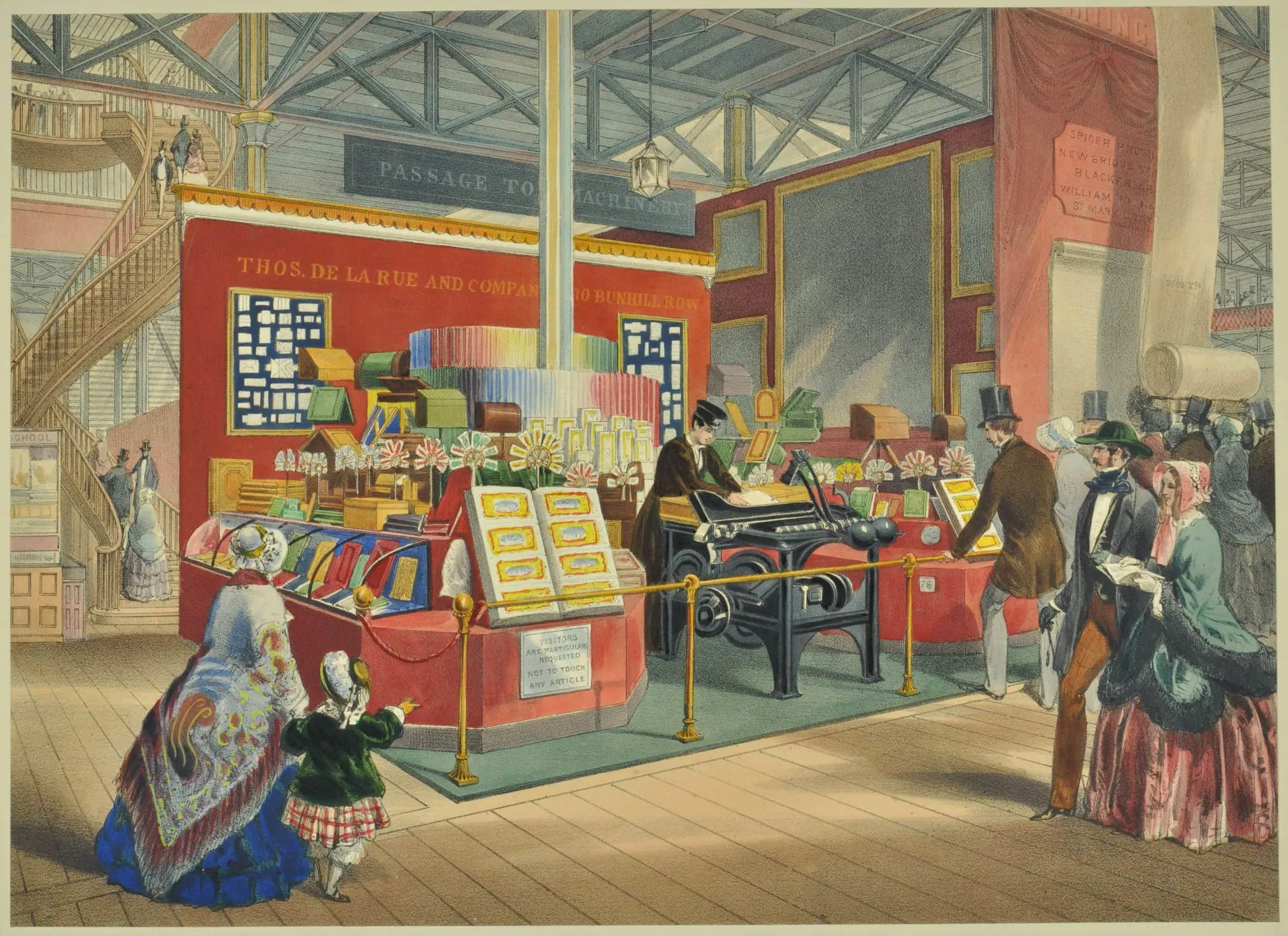
Other images include views of the stands or courts of a number of countries, India, China and France, and also the stands of individual businesses. One such stand was De la Rue’s which displayed and demonstrated its envelope folding machine. De la Rue, cardmakers and wholesale stationers, had been established for 30 years and were based at 109-113 Bunhill Row in London.
Information for another publication appeared on 29 November 1851 in The Examiner newspaper announcing the forthcoming 'Dickinson’s Comprehensive Pictures of the Great Exhibition' which would comprise 50 coloured images. The price was announced as 16 guineas and the publication was to be produced in 16 parts, 21 shillings per part. Also for sale would be proofs with the artist’s signature at 31 shillings and 6 pence per part.
The images to be produced were based upon watercolours commissioned by Queen Victoria and Prince Albert with the purpose of being reproduced as chromolithographs and widely distributed. Further images were added to the original 50 to bring the total to 55.
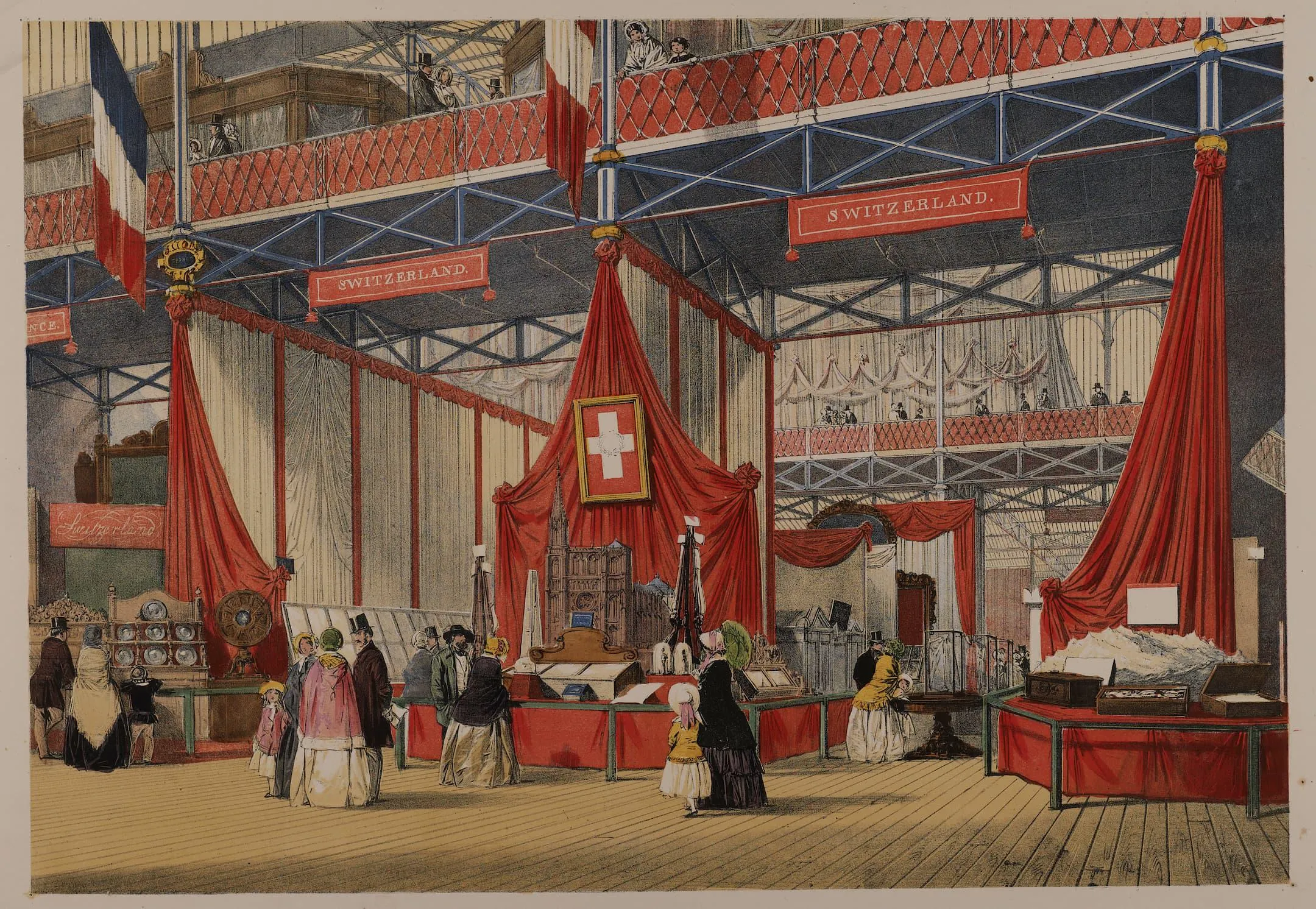
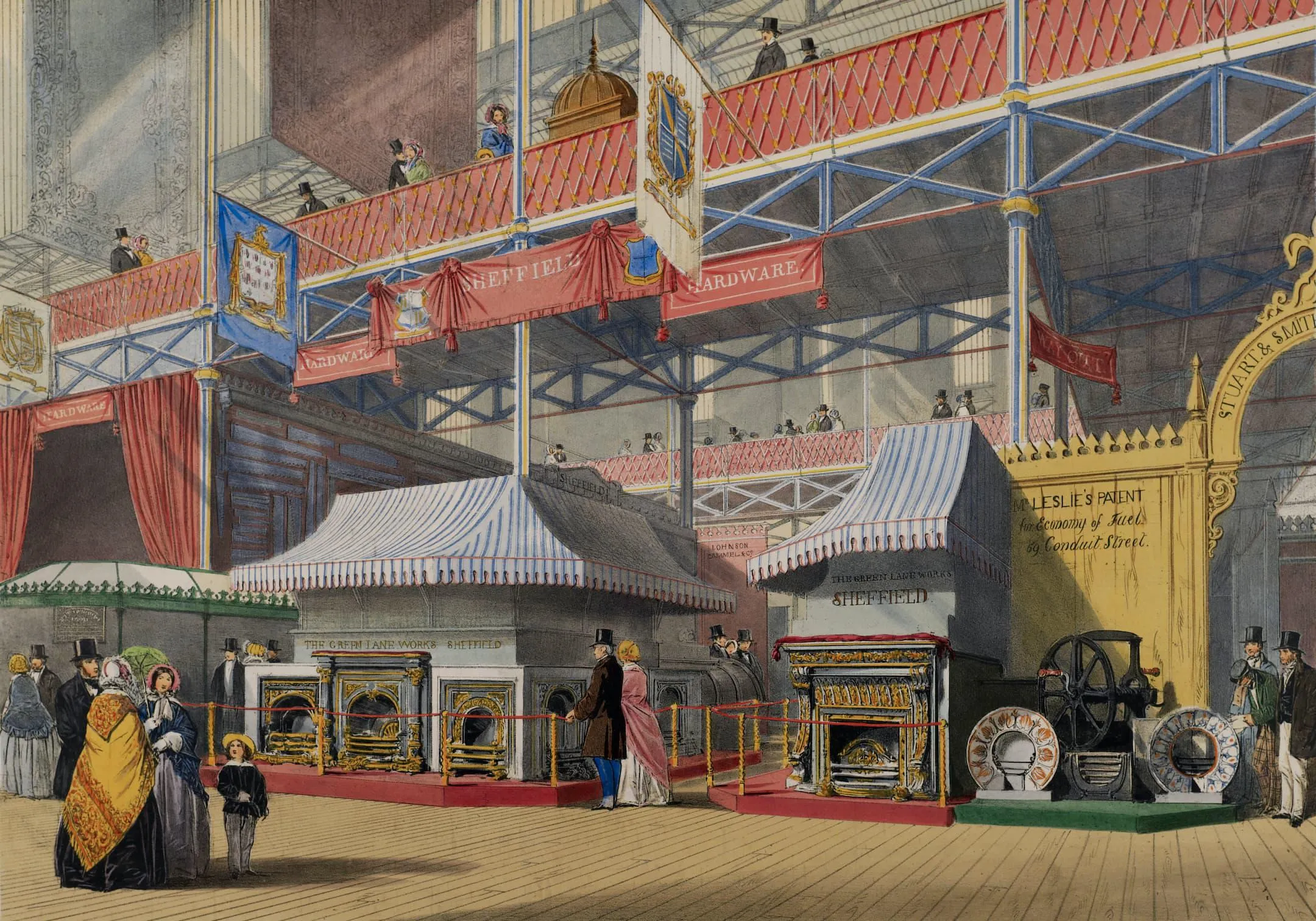
TLA holds different copies of this group of images. We have a set of the images [SC/PZ/WE/02/1489-1543] and second copies of 32 of them [SC/PZ/WE/02/1642-1773]. These are a combination of published chromolithographs, proofs with the artist’s signature, proofs (unsigned) and proofs before lettering (that is before the title had been added). Dickinson’s Comprehensive Pictures was also published as a two volume set, with the accompanying text, in 1854.
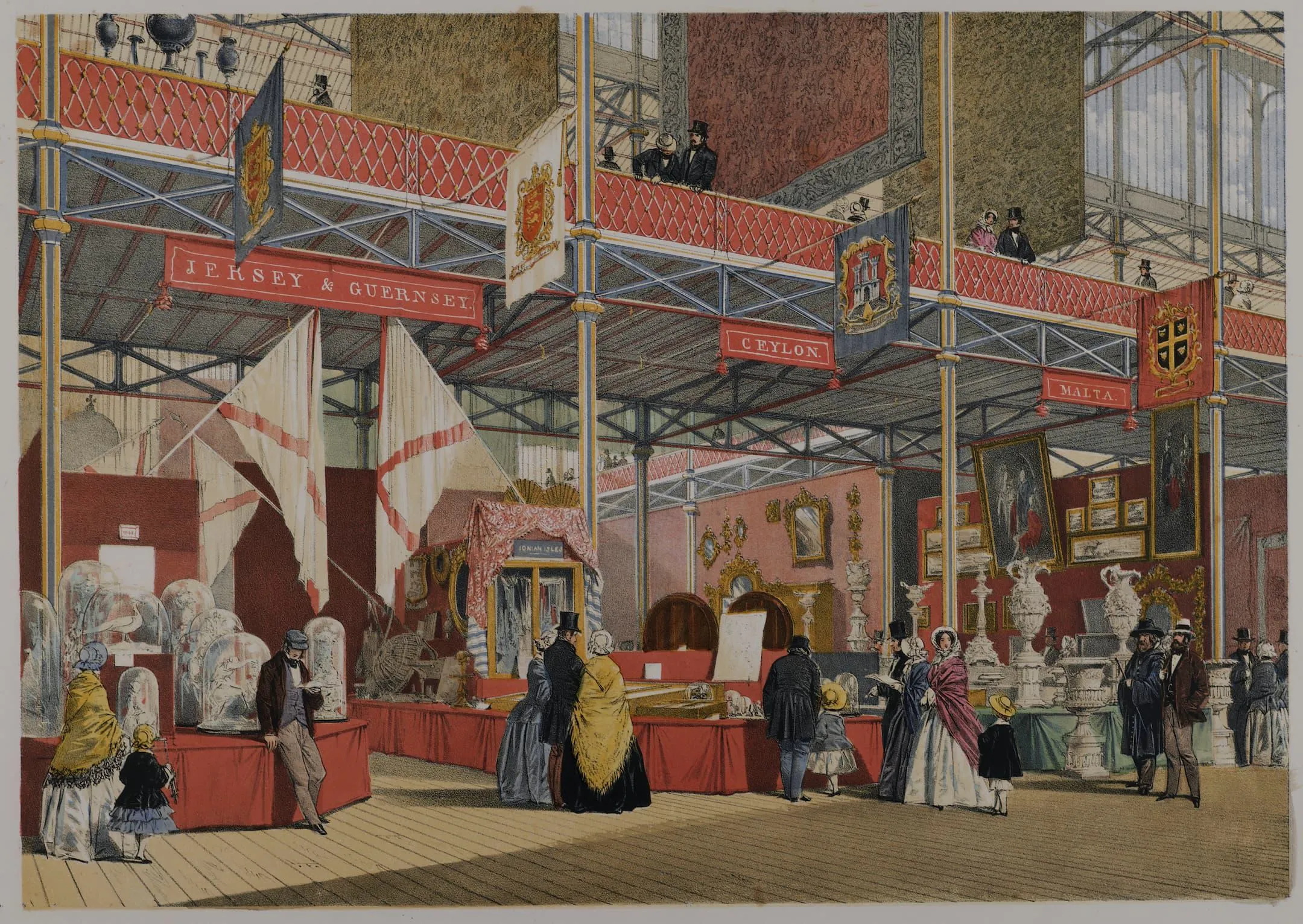
The subjects were similar to those in Day’s publication, but the colour is more intense. Dickinson Brothers were known for their use of the chromolithograph process, a method of creating coloured lithographs by using multiple stones to add the colours.
Images on the London Picture Archive
The images in the Day & Son and Dickinson Brothers publications can be found on the London Picture Archive, along with other images of the Great Exhibition including those produced by other publishers such as Ackermann & Co and Read and Company. Also to be found are images that appeared in the Illustrated London News relating to the exhibition.
Search the London Picture ArchiveThe Illustrated London News
From the beginning the Illustrated London News (ILN) reported the discussions and developments around the proposed exhibition and contained reports on the progress of the project and plans of the building from mid-1850. The ILN was established as an illustrated weekly publication, first appearing on Saturday 14 May 1842, which reported on world events as well as London news, and many articles were accompanied by illustrations and later photographs. In the weeks following the opening, the ILN produced a number of exhibition supplements which described and illustrated the different courts (or stands).
The ILN produced a grand panorama of the Great Exhibition as a black and white woodcut over a number of issues. Advertising of the views began in October 1851 with the first appearing as fold out pages in the issue of 22 November 1851. Many of the woodcuts are attributed to being taken from daguerreotypes by Richard Beard or Antoine Claudet, the leading daguerreotypists of the period.
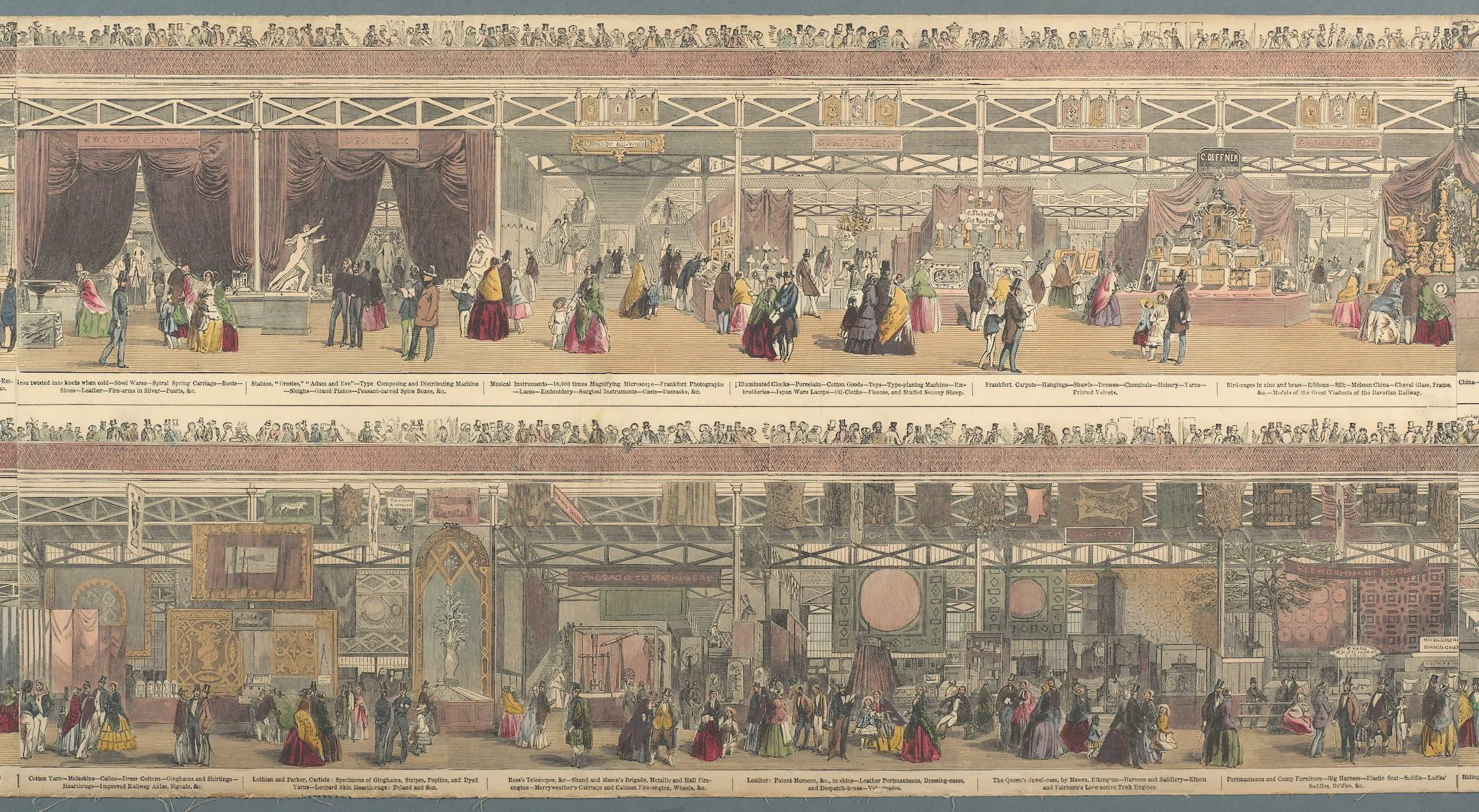
The grand panorama was also produced in colour and mounted on linen as two parallel views around the displays. It was rolled in a blue cloth wrapper with an embossed title and measures 279 x 559mm.
Catalogues and plans
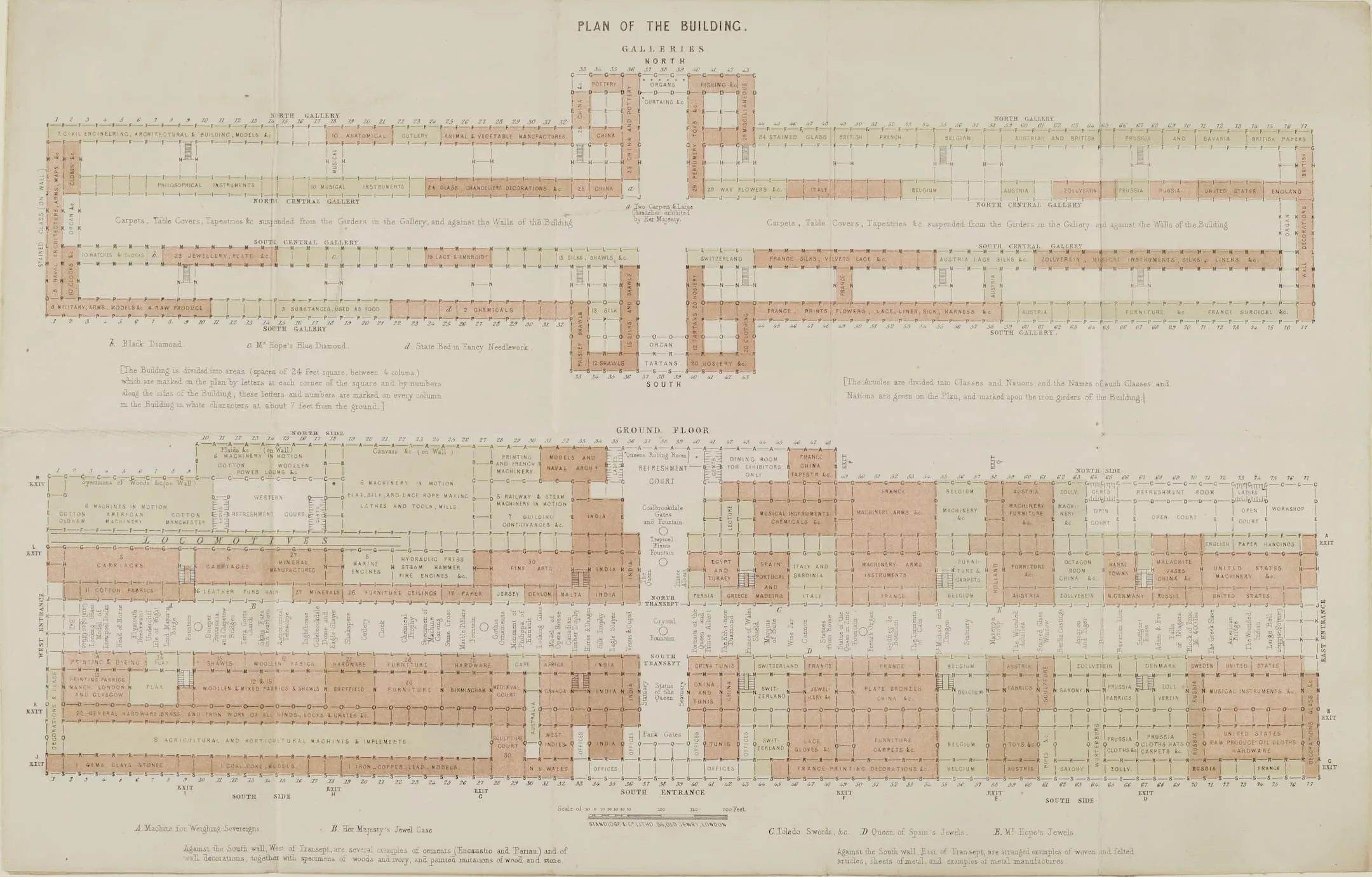
Like events of today, the Great Exhibition was accompanied by catalogues and plans. A copy of 'The official descriptive and Illustrated catalogue of the Great Exhibition of the Works of Industry of All Nations, 1851 (3rd edition)' can be found in TLA’s Library (store 35.8) and cheaper guides were produced during the year. A plan of the building produced by Standidge & Co carefully located the individual courts and some of the exhibit highlights, for example, the Queen’s jewel case and a state bed in fancy needlework. The plan shows the arrangement of the courts with a large part of the western section allocated to Britain and its colonies and dependencies and the eastern half largely taken up by other countries.
Telescopic views
Paper peepshows or telescopic views proved popular souvenirs. They first appeared in England in 1825 and were popularised by the construction of the Thames Tunnel between 1825 and 1843. TLA has a couple of peepshows of the Great Exhibition: 'Telescopic view of the Great Exhibition' printed by C Moody, 1851 (reference: SC/GL/PAN/004/p5408065) and 'Forbes's telescopic view of the ceremony of Her Majesty opening the Great Exhibition', designed by Bailey Rawlins, 1857. The Forbes panorama (reference: SC/GL/PAN/005/p5408295) has been repurposed by the addition of Forbes labels in two places on the front obscuring references to T Lane and C A Lane, the maker and publisher. These items are delicate and an appointment to view them may be required.
Maps
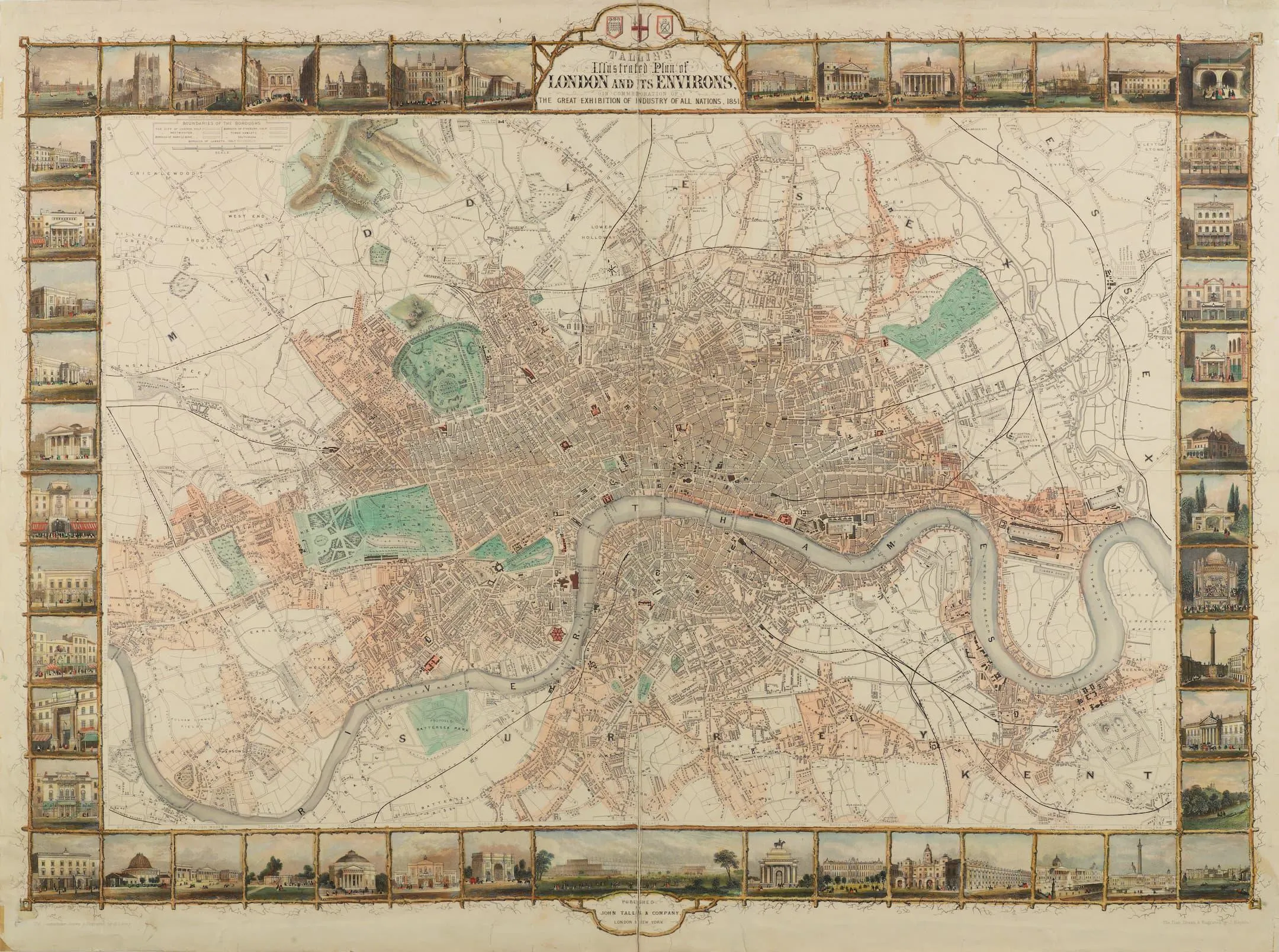
Maps were also potential souvenirs and an example is Tallis’ Illustrated plan of London and its environs in commemoration of the Great Exhibition. The map, which locates the Crystal Palace as the Exhibition of Industry, is bordered by 49 colour views of principal buildings, including the Crystal Palace, drawn and engraved by J Rapkin. The map was published by John Tallis & Co. as part of Tallis’s Illustrated atlas and modern history of the world and as a folded map.
Other maps also used the Great Exhibition as part of their title, for example, Reynold's Map of London with the latest improvements cover is titled, 'The Exhibition Map of London and Visitors Guide' (reference: SC/PM/LC/01/05/155). It includes some notes on the sights and amusements of London, a key to principal public buildings and a note on the Great Exhibition. The site of the building for the Great Exhibition in Hyde Park is marked.
Another example is Wyld's New Plan of London, published by James Wyld, 1851 with the cover title Wyld's Map of London and Visitor's Guide to the Great Exhibition 1851 (reference: SC/GL/FLM/055/1851/k1287044).
Music
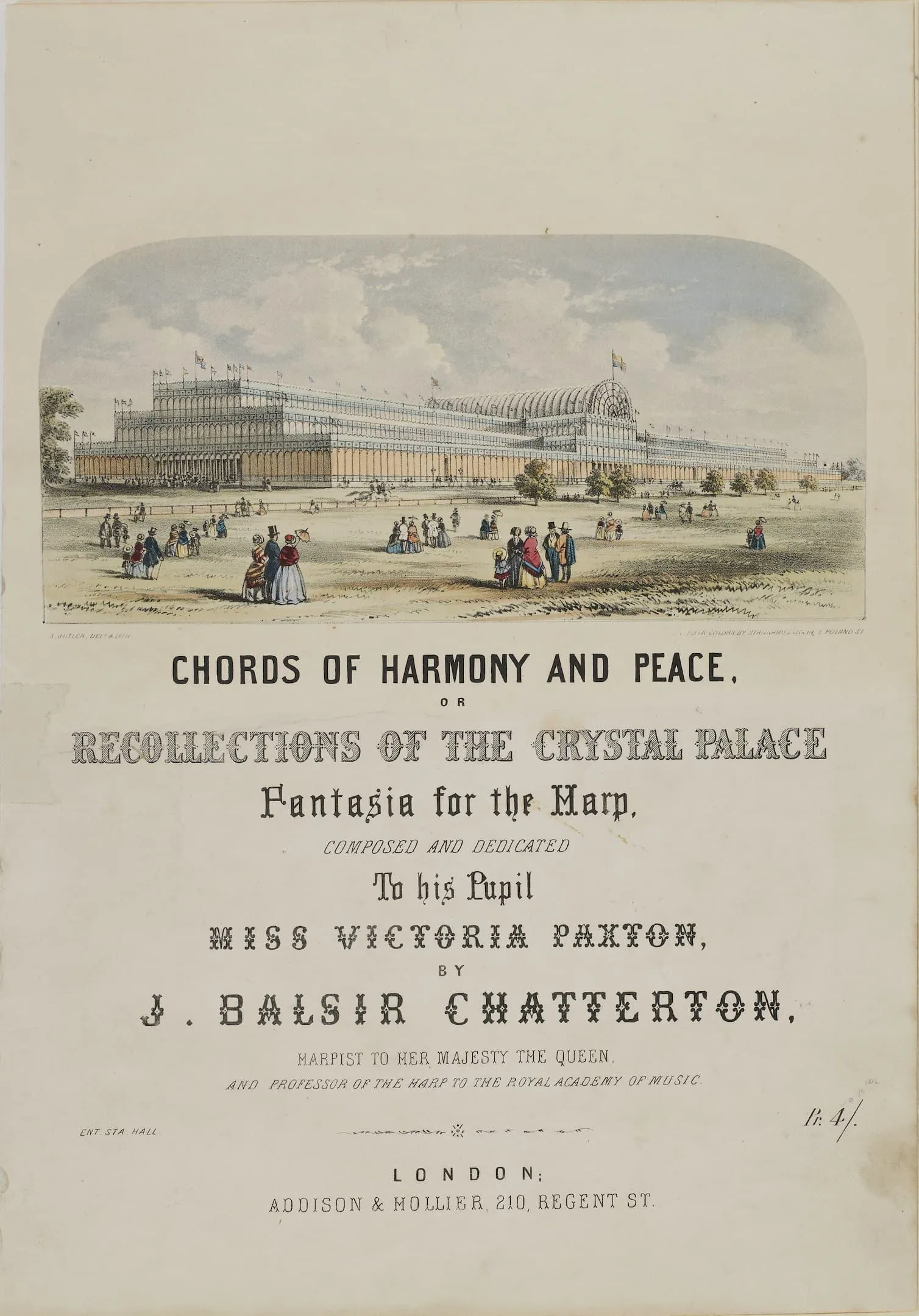
Musical items are also associated with the Great Exhibition. 'Chords of Harmony and Peace or Recollections of the Crystal Palace' comprises 13 pages of music for the harp written by John Balser Chatterton, including Rule Britannia, a Prussian March and Neapolitan Melody. The cover dedicates the music to Victoria Paxton, daughter of Joseph Paxton, and includes an illustration of the Crystal Palace by Augustus Butler.