

The Great Exhibition
The Victorians loved an exhibition. The Great Exhibition of 1851 was the first of a series of major trade exhibitions that took place in the nineteenth-century.
The Great Exhibition
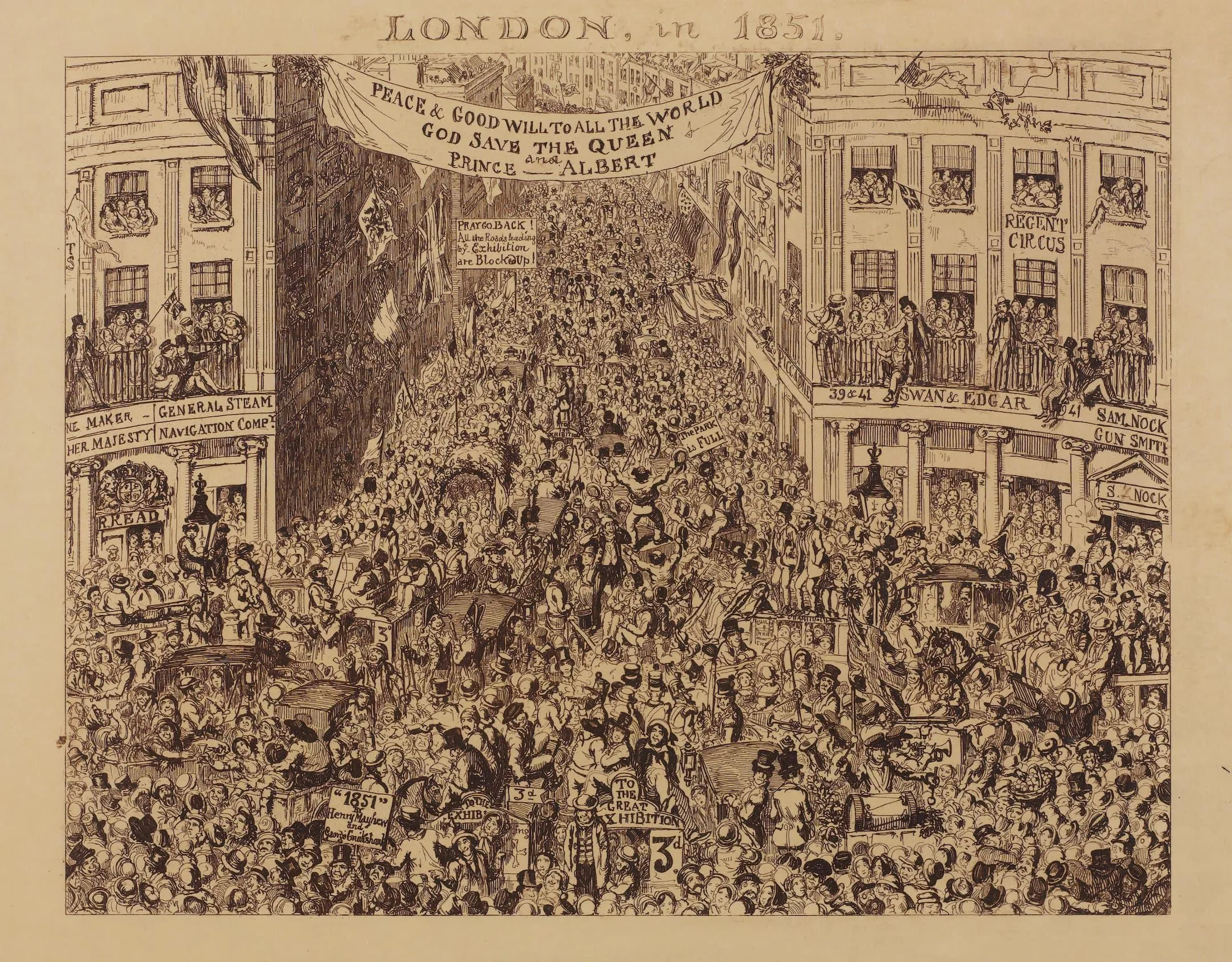
'The Great Exhibition of the Works of Industry of All Nations’ took place in Hyde Park May from May to October 1851 as a celebration of modern international industrial technology and design. Over one hundred thousand objects were exhibited from around the world (44 countries) in a glass palace designed by Joseph Paxton and spanned over 18 acres, which in itself was a feat of engineering. By gathering all these objects together, this was an exhibition to promote the 'myth' of British imperial dominance and power. Queen Victoria wrote in her diary about her visit:
The Green Park and Hyde Park were one mass of densely crowded human beings in the highest good humour and most enthusiastic. I never saw Hyde Park look as it did… We drove up Rotten Row and got out of our carriages at the entrance on that side. The glimpse, through the iron gates of the Transept, the waving palms and flowers, the myriads of people filling the galleries and seats around, together with the flourish of trumpets as we entered the building, gave a sensation I shall never forget, and I felt much moved.
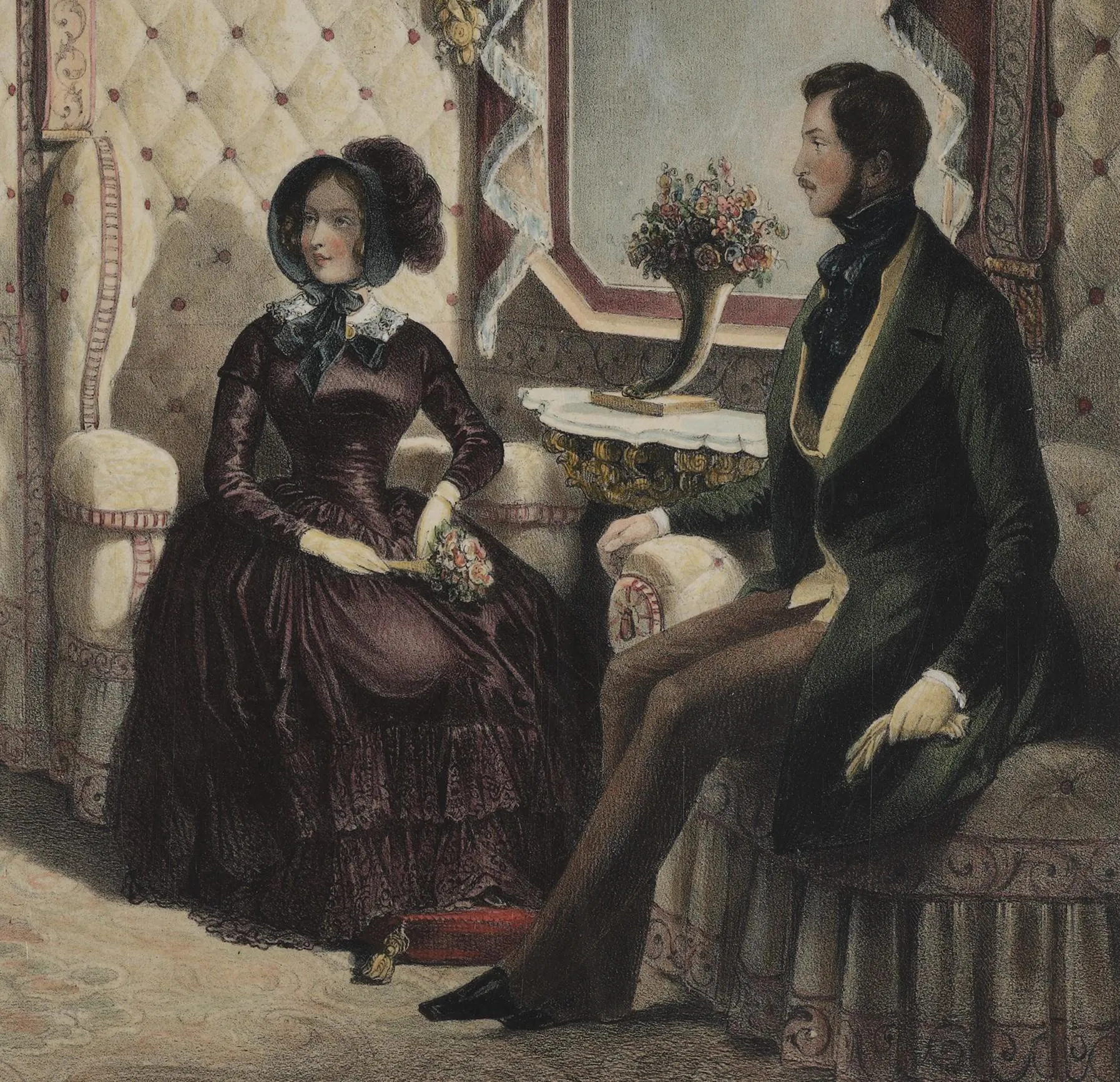
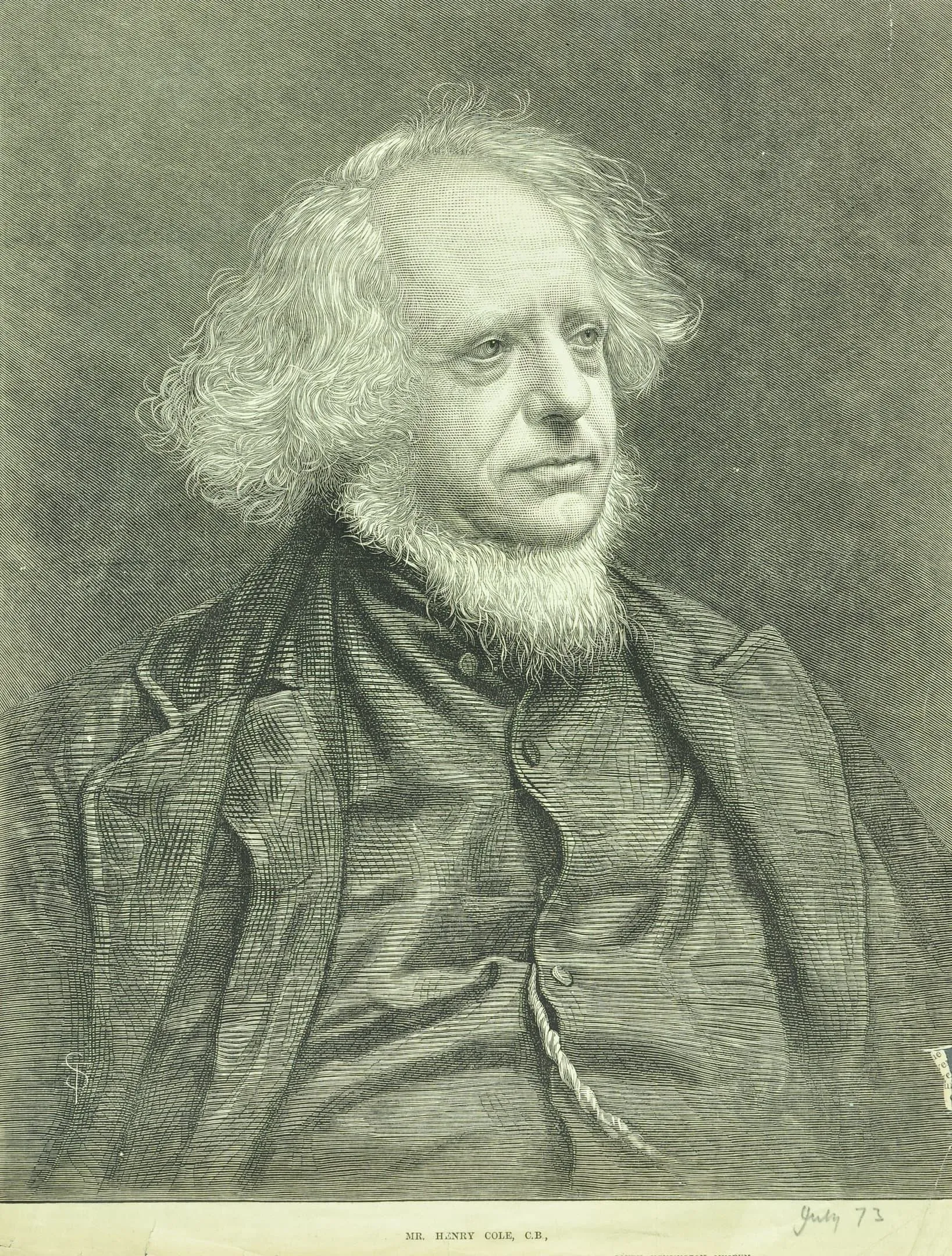
Henry Cole
Henry Cole was one of the commissioners of the Great Exhibition. Cole wanted to improve standards in Industrial design and after gaining the support of Prince Albert plans went ahead.
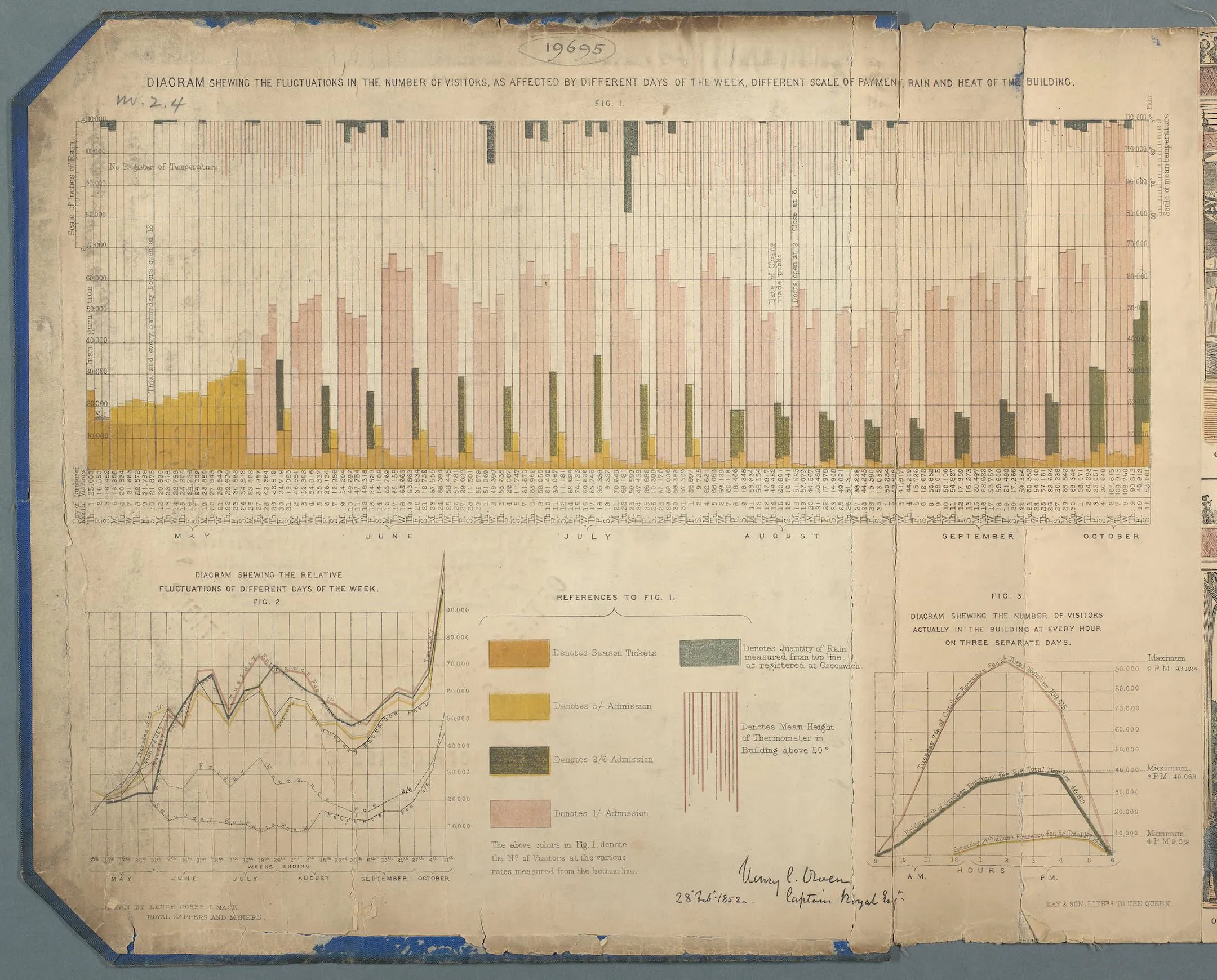
Visitor numbers
Throughout the course of the exhibition over 6 million visits were recorded. To enable all classes to attend the cost of entry varied from 3 guineas a day, £1 a day, five shillings a day, and down to one shilling a day. The one shilling ticket was a huge success and four and a half million shillings were taken.
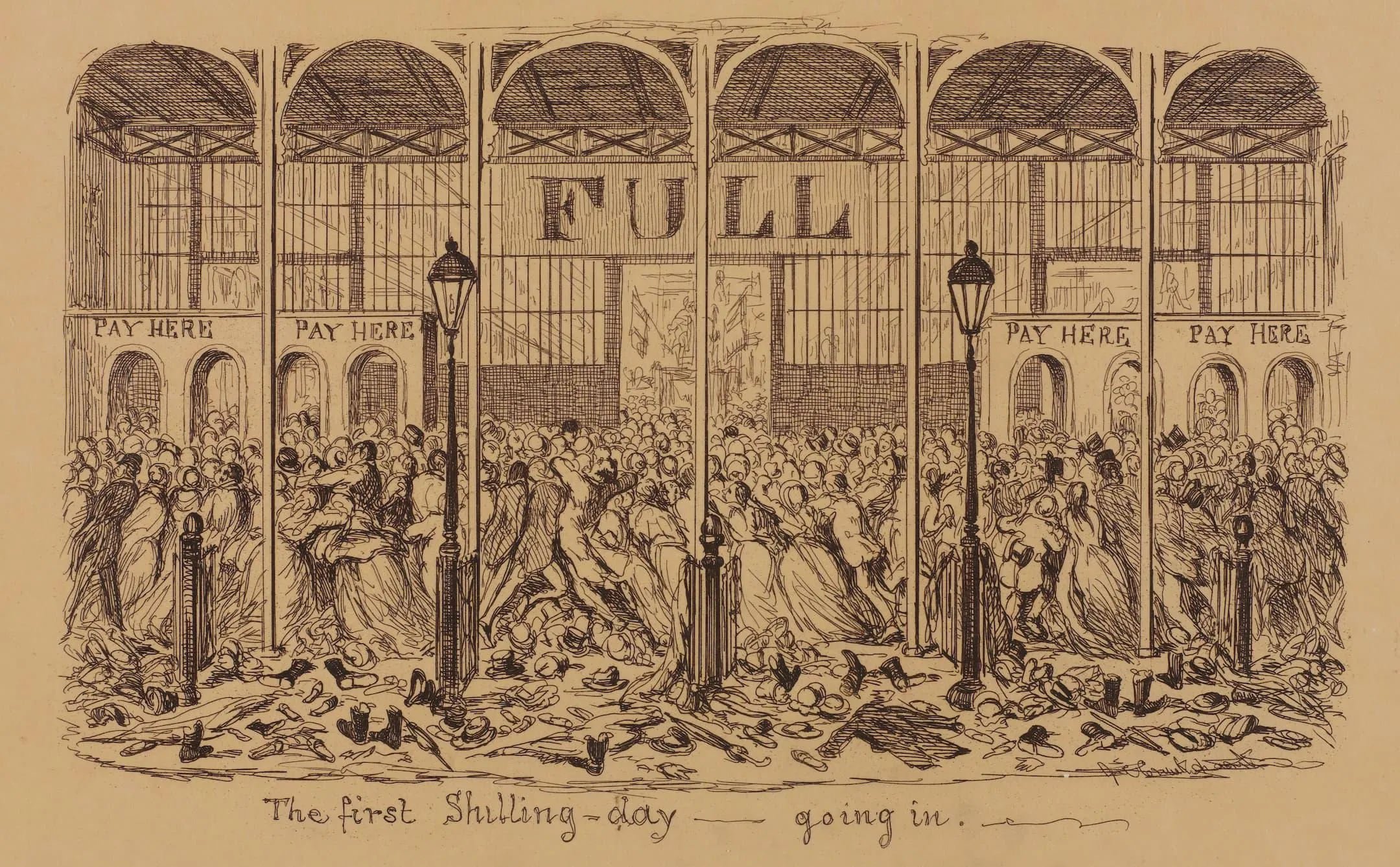
Inside the exhibition
There was a huge crystal fountain in the central court beneath the great transept which refracted sunlight through it from the large glass panels of the building. The trees of the park were incorporated by creating an arched transept.
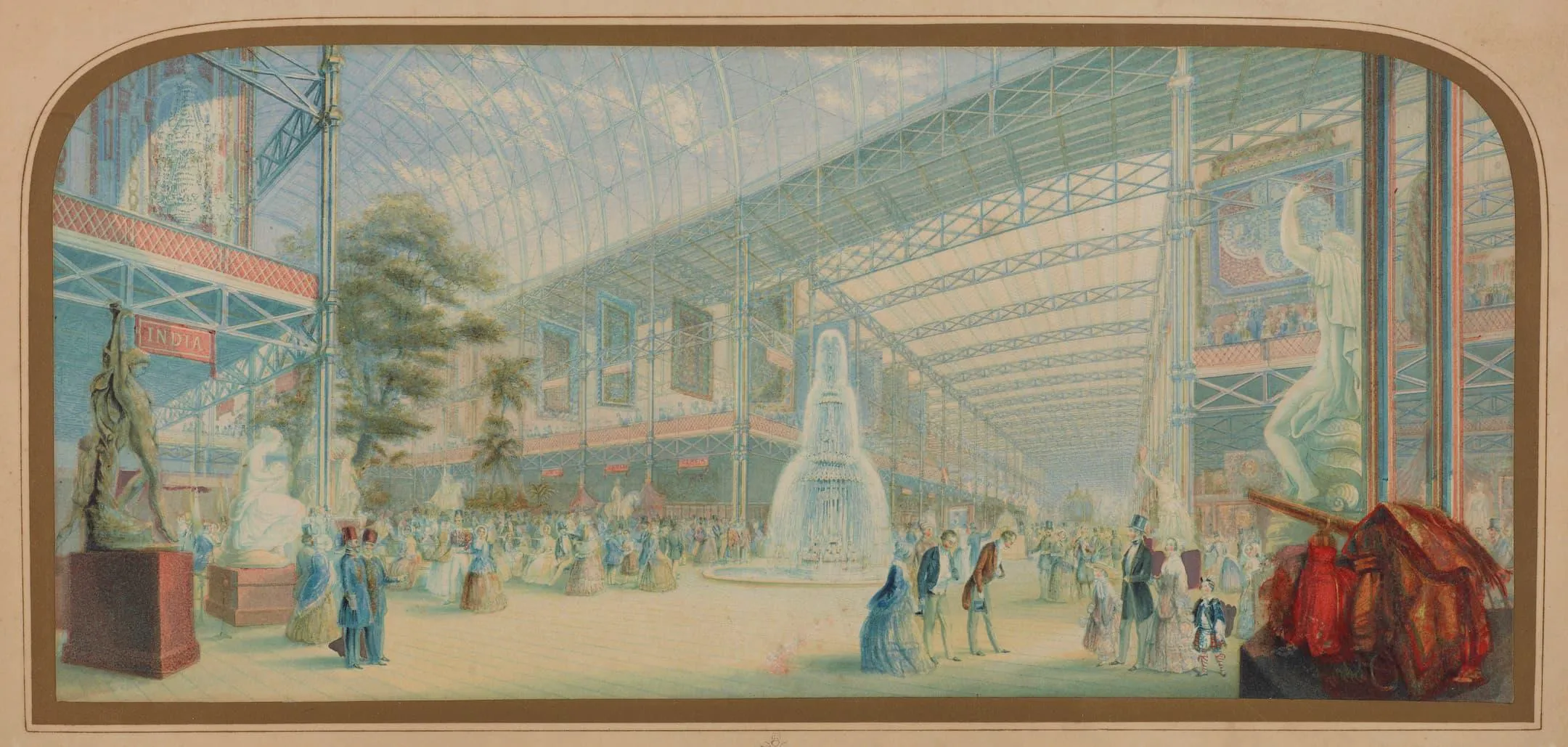
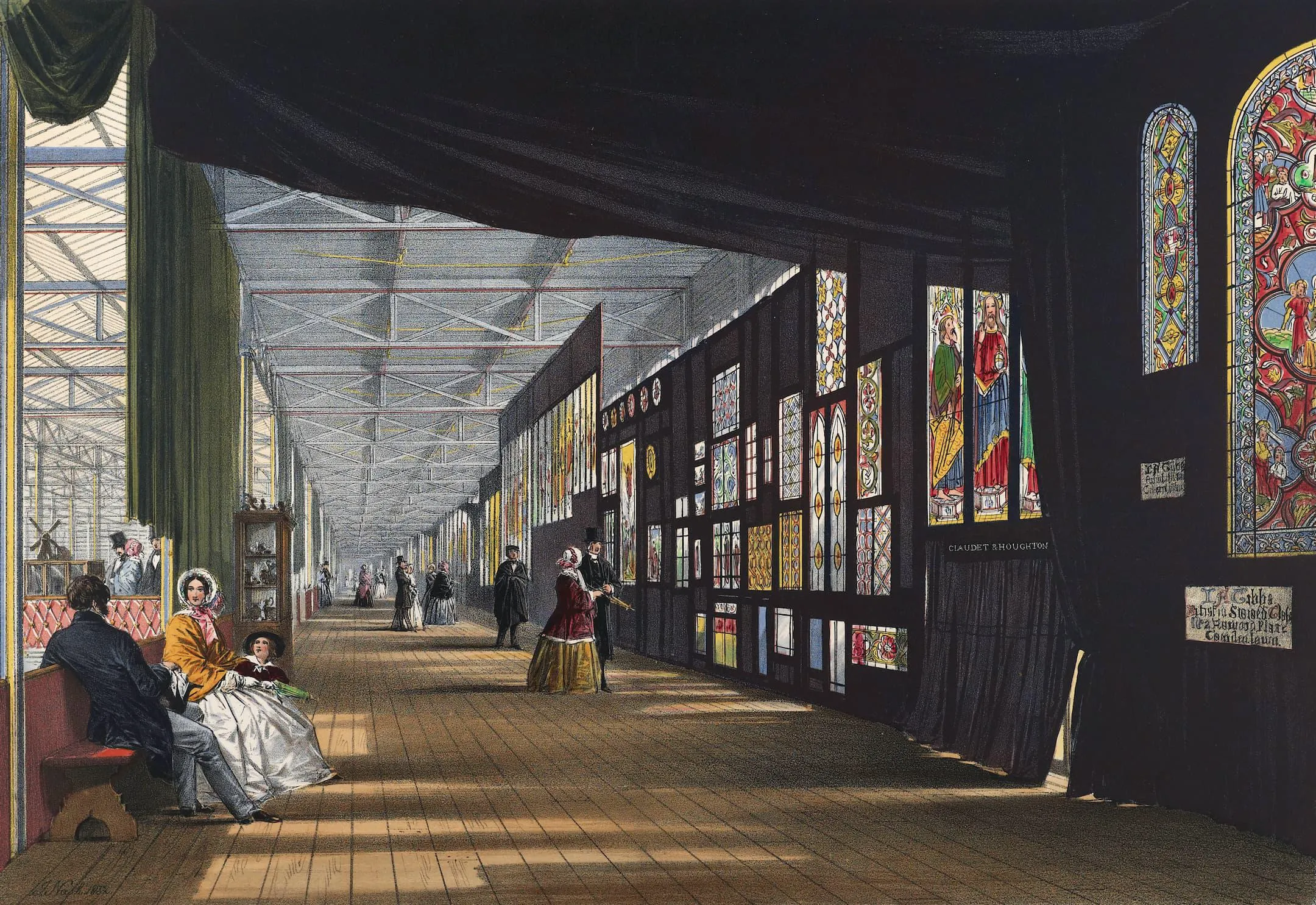
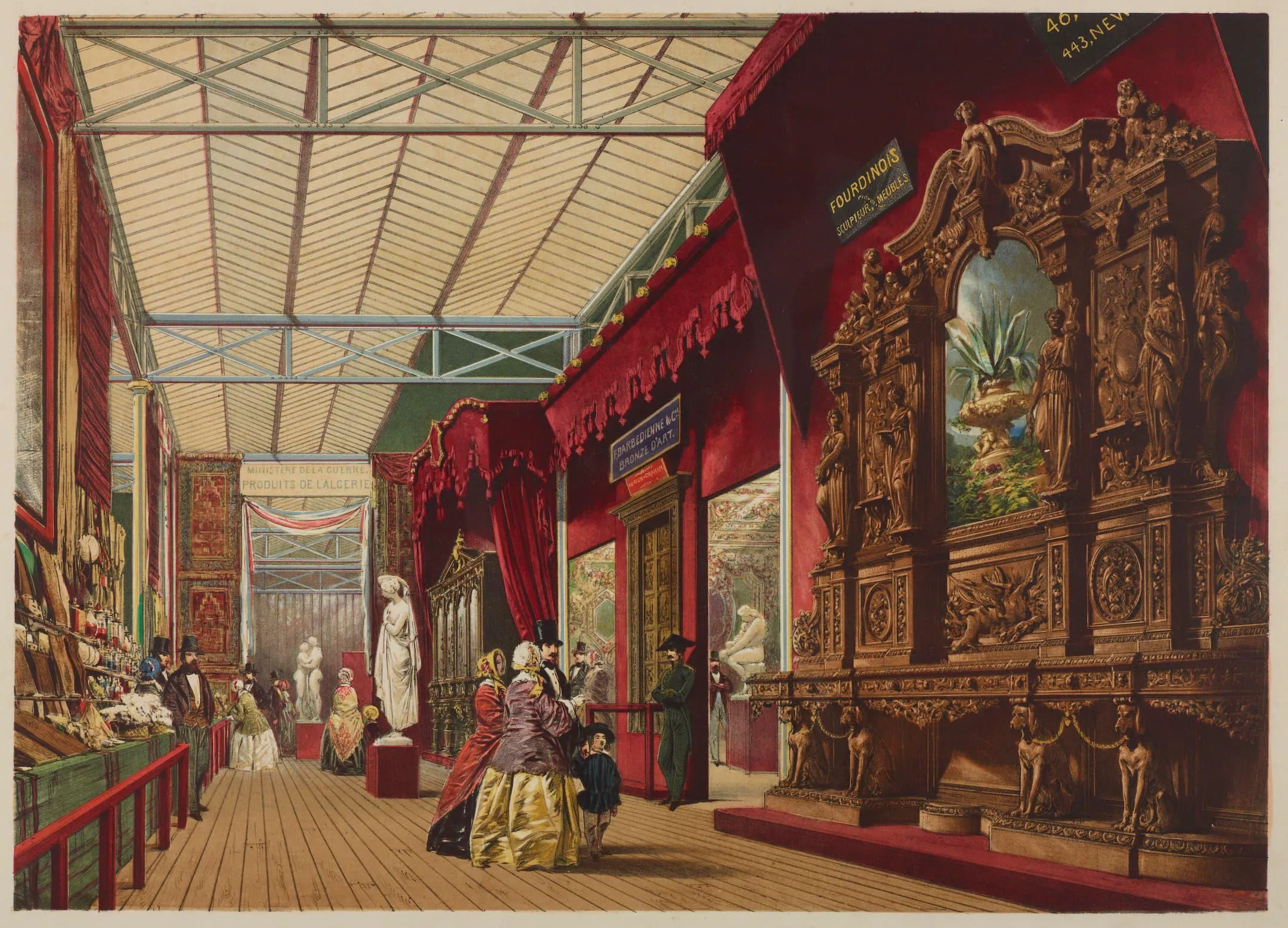
The exhibits from the different countries are visually documented in our collections and can be viewed on the London Picture Archive. Here are some examples of what you might find.
Related content
Explore the London Picture Archive for more images.
Search London Picture ArchiveFind out more about the engravings and printed media created of the Great Exhibition.
Engravings and Printed Media of the Great ExhibitionCrystal Palace, Sydenham
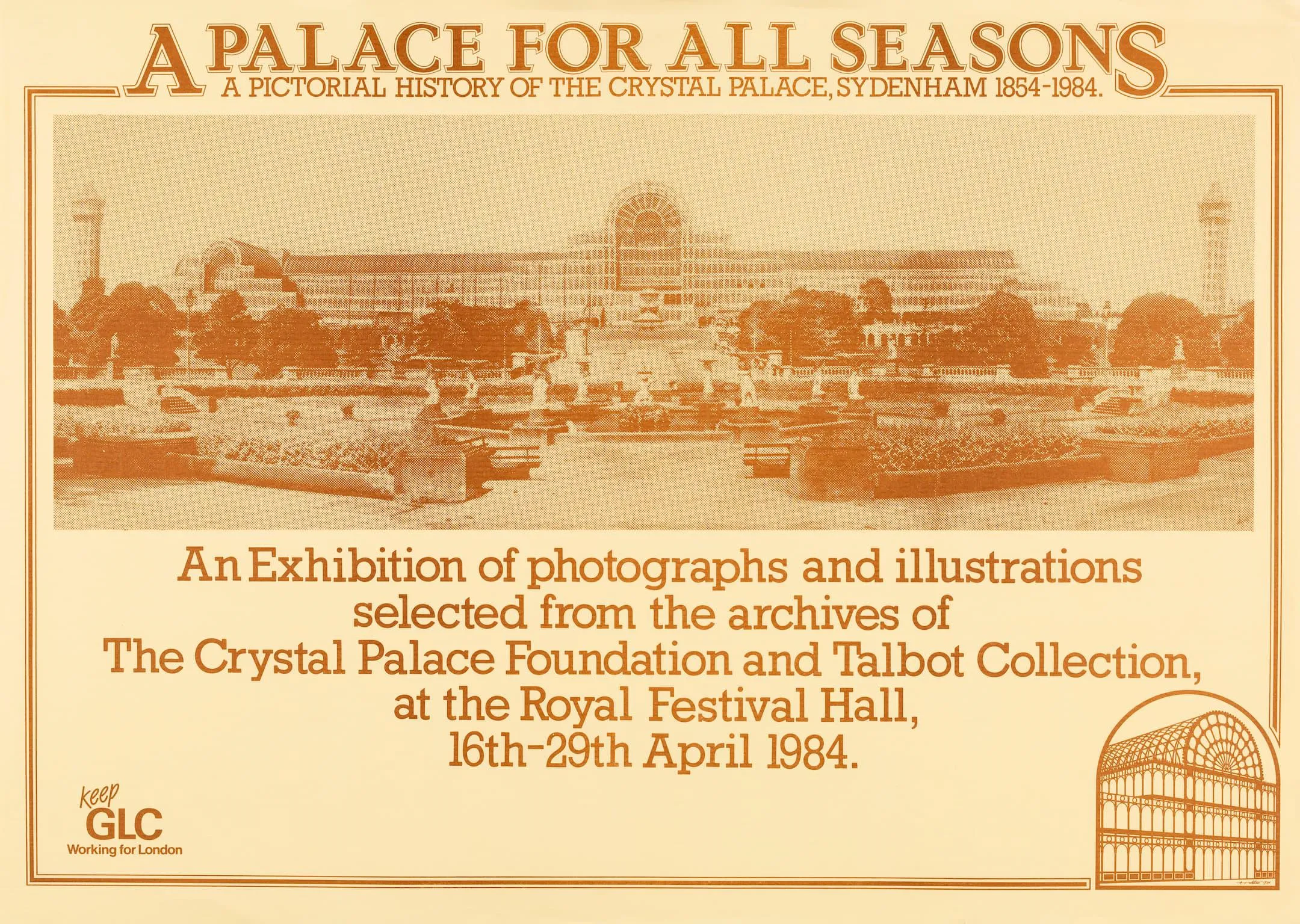
After the exhibition, the palace was dismantled and re-erected at Sydenham Hill, in South London in 1854 and stood until 1936 when it was destroyed by fire. You can learn more about the building on that site, and in particular the Delamotte photographs that document it, in a blog that was written for our 'Lost Victorian City' exhibition that was held at TLA in 2024:
Learn about the Crystal Palace siteThe Legacy
Profits from the Great Exhibition primarily contributed to the building of the South Kensington Museum, now known as the V&A, the Natural History Museum and the Science Museum. However, through the lens of decolonisation we might consider how we should we reflect on this anniversary. We might think about what was actually on show, what was left out and how these decisions link to Imperial motivations of the period that exploited people across the world.
Decolonising the archivesFestival of Britain
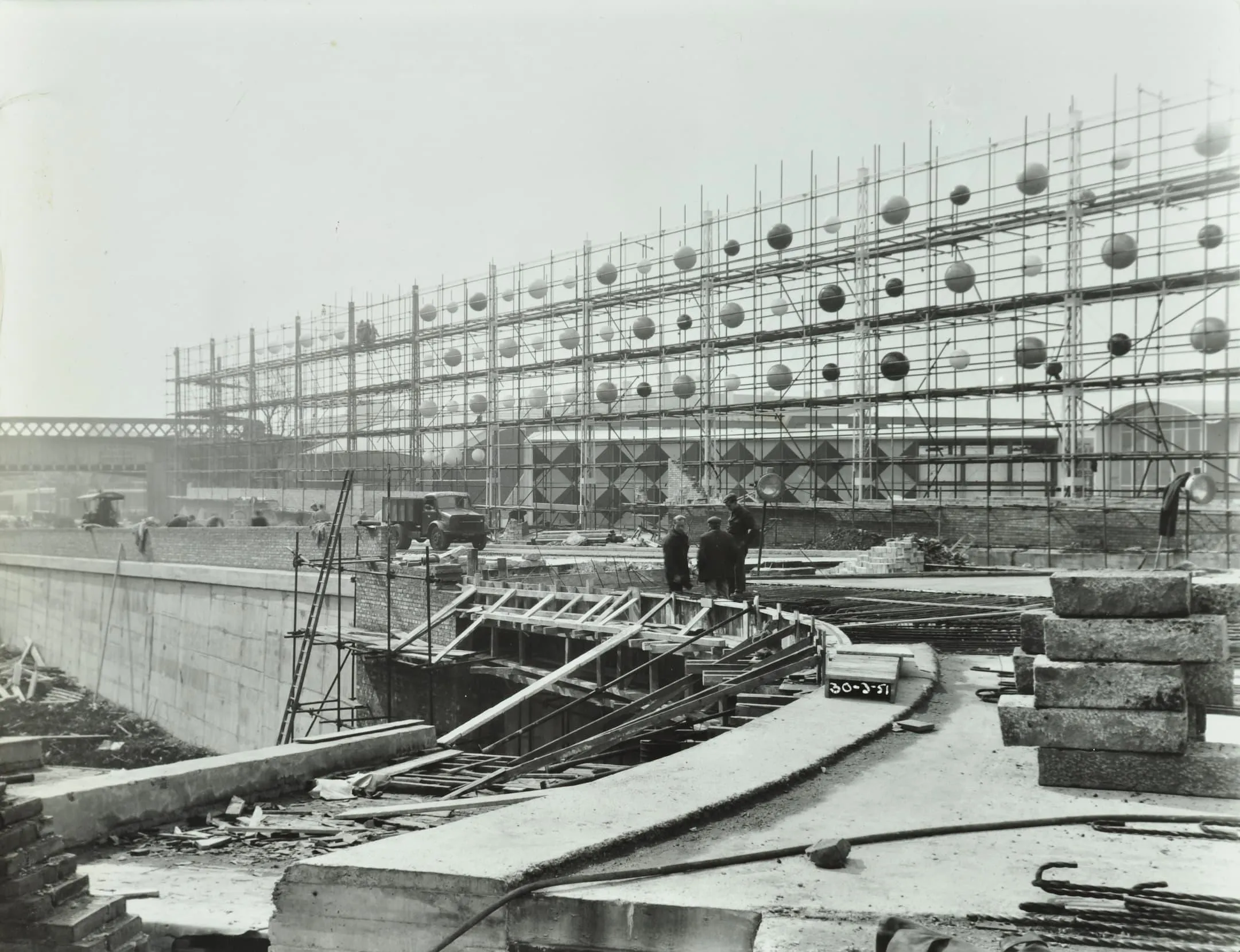
In 1951 the 'Festival of Britain' was a centenary response to the Great Exhibition, this time it was on the South Bank and aimed to inspire optimism post-war. TLA holds images of the construction of the site as well as programmes and printed material.
Archive sources
Try searching our catalogue for related sources, including records of the Crystal Palace Trustees (CPT):
Search the catalogueLibrary sources
Explore our reference library for related publications on this subject such as:
- The Great Exhibition by John R. Davis (1999) reference: 35.8 CRY
- The Great Exhibition of 1851: a nation on display by Jeffrey A. Auerbach (1999) reference 35.8 CRY