

A Short History of the New River
A Short History of the New River
The New River is one of London’s most significant early modern engineering undertakings: an artificial watercourse constructed between 1609 and 1613 by Sir Hugh Myddelton to convey fresh water from Chadwell and Amwell in Hertfordshire into the City of London. Here we provide an overview of the history of the New River.
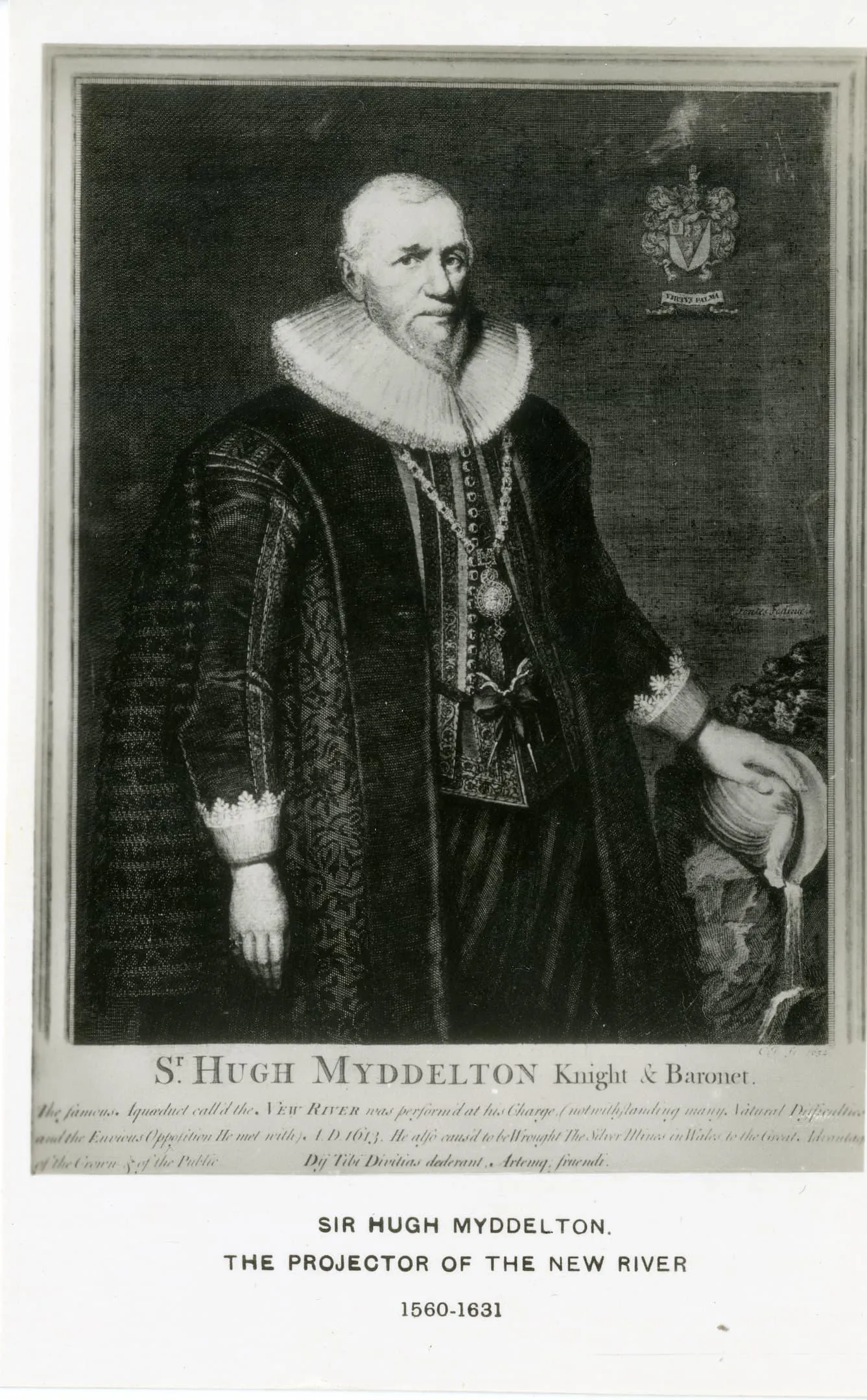
Often described, with some irony, as “neither new nor a river,” it is also sometimes mistakenly referred to as a canal. In fact, it was never intended for navigation and has never functioned as such; rather, it is a carefully engineered aqueduct designed to carry water by gravity. It continues to form an important part of London’s water supply infrastructure.
Origins and Early Water Supply
Early water provision in the City of London relied directly on wells, streams, and the Thames. However, as early as 1236, the growing population placed increasing pressure on these sources, and works began to bring fresh water into the city from external springs. Water supplied through pipes and conduits was freely available for domestic use, although commercial use was taxed. The system was managed by wardens or keepers, funded through local taxation, and on special civic occasions—such as coronations—the conduits were (famously) said to run with wine.
The idea of bringing water from more distant sources continued to develop over the following centuries and during the sixteenth century, a number of schemes were proposed to address the inadequacy and pollution of local supplies.
Construction and the Rise of Commercial Water Supply
Around 1600, Captain Edmund Colthurst devised a more practical plan to convey water from the Chadwell and Amwell Springs in Hertfordshire but was unable to further the project himself due to financial issues. With royal backing secured from King James I in 1604, the project was advanced under parliamentary authority and as one the first joint-stock utility companies and construction of the New River was subsequently undertaken by Sir Hugh Myddelton, a Welsh goldsmith, merchant and self-trained engineer when he took charge of the New River Company in 1609.
The chosen route was carefully surveyed to follow the natural contours of the land, maintaining a shallow, consistent gradient that allowed water to flow from the natural springs near Ware in Hertfordshire entirely by gravity over some 38–42 miles to its point of termination at the Commandery Mantles in Clerkenwell, near Sadler’s Wells, where ponds and a cistern house were constructed. This part became known as New River Head and water was distributed from it across London via a network of pipes. The enterprise was formalised with the incorporation of the New River Company in 1619 (building on its earlier operational beginnings in 1612).
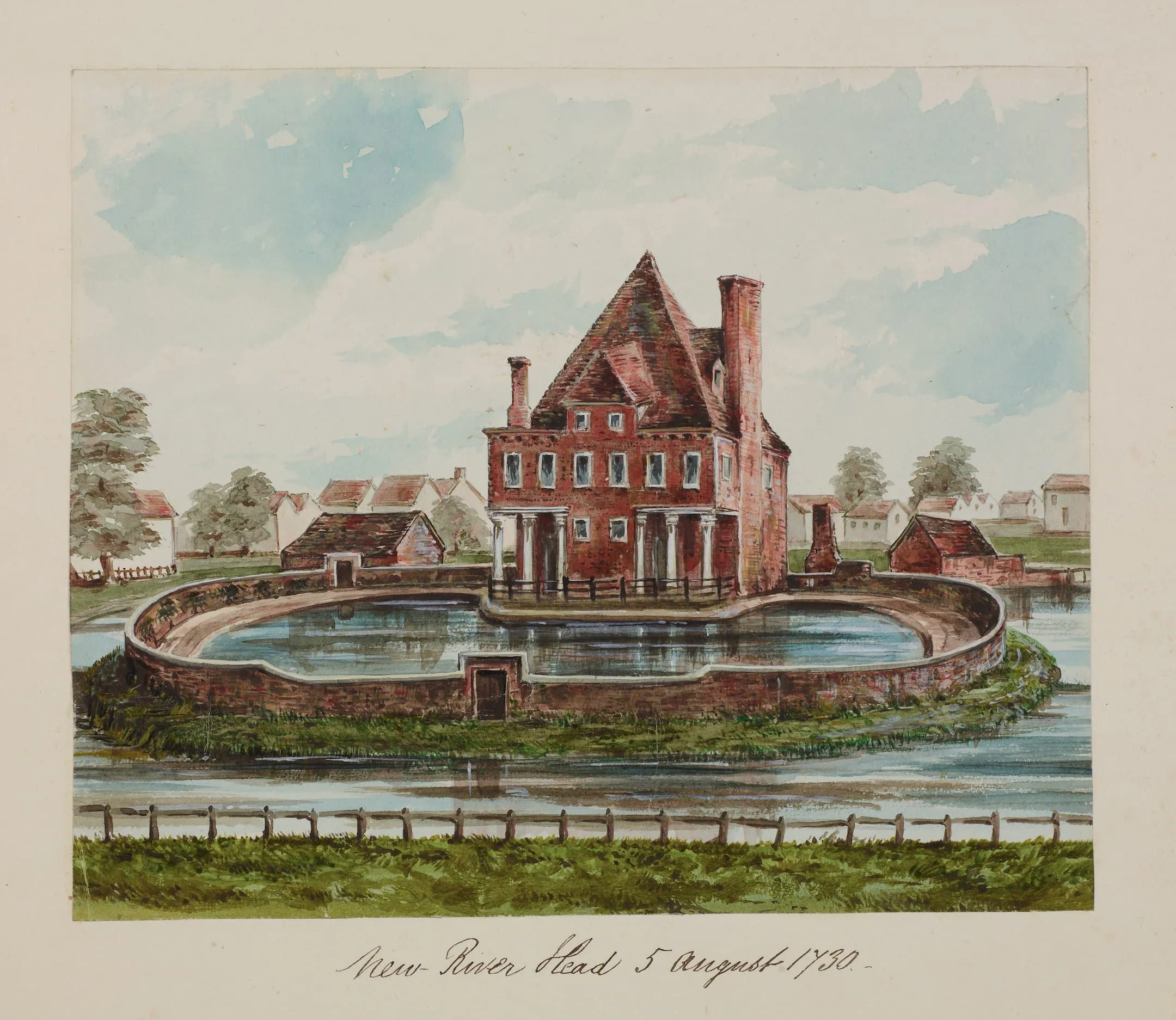
The establishment of the New River Company marked a broader shift from publicly accessible water towards a commercialised (and usually profitable) system of supply. It formed part of a growing network of private water companies including:
- London Bridge Waterworks (founded in 1581)
- Chelsea Waterworks Company (1723)
- Southwark Water Company (1760)
- Lambeth Water Works Company (1785)
- Vauxhall Water Company (1805)
- West Middlesex Waterworks Company (1806)
- East London Waterworks Company (1807)
- Kent Waterworks Company (1809)
- Grand Junction Waterworks Company (1811)
Technological developments accompanied this expansion: in 1746, the Chelsea Waterworks Company laid the first iron water main, replacing earlier wooden and lead pipes.
Early Operation and Expansion
The New River system quickly required adaptation. By 1660, supply from the original Hertfordshire springs had been supplemented by abstraction from the River Lea below Hertford.
At New River Head, infrastructure was expanded to improve pressure and distribution. In 1709, an Upper Pond was constructed at Claremont Square. Water was initially raised to this higher reservoir by windmill, later by horse-powered machinery, and by 1767 by steam engine—reflecting early industrial innovation.
The New River Company also expanded through acquisition, purchasing other waterworks, including those at Durham Yard, St Marylebone, and Wapping, as well as the York Buildings and London Bridge Water Works. Although some of these drew water from the Thames, routine abstraction from the river was eventually abandoned, remaining only as an emergency measure into the mid-nineteenth century.
Water Quality, Public Health, and Reform
By the early nineteenth century, increasing concern emerged over the quality of London’s water supply, much of which was heavily polluted. From the 1820s onwards, criticism intensified, particularly as London experienced repeated cholera outbreaks. Although the Chelsea Waterworks Company introduced sand filtration, many other companies were slow to adopt such improvements.
The Poor Law Commissioners’ Sanitary Report of 1842 highlighted the appalling conditions endured by the urban poor and recommended a constant supply of clean water to every household. In 1849, Dr John Snow demonstrated that cholera was water-borne, providing crucial impetus for reform.
Despite growing pressure, progress was slow: many Members of Parliament held financial interests in water companies, and legislation was often delayed, diluted, or poorly enforced.
Nineteenth-Century Transformation
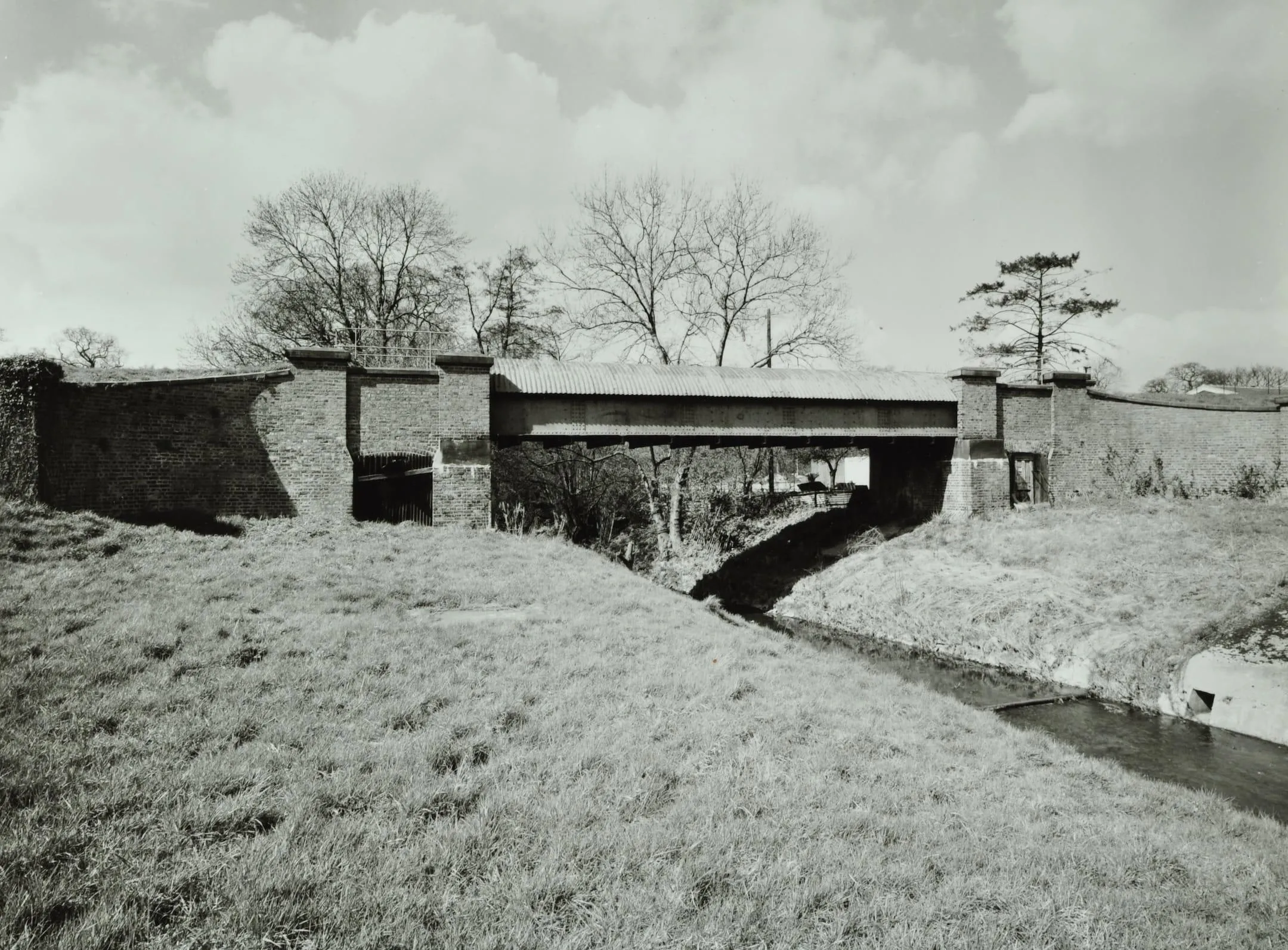
During the nineteenth century, the New River underwent extensive modification to meet the demands of a rapidly expanding population and the increasing need to safeguard public health. Its winding course was straightened in places through the construction of aqueducts, tunnels, and pipes, improving efficiency and capacity.
Reservoirs were built at Stoke Newington (1831 and 1833) and Cheshunt (1837), while the Metropolis Water Act of 1852 required filtration and covered storage of domestic water supplies. In response, the New River Company constructed filtration works at New River Head, Stoke Newington, and Hornsey.
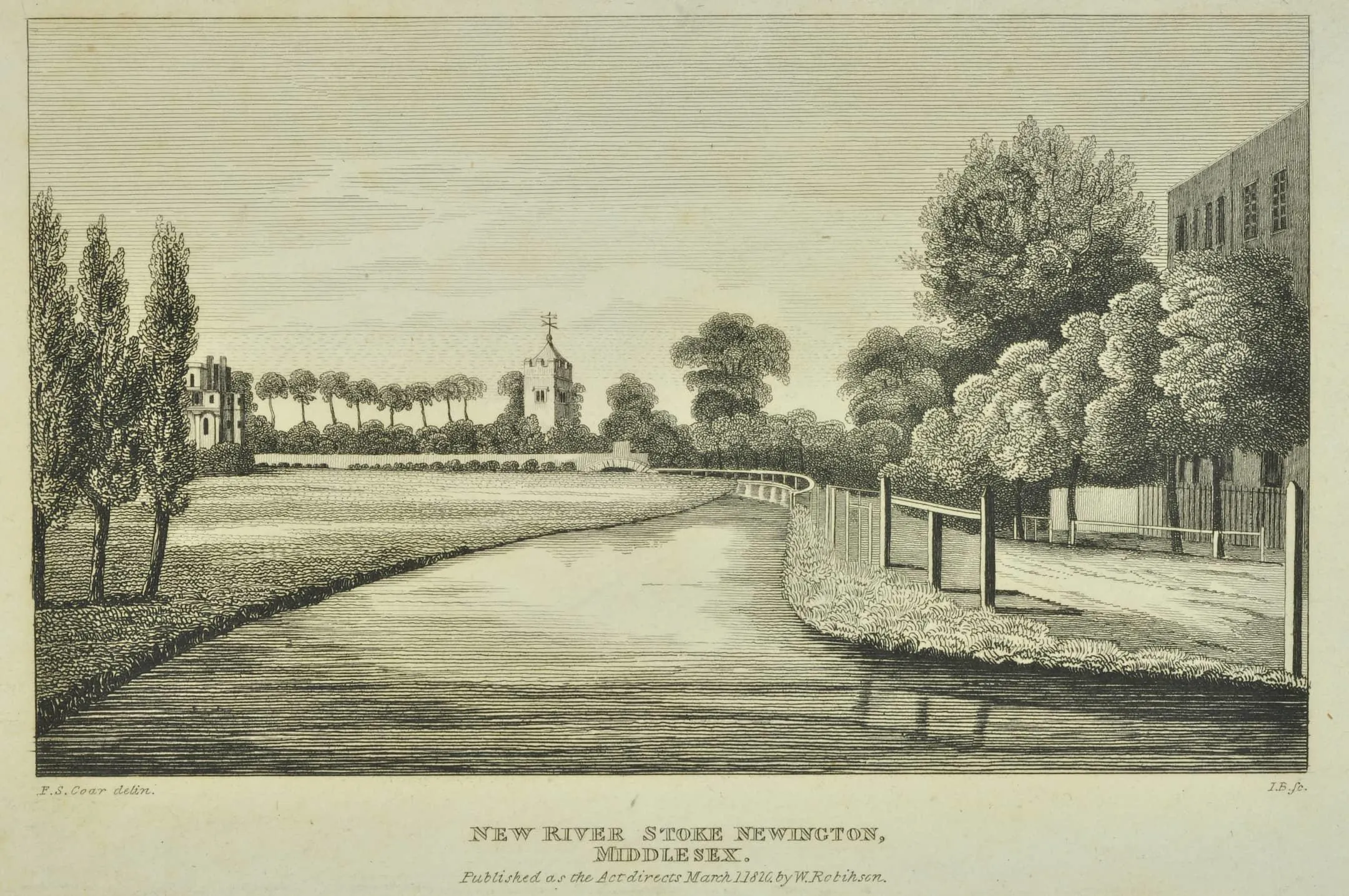
Additional supply was secured through wells sunk along the river’s course, powered by steam pumps. By the late nineteenth century, large-scale developments such as the reservoirs at Staines and pumping works at Kempton Park reflected the increasing scale and complexity of London’s water infrastructure.
Public Control and the Metropolitan Water Board
Meaningful reform came with the Metropolis Water Act of 1902, which led to the creation of the Metropolitan Water Board (MWB). In 1904, the Board took over the capital’s principal private water companies, including the New River Company, marking the transition from fragmented private enterprise to unified public control.
The MWB established its headquarters at New River Head on Rosebery Avenue, Clerkenwell. The building, constructed from 1915 to designs by Herbert Austen Hall, incorporated architectural elements from the earlier Water House of 1693, creating a tangible link between early modern infrastructure and twentieth-century civic administration. The structure was later designated Grade II* listed in 1950.
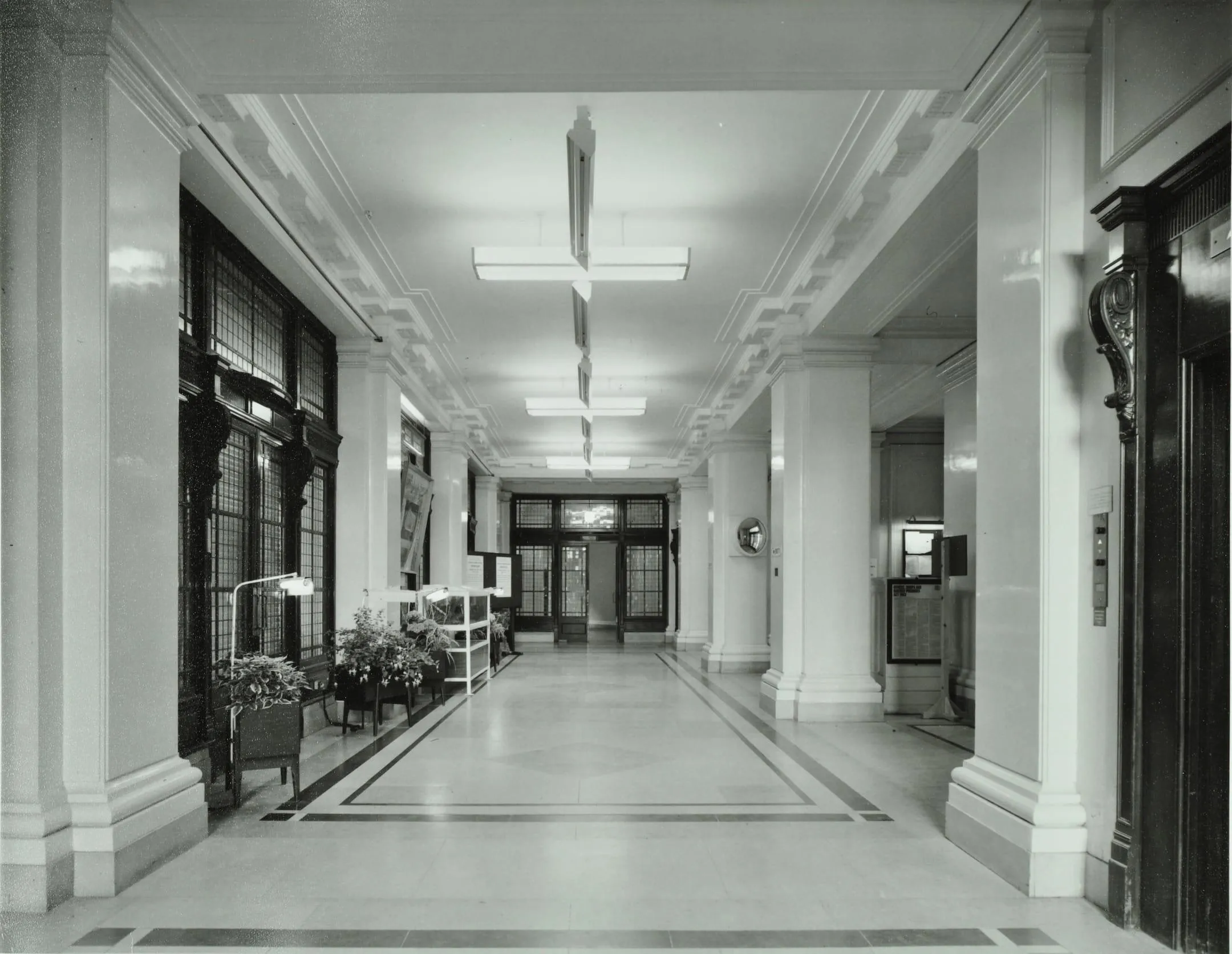
The Board itself comprised 66 members drawn from across London governance: the London County Council, Metropolitan Borough Councils, the City Corporation, and authorities beyond the central area. From 1907 onwards, it embarked on an ambitious programme of reservoir and waterworks construction.
In 1974, responsibility for London’s water supply passed from the Metropolitan Water Board to the Thames Water Authority. This transition also consolidated control over sewerage infrastructure, bringing together systems previously managed by bodies such as the Metropolitan Board of Works, the London County Council, and the Greater London Council.
Landscape and Present Character
Today, the New River forms a distinctive corridor linking Hertfordshire with London, crossing historic counties and modern boroughs, and offering a unique way of navigating semi-rural, urban, and suburban landscapes.
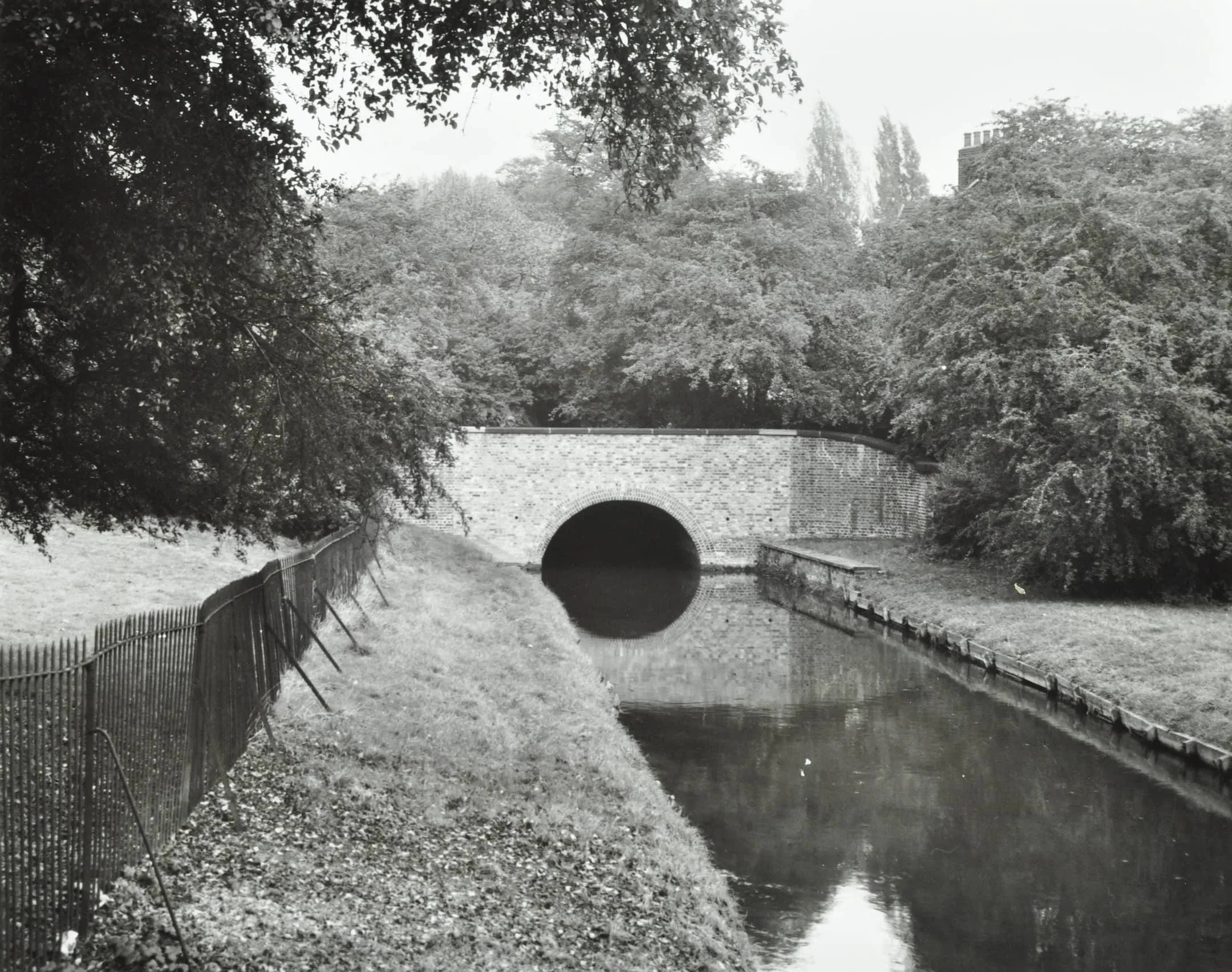
The sections of the New River have been culverted, piped, or diverted underground should not be considered ‘lost’ as many are still integral to the main supply and treatment works, and can certainly be traced through the maps, plans and engineering drawings allowing the historic route to be reconstructed even where it is no longer visible on the open ground.
Today, and perhaps more than ever, in addition to the obvious role it has in helping to supply London with clean water, the New River is a important environmental and cultural asset, supporting wildlife and preserving layers of historic infrastructure alongside more recent development. Public access today varies along its route. Some sections are open under permissive path arrangements, providing walking and cycling routes, while others remain closed due to operational, safety or other considerations. In places, arrangements have not been without controversy, with ongoing concerns relating to privacy, maintenance, public safety, anti-social behaviour, and the complexities of shared use.
Archival Context: The New River at The London Archives
The history of the New River is extensively documented within the holdings of The London Archives, where records of the New River Company and its successor bodies are preserved as part of the Thames Water Predecessors (reference: ACC/2558).
Deposited in 1988, this collection includes corporate records, legal and parliamentary papers, financial accounts, engineering drawings, and documentation relating to water supply and distribution. It reflects a complex custodial history, including significant losses caused by the fire at the New River Office in Bridewell Precinct in 1769, after which surviving material was recovered and later catalogued. More recent Thames Water records (post 1974) are believed to remain in the care of Thames Water. A large number of images can be found on the Thames Water Archives website.
We also hold related material from the New River Action Group (reference: LMA/4471), providing a more recent, communities-based perspective on the management and use of the river.
Beyond manuscript records, TLA cares for hundreds of prints, drawings, plans, and photographs relating to the New River, many available to view and purchase through the London Picture Archive, as well as a wide range of published works in the library collections covering the New River and London’s waterways more broadly.
Search the London Picture ArchiveRelated sources
This article on the New River draws on archival material held at TLA for its technical details and historical overview. Sources include a pamphlet titled, 'The History of the New River published by Thames Water' (reference: LMA/4471/D/04/002), as well as TLA’s own catalogues and research guides.
Discover related material on the New River Head and drainage plans if you are researching house history:
New River Head
New River Company RecordsDrainage applications
Drainage application research guideHouse History
House History Research GuidePersonal Reflection by Meera, Archives Officer
My relationship with the New River is both professional and personal. Through my work at The London Archives, I have developed a broad overview of, and long-standing interest in London’s waterworks infrastructure through handling a variety of enquiries. These have included queries about sewers, water supply, canal networks, lost waterways and the River Thames, as well as undertaking retrospective catalogue enhancement work on other water-related collections, including those of the Commissions of Sewers.
Within this context, the New River Company records held here constitute a particularly rich resource, documenting some 400 years of a vitally important aspect of London’s infrastructure and the wellbeing of its population and yet, they remain comparatively underused - largely due to the scale and scope of the collection, but also due to the way the collection was catalogued some decades ago. The records actually offer significant potential for further research and could be much more fully explored and so I hope that reflections such as this might encourage some further research into these fascinating documents.
Family connections
Beyond the professional engagement, my connection to the New River is also lived—daily and over generations. My family has resided near the New River since the First World War, with my daughter now representing the fifth generation to grow up alongside it. I was married at Ware, where the New River begins, and I work at The London Archives, close to its historic terminus at New River Head.
It is the first thing I see when I open my curtains, and I have walked its banks over many years—dog walking, toddler walking, litter-picking; sometimes simply wandering. Through this sustained familiarity, I have developed an intimate knowledge of its flora, fauna and wildlife, and of some of the people and communities who share it.
All of this makes me something of an unapologetic New River and a waterworks enthusiast. But it is hard not to feel a deep sense of admiration for both the beauty of its execution as an extraordinary feat of practical engineering, and the way in which it flows across London’s physical and emotional landscapes, becoming part of the city’s very life force.
For me, the New River exists simultaneously as archive and lived landscape: a continuous presence that connects personal and professional experience with the wider history of London.