

Robert Hooke
Robert Hooke and restoration science
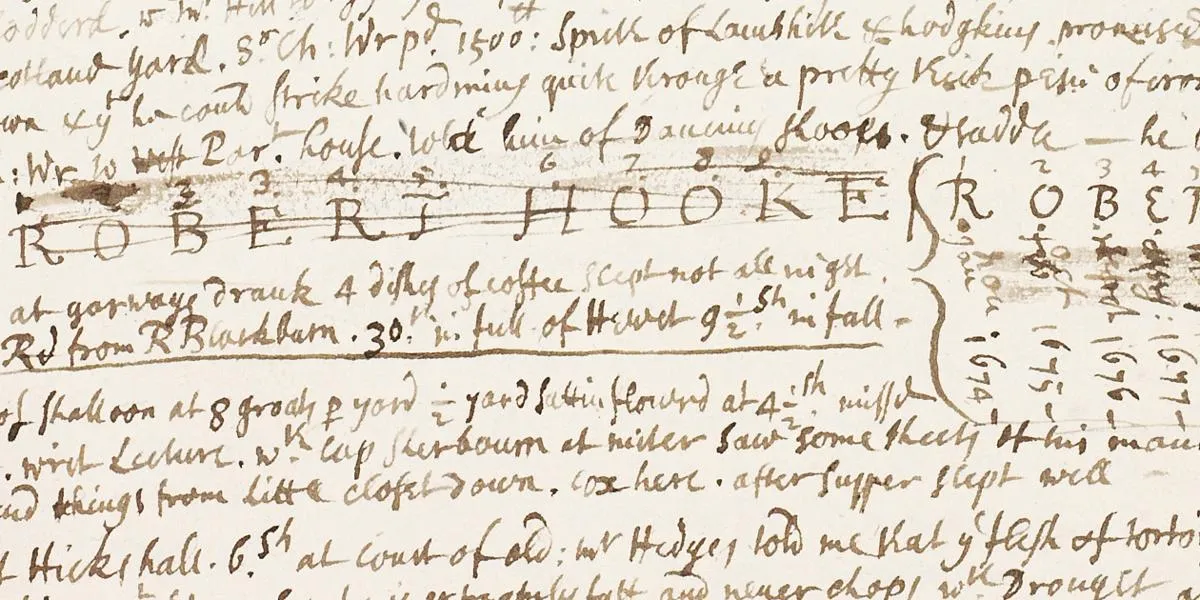
We take a closer look at Robert Hooke (1635-1703) whose major contribution to science and architecture is clearly revealed in his diary (reference: CLC/495/MS01758). It also chronicles other aspects of his daily life in London from his work as City Surveyor to evenings out in City taverns and coffee-houses.
For nearly 300 years Robert Hooke was the forgotten man of English science, eclipsed by brighter stars like Isaac Newton and Christopher Wren, but more recently his achievements have come to be better recognised. He is remembered for Hooke's Law, the theory of elasticity familiar from school Physics, but that is only one of his many contributions to knowledge.
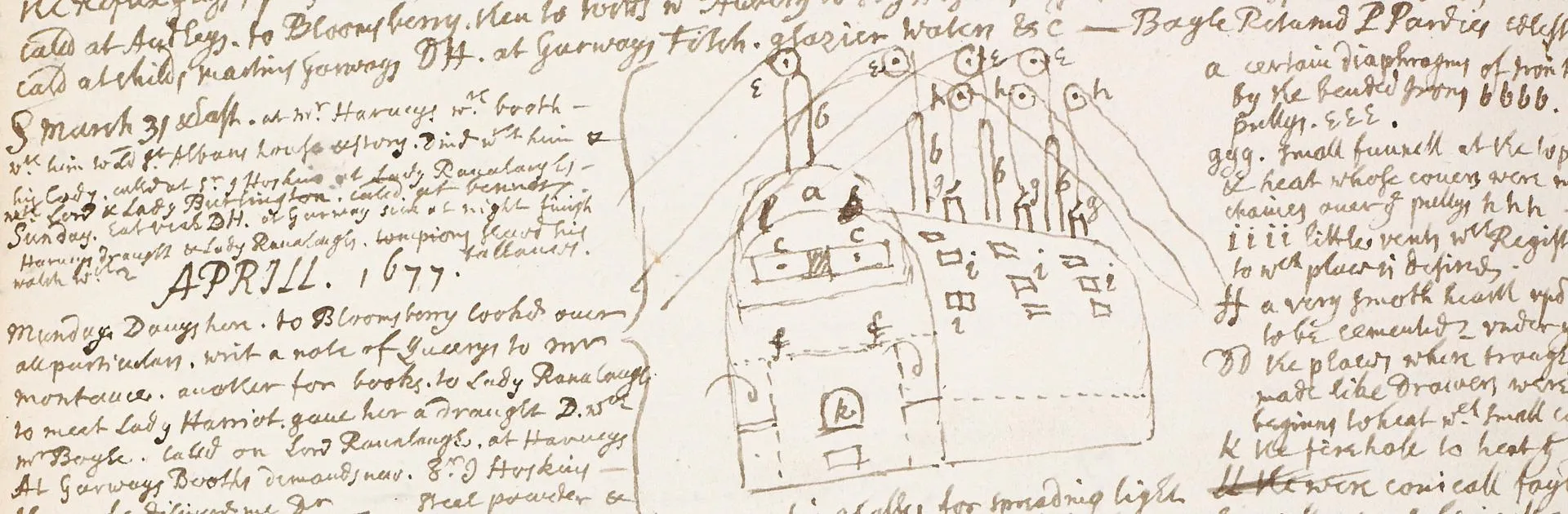
Hooke published the first fully illustrated scientific textbook, 'Micrographia' (1665), which introduced the microscope as an indispensable instrument and showed the wonders of cellular structure. Samuel Pepys recorded in his diary his fascination with this book, sitting up late reading it and wondering at the fantastic illustrations. He experimented widely and invented many devices, including the spring balance (which he sketched in his diary).
Born in the Isle of Wight in 1635, Hooke studied at Oxford before moving to London in the early 1660s. Shortly afterwards, he became curator to the Royal Society and Gresham Professor of Geometry and was hired by the City of London as a surveyor and architect.
Working with Christopher Wren
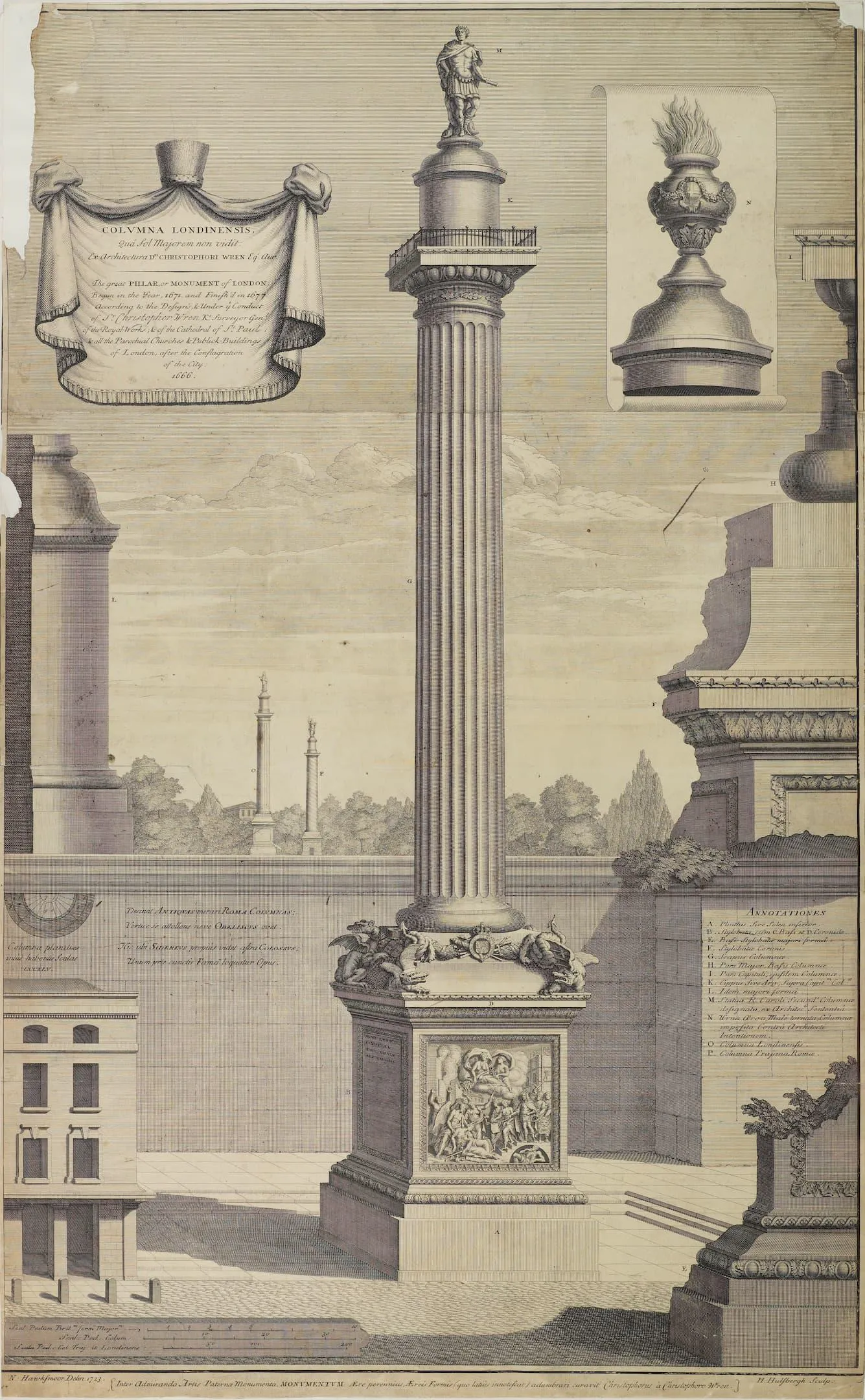
Working with Wren after the Great Fire in 1666, he was closely involved in the design of many buildings and new street layouts, including Bethlehem Hospital (Bedlam), the Monument, the Royal College of Physicians and numerous City churches.
Hooke's contribution to science and architecture is clearly revealed in his diary (CLC/495/MS01758), purchased by the City in 1891, along with some other papers of his (CLC/495/MS01757), as part of the sale of Moor Hall, Harlow. They had previously been preserved by George Scott, an antiquary and Fellow of the Royal Society.
The diary runs from 10 March 1672 and 16 May 1683, and shows Hooke's scientific thoughts and experiments rubbing up against his work as City Surveyor. The diary also describes his evenings out in City taverns and coffee-houses, his diet, his physical symptoms and mental states and the (experimental and dangerous) medicines/drugs he took. He had a spine deformity, and had a series of minor ailments, which may have contributed to his reputation for irascibility.
Not an easy read
Unlike his published work and unlike Pepys' diary, the diary is not an easy read. It is the memorandum book of a secretive man in perpetual hurry. Hooke's use of symbols in the diary is evidence of his drive to express science in a more rational and internationally understandable way, but also of his haste and secrecy (his private life is hidden from immediate view, again, unlike Pepys - by the use of the symbol to denote sexual intercourse). The Diary has been used extensively in recent years as a major source for the biographies and other works celebrating the tercentenary of Hooke's death in 2003 and is recognised in the UNESCO Memory of the World Register.
Read Robert Hooke's Diary