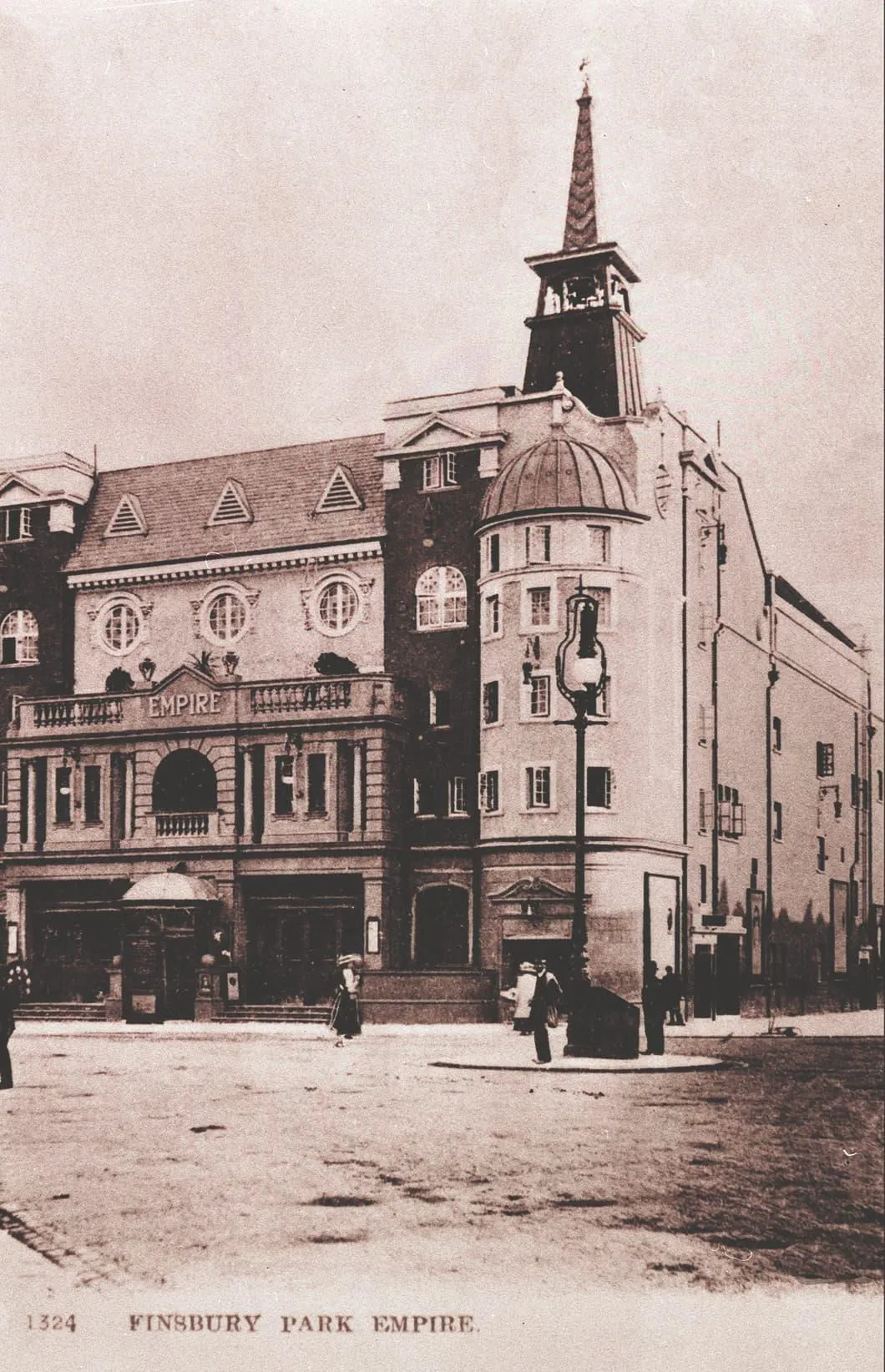
The Finsbury Park Empire
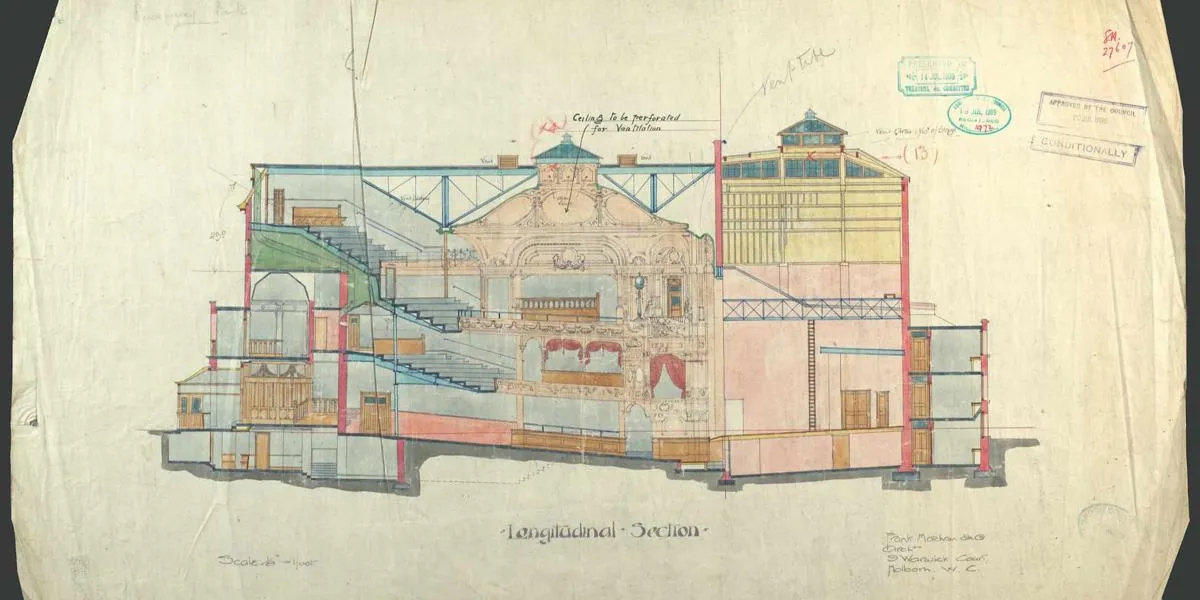
The Finsbury Park Empire:
The Finsbury Park Empire in North London was one of hundreds of purpose-built variety theatres that sprang up and flourished across the capital during the golden age of Music Hall. Its opening night on 5 September 1910 was met with great fanfare and widespread acclaim.
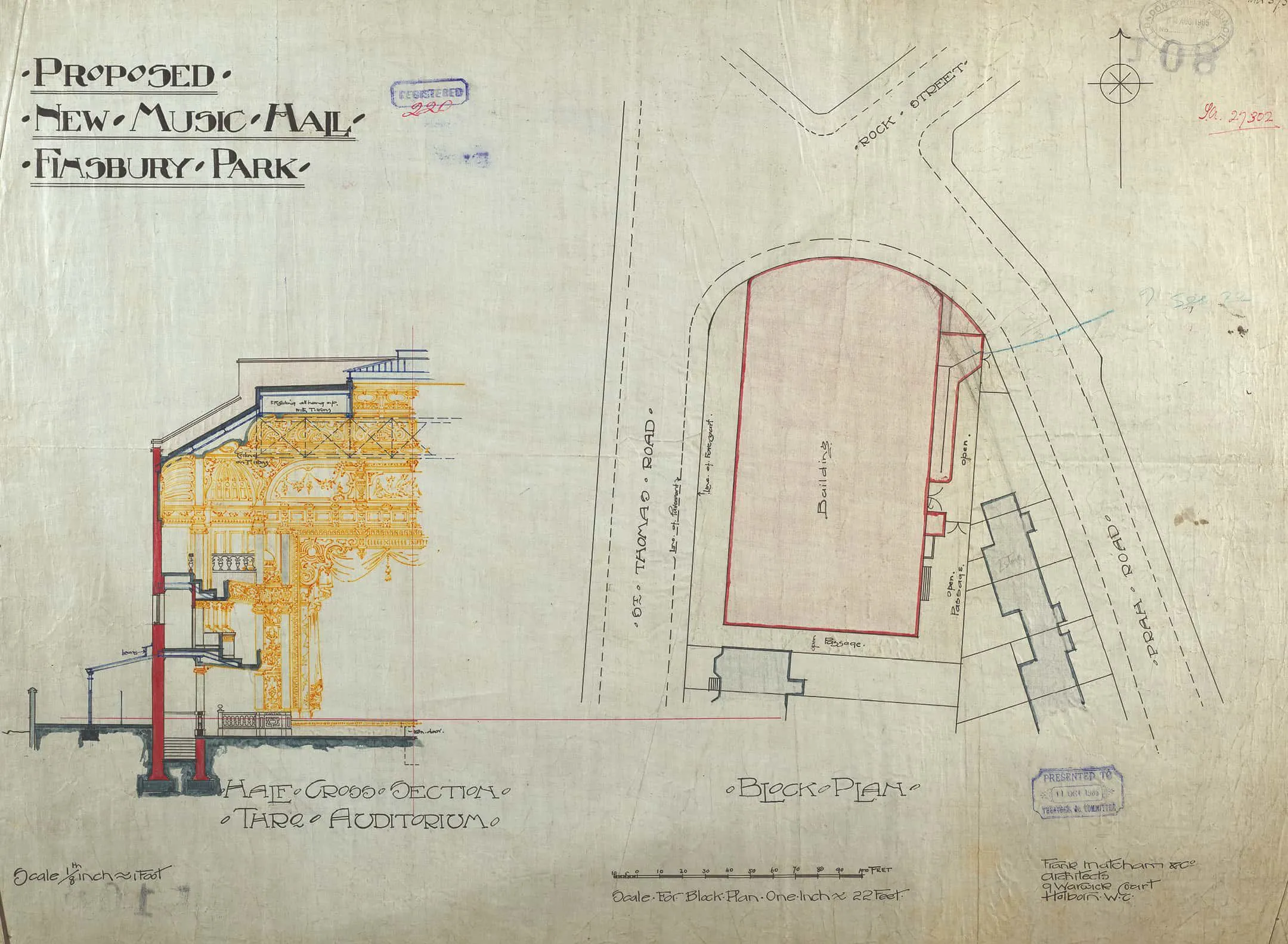
Built on the site of the former Finsbury Park Sorting Office and adjacent housing at the junction of Prah Road and St Thomas’ Road, the Empire was heralded as Moss Empire Ltd’s premier variety theatre outside the West End. Designed by the renowned theatre architect Frank Matcham and managed by Oswald Stoll, the building embodied the grandeur and ambition of early twentieth century popular entertainment.
Years in the Making
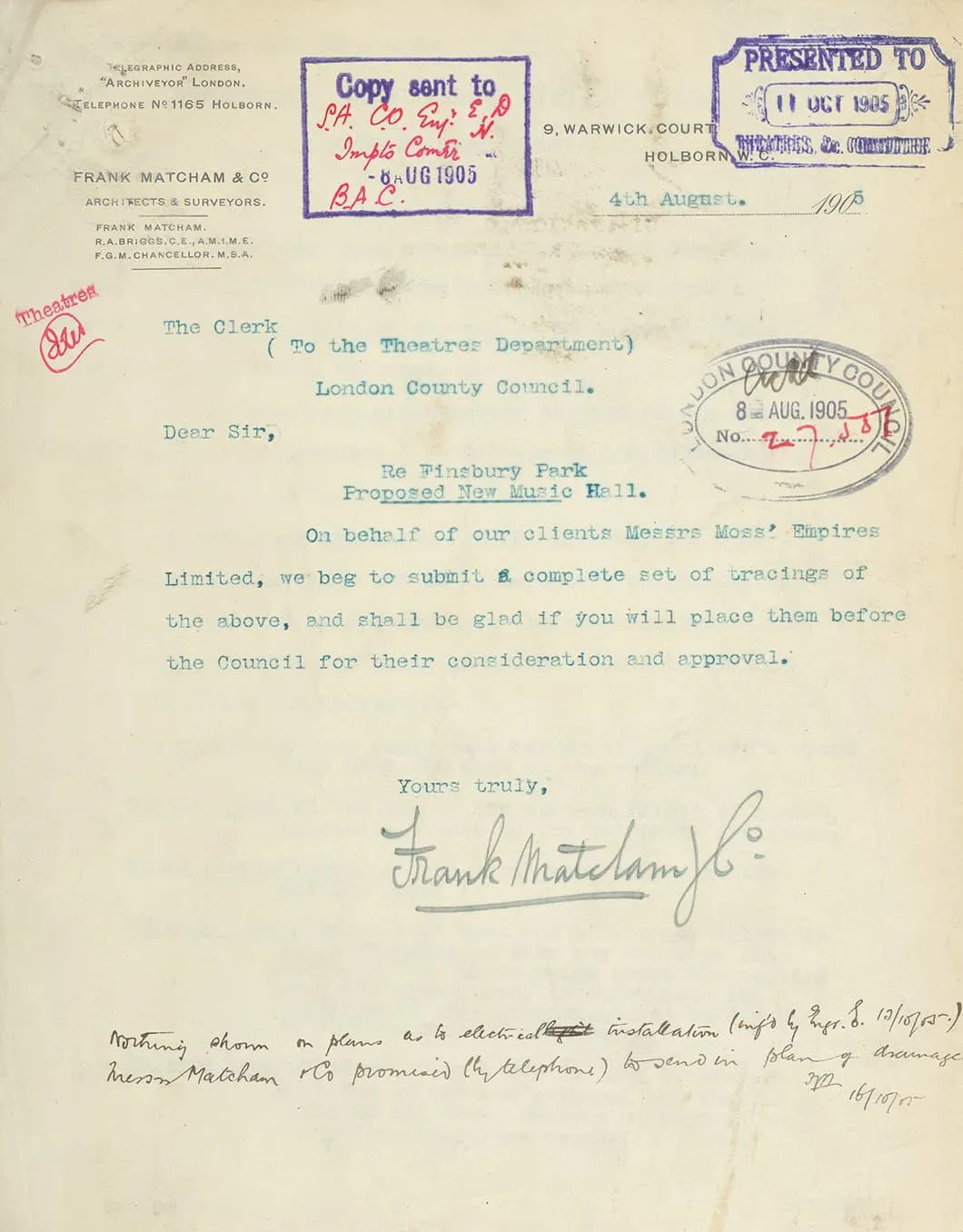
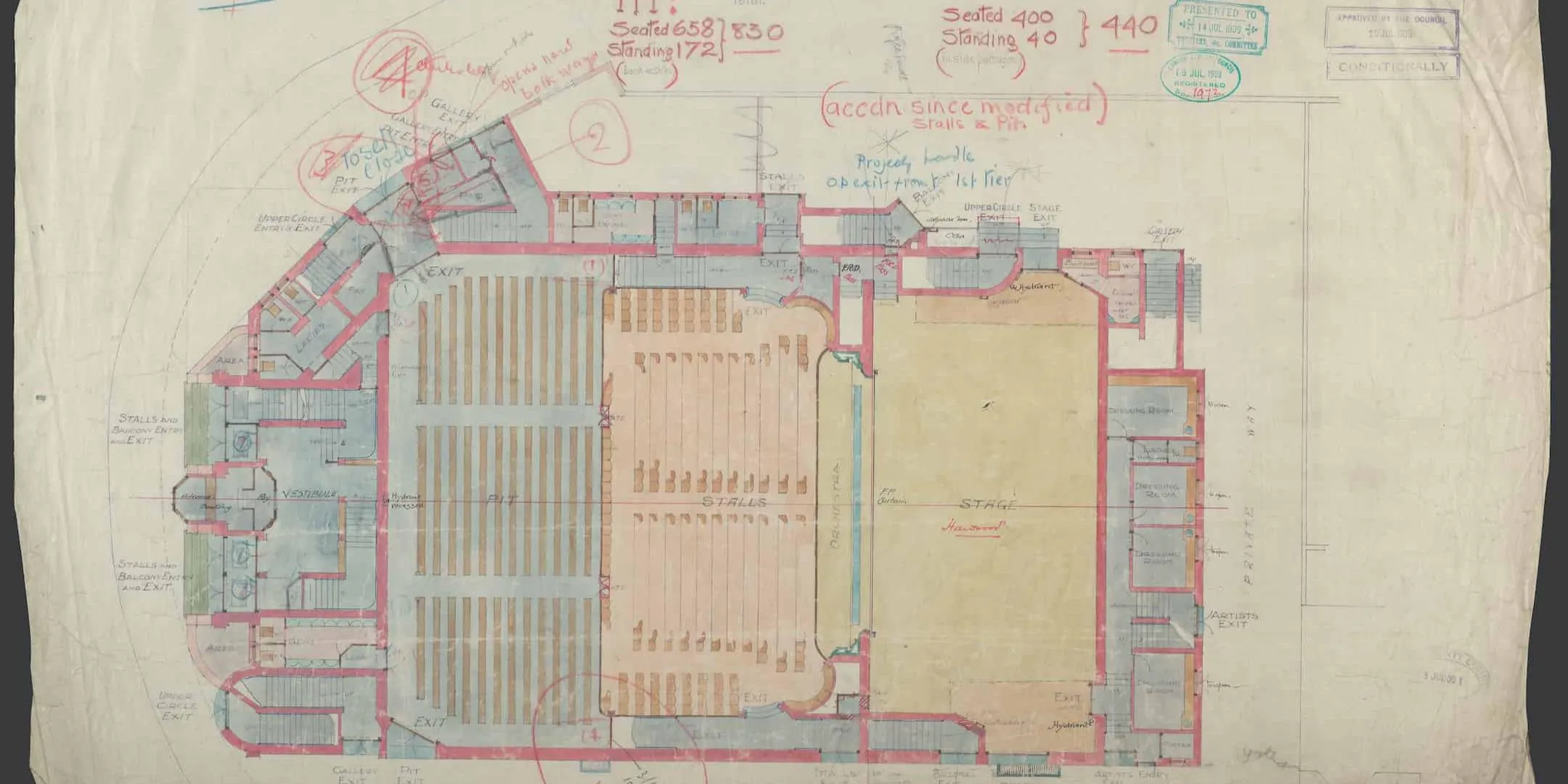
Despite its impressive pedigree, the Empire’s journey from proposal to opening spanned nearly five years. Initial plans were met with objections — mostly from concerned neighbours and LCC personnel tasked with ensuring full compliance with health and safety requirements — and underwent multiple revisions before finally receiving approval from the Theatre and Music Hall Committee.
A Stage for Stars
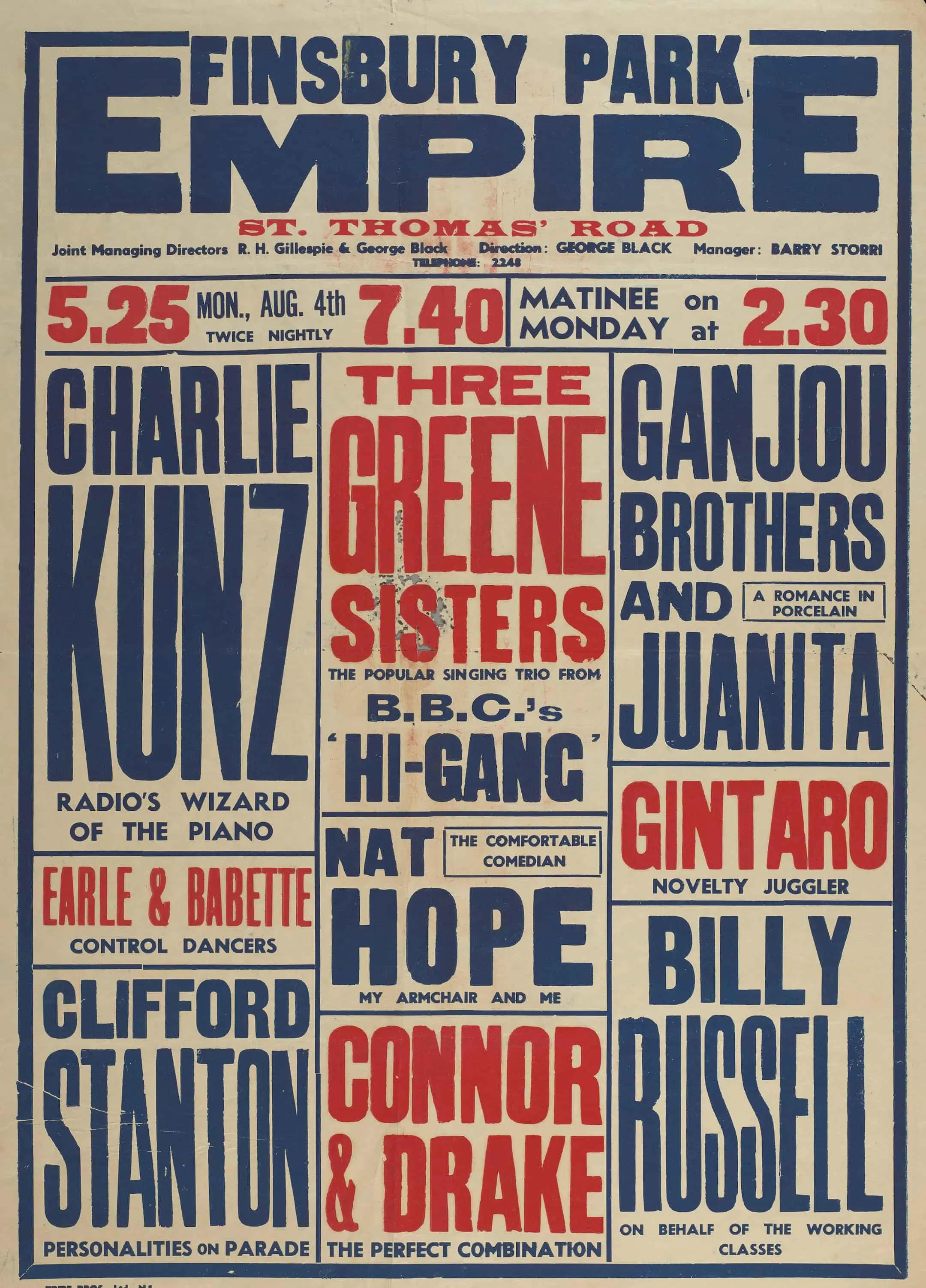
Once open, the Empire enjoyed many years as one of London’s most popular and well-regarded music halls — a vibrant hub for celebrated performers, attracting the finest of British and international variety talent.
What archives can tell us
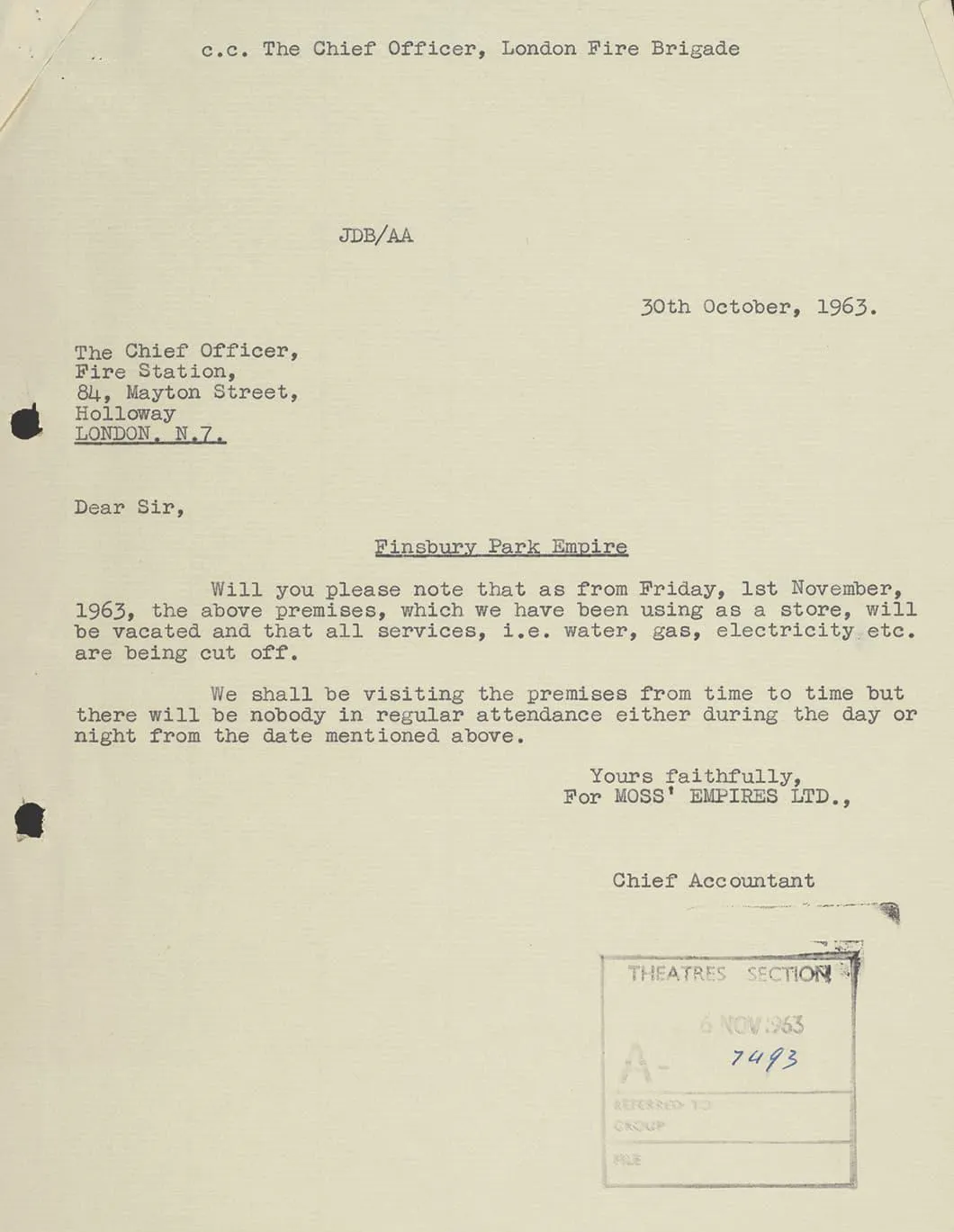
Curated primarily from the London County Council Presented Papers and Plans, the archives relating to the Finsbury Park Empire showcase not only the architectural brilliance and scale of the building, but also its relatively short lifespan as a functioning music hall. Plans and designs showing hand drawn alterations in the back and forth between the architects and planning officials. Letters highlight the exact nature of what the architects and owners want to achieve against the planning regulations and other considerations from the council. A letter marking the official notice of closure on 1 November 1963 underscores the ultimately time-limited nature of this form and place of entertainment.
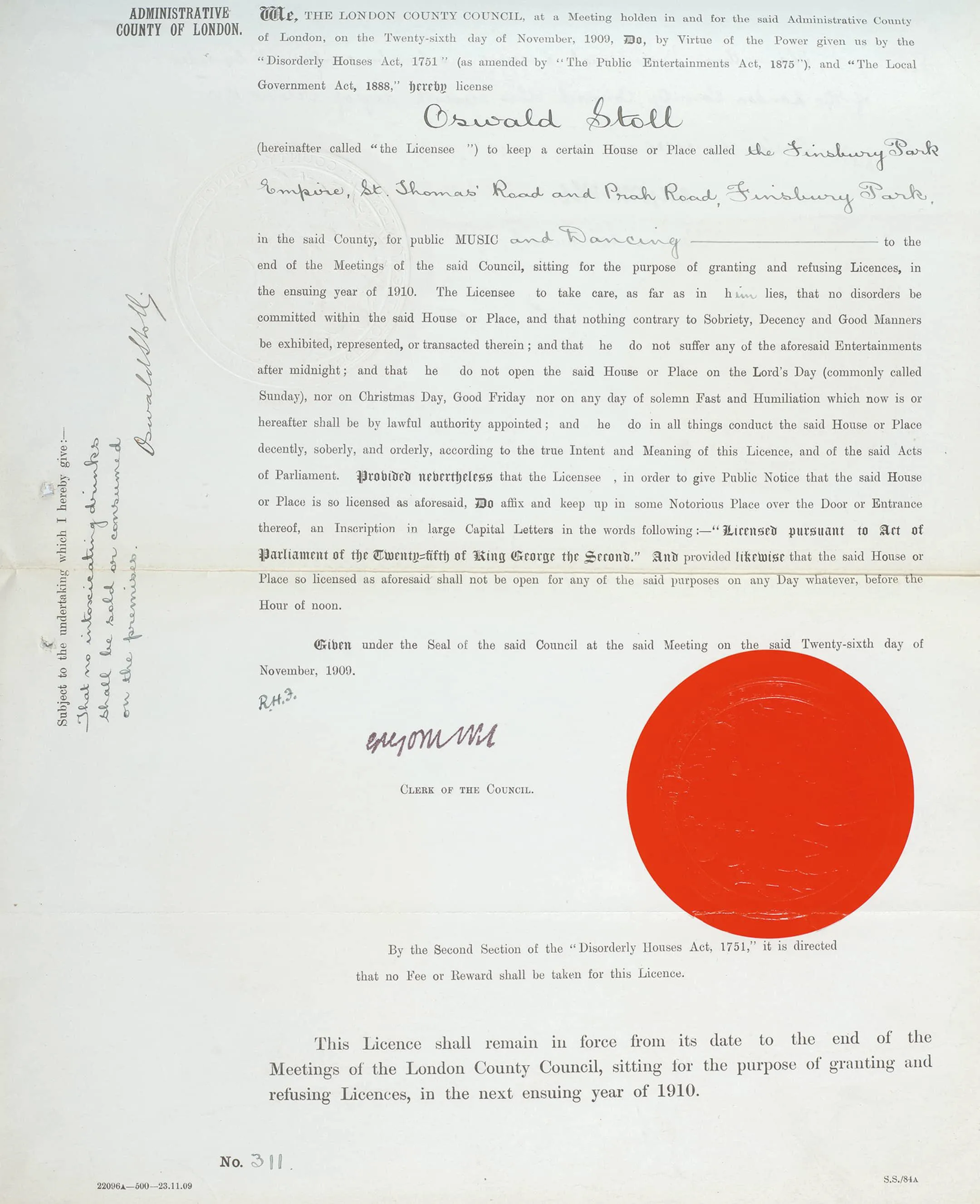
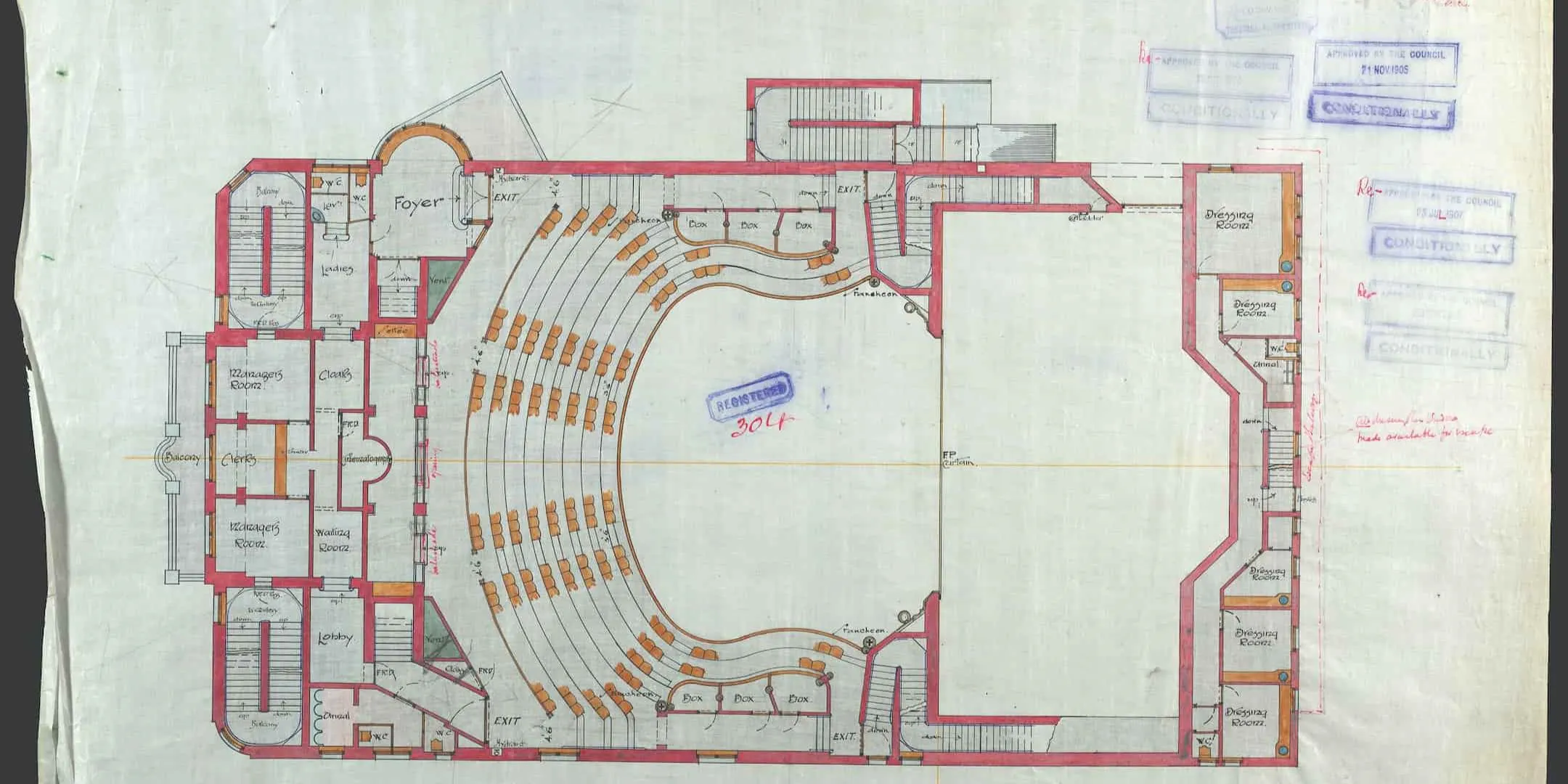
These records offer rich potential for further research. They chronicle the Empire’s entire lifecycle — from construction costs and the technical challenges of staging multiple, often elaborate performances to twice-nightly audiences of over 2,000, to the physical adaptations made for cinematic projection, and its role as the “nursery of the London Palladium”, where shows were trialled before touring nationally.
A Changing Role and Final Curtain
The Papers also document the changing nature of music hall performance, and how the Empire later served as a venue for religious services and occasional productions. Eventually, it was repurposed as a rehearsal space and warehouse for Stoll Moss Empires’ stage props and scenery.
Declining audience numbers and increasing pressures from land value and urban development led to discussions around compulsory purchase of the Finsbury Park Empire for housing — culminating in its demolition in 1965 and closing the final chapter on a once-thriving cultural landmark.
Today, an Islington People’s Plaque marks the site where the Finsbury Park Empire once stood.