

Minnie Pheby: a Victorian Lady Burglar
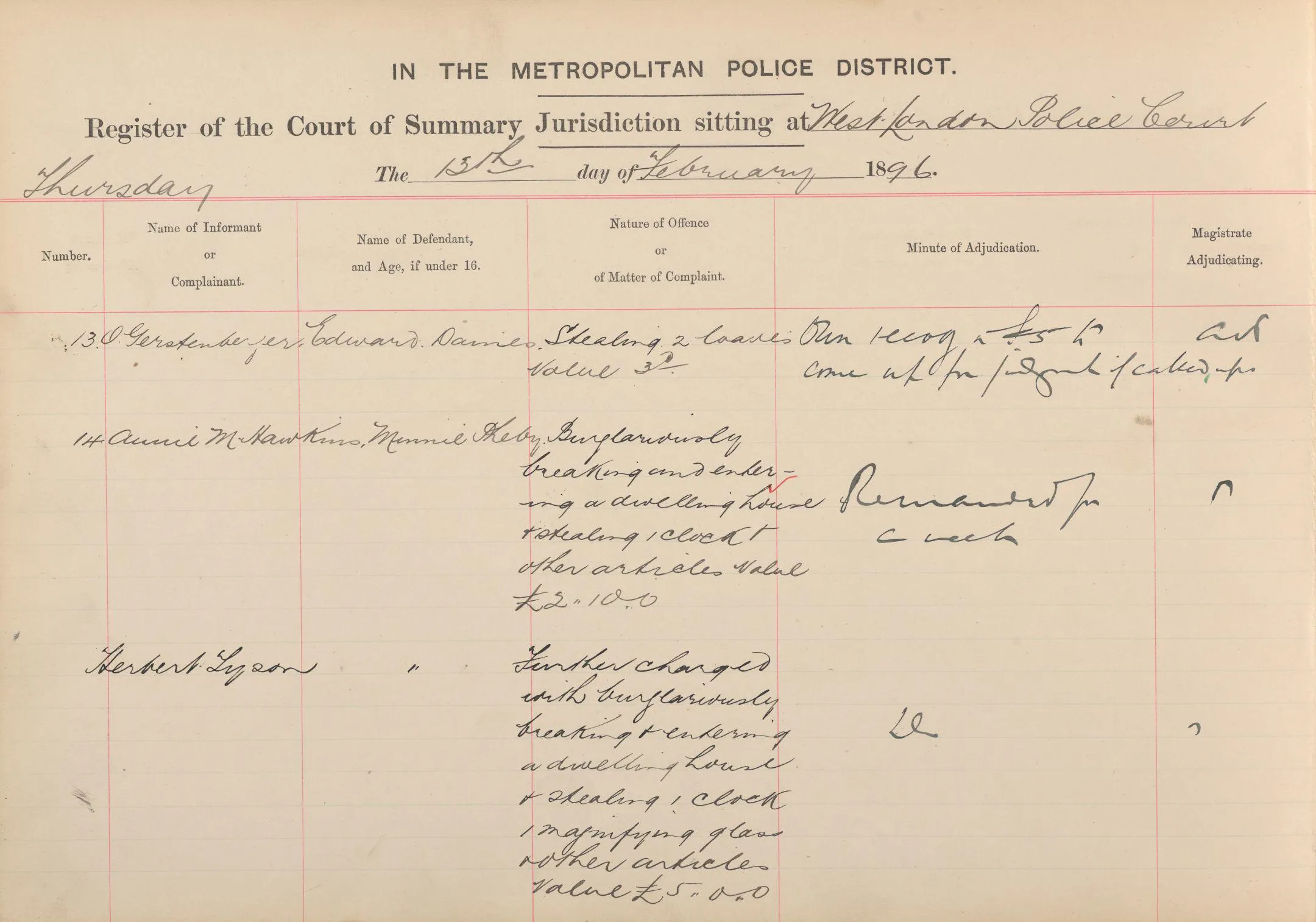
On Thursday 13 February 1896, a burglary in Askew Road in Shepherd’s Bush was discovered by Detective Serjeant Knott. The burglar, the 20-year-old Minnie Pheby, had managed to break in through a small window and was in the process of stealing items from the house.
After attempting to flee, she was arrested and indicted at West London Police Court for breaking and entering, and attempting to steal goods worth £2 and 10 shillings. Newspapers noted her crimes as ‘remarkable’. Not only was she able to break open doors and windows with strength, but also fit through gaps as small as 8 inches, all with a calm demeanour. Most notably of all, she was a ‘lady burglar’ or ‘burglaress’, a rare occurrence in late Victorian society. In fact, of the 95 burglaries that were tried at the Old Bailey in 1896, only three were by women, one of which was Minnie herself.
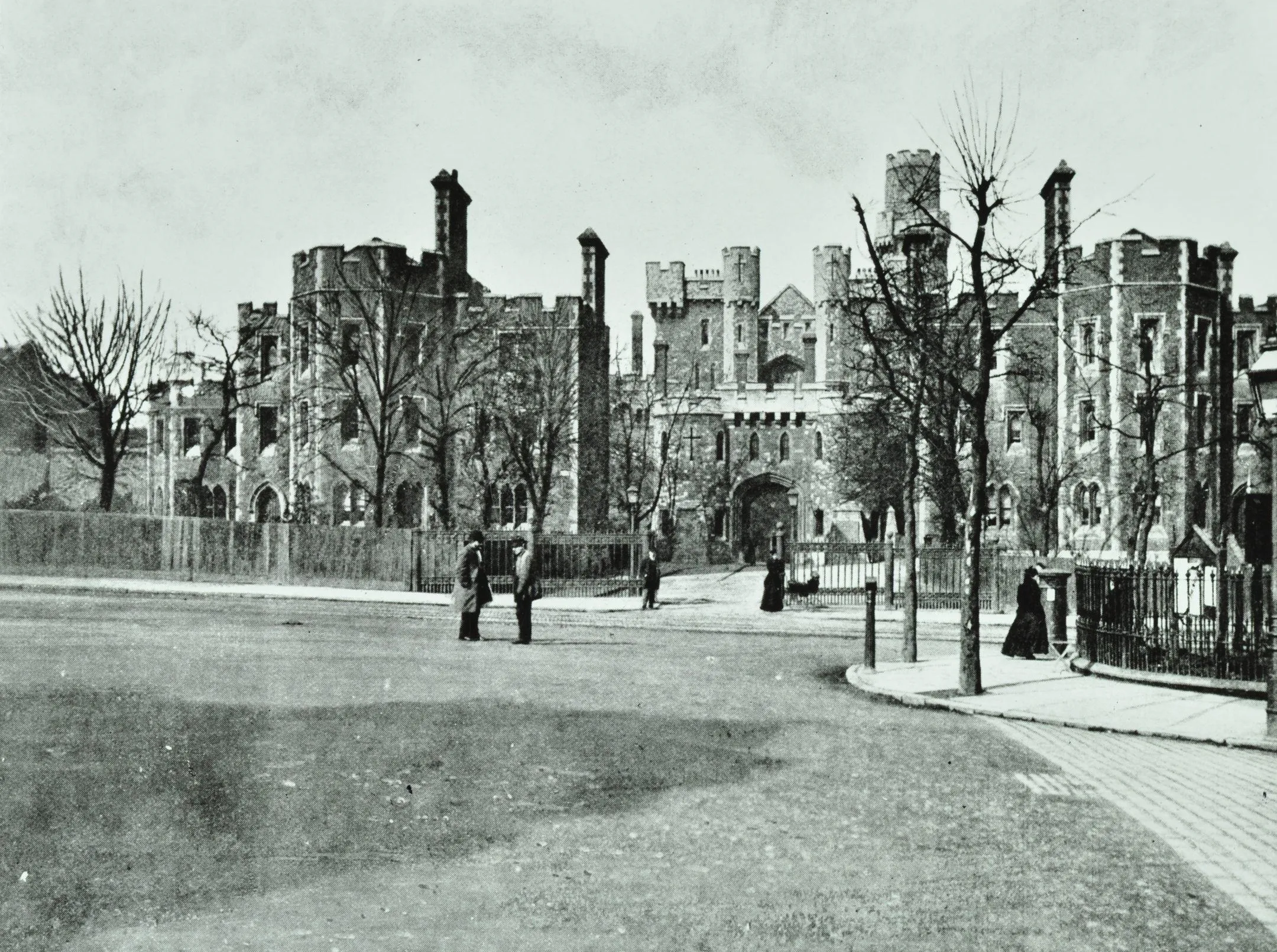
Minnie Pheby had been born in Uxbridge in 1875, but by 1891, after her father’s death and mother’s remarriage, she was living in Hammersmith with her mother, stepfather and two sisters. Contemporary newspapers reported that she had worked in a coffee shop for several years after leaving school, before working as a maid in Askew Road, where she would later go on to burgle houses. She then fell into company with another woman who her friends suspected was a bad influence, as she ran away from her employment and began squatting in a vacant house in St Stephen’s Avenue. It was from here that she committed the two burglaries that saw her first conviction in 1896, for which she was sentenced at the Old Bailey to nine months in Holloway Prison.
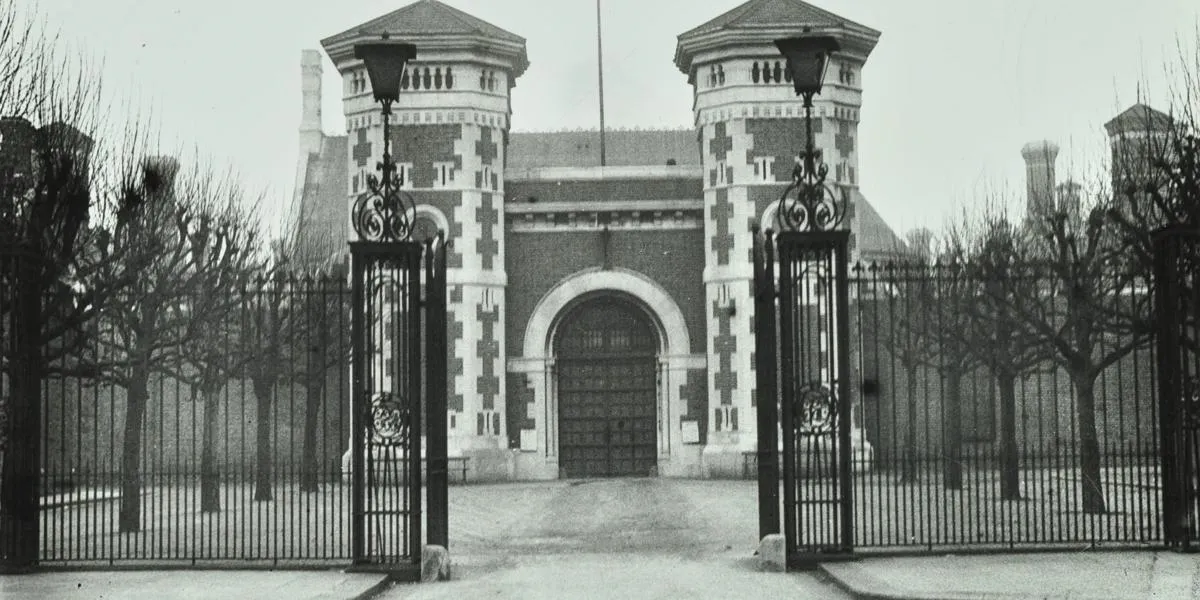
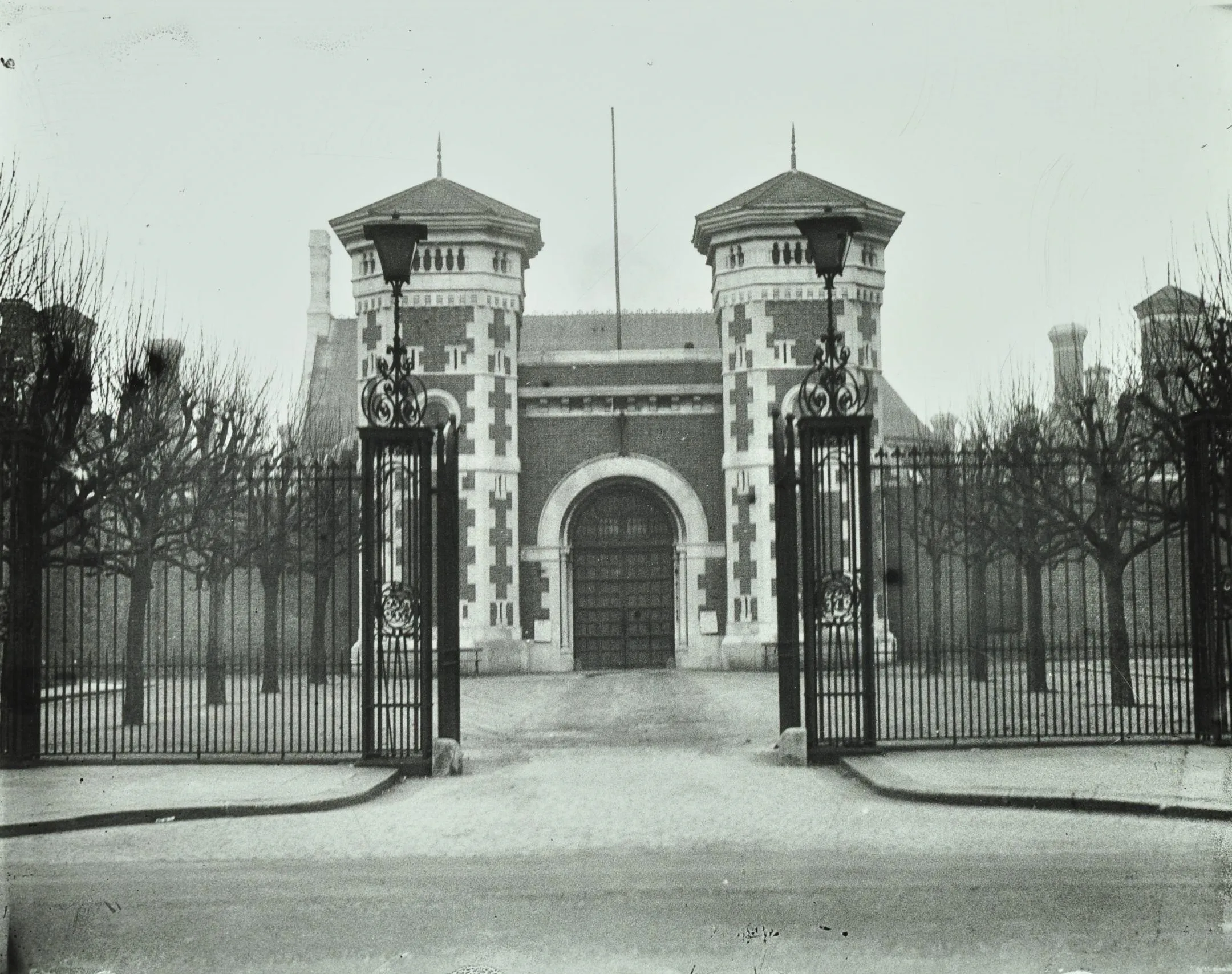
Minnie was released from Holloway Prison at the end of 1896. Her younger sister Emma met her at the gates, with Minnie saying that she had received a harsh lesson in prison, and it had served as a warning to her. However, the records show that she was charged again at West London Police Court on 18 January 1897, just weeks after her release from prison. This time she had burgled the house of a dressmaker on Paddenswick Road. It was the same Detective Sergeant Knott who reported to the scene and he immediately suspected Minnie, as the house was broken in through a small window just nine inches wide, and the burglar had left a small muddy woman’s footprint. She had also stolen belongings from both her sisters before running away from her family home. Lloyds Illustrated News noted the family had already been struggling financially, and that Minnie’s reputation had meant that her sister and stepfather were unable to find employment. While her crimes fascinated contemporary audiences, they had real world consequences for her victims.
'female burglars are somewhat of a rarity, especially of the determined character of Minnie Pheby'
Minnie was convicted to 12-months hard labour in Wormwood Scrubs at the Old Bailey on 8 February 1897. At some point after her release in 1898, she moved to Cheltenham for work, and by May 1899 she had once again slipped into her old ways. While working as a laundress using the alias ‘Mary Ward’, Minnie was arrested for stealing various items of clothing and jewellery from two women in Cheltenham. She was tried at the County of Gloucester Quarter Sessions and sentenced to three months for each offense to be served at Gloucester Gaol. There was at one time a picture of her in Gloucester Gaol’s album of prisoners' photographs, however it was later removed with the note 'Mary Ward photo sent to Norwich Police' in its place, suggesting her name had cropped up in other police investigations for burglary.
By early 1900 Minnie Pheby, aged still just 24 and working as a charwoman, was back in London after her third spell in prison. In March of that year, she was arrested and indicted at the West London Police Court for the third time in just four years. Detective Sergeant Knott, who had been following her criminal career closely, once again gave evidence at her trial. As with most of her previous crimes, Minnie was charged with breaking and entering the houses of two women, one on the now familiar Askew Road and one on Uxbridge Road, although Knott suspected her of up to 15 house break-ins across Hammersmith and Shepherd’s Bush. This time she was tried at the County of London Sessions, with the judge noting that ‘he had never known a woman with such determination to continue the career of a burglar’ and sentenced her to 18-months hard labour in Wormwood Scrubs. Allegedly her response to her lenient sentence was ‘is that all?’
‘[I have] never known a woman with such a determination to continue the career of a burglar’
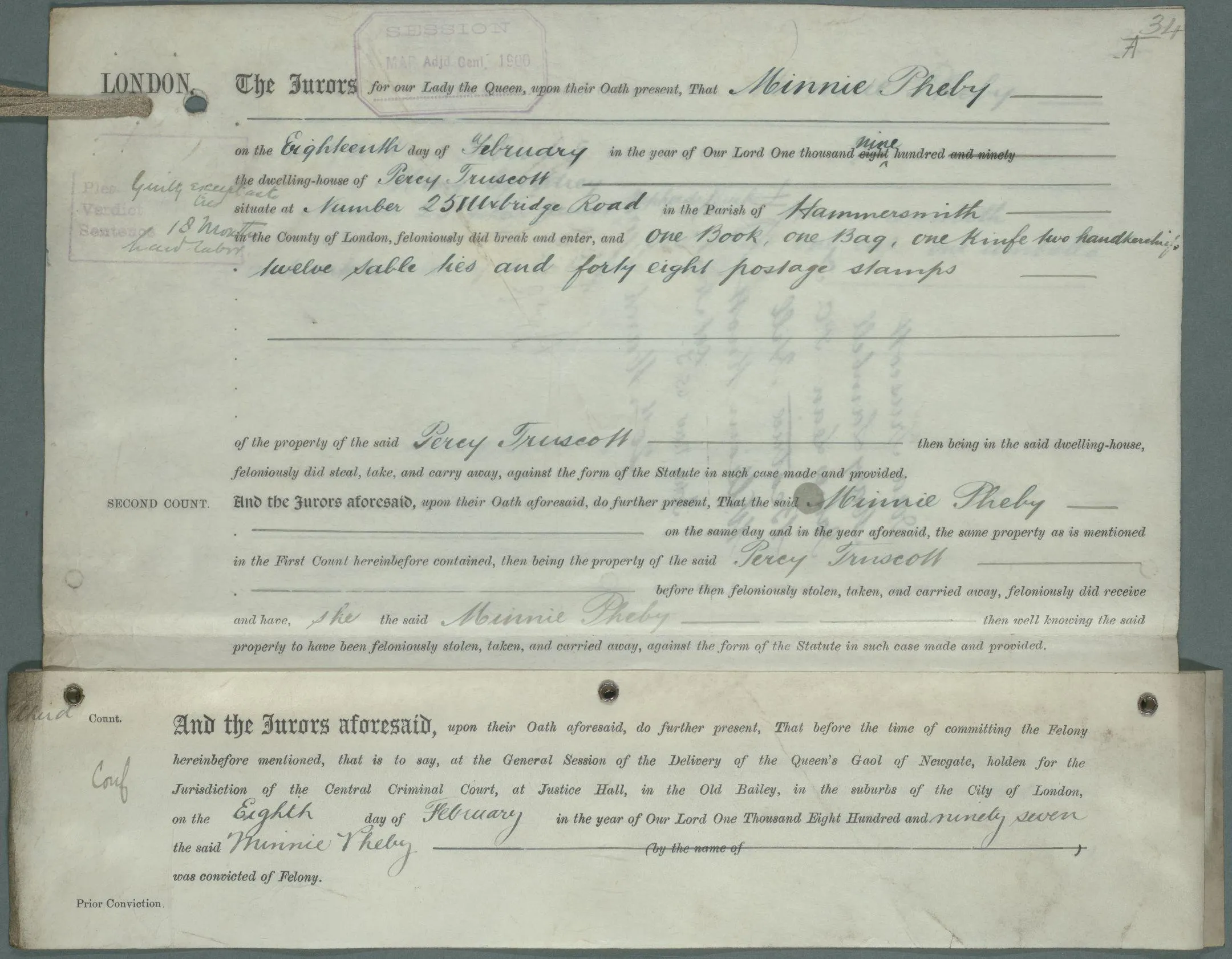
Minnie Pheby still had six months left of her sentence when she appears on the 1901 census returns for Wormwood Scrubs from March. Released some time later that year, she appears to have ended her criminal career, or continued it unnoticed, as she was not convicted again. A few years later in 1904 while working as a waitress she had a daughter, Minnie Violet Douglas. She gave birth in Kingsland Road Workhouse infirmary in Shoreditch, and was admitted under her middle name Martha and the surname Douglas. She went on to have another daughter in 1908 named Nellie Evelyn Douglas, however there is no evidence she married. By 1911 she had moved to Ealing, where she remained living until her death in 1969. Her eldest daughter went on to marry her cousin Frederick in 1928, the son of Minnie Pheby’s elder sister Sarah, suggesting that rifts between the sisters caused by Minnie’s stealing had been healed.

Minnie Pheby's crimes shocked and scandalised Victorian society, appearing in regional and national newspapers across the country, as well as in newspapers as far as Lahore in Pakistan. Minnie represented the antithesis of the 'angel in the house', the Victorian feminine ideal of a woman who was submissive and embodied familial and domestic and values. Instead, she was seen as a 'fallen woman', a woman who fallen into deviant behaviour, and who was in need of reform. Judges and newspapers used Minnie as an example of the dangers of the 'new woman', women in late Victorian society with liberal ideals who sought greater independence for themselves, and who some saw as a threat to society. While we cannot know the motivation behind Minnie Pheby's burglaries, her crimes had an impact on both her victims and on Victorian society.
Londoners on Trial exhibition