

The original Wembley Stadium
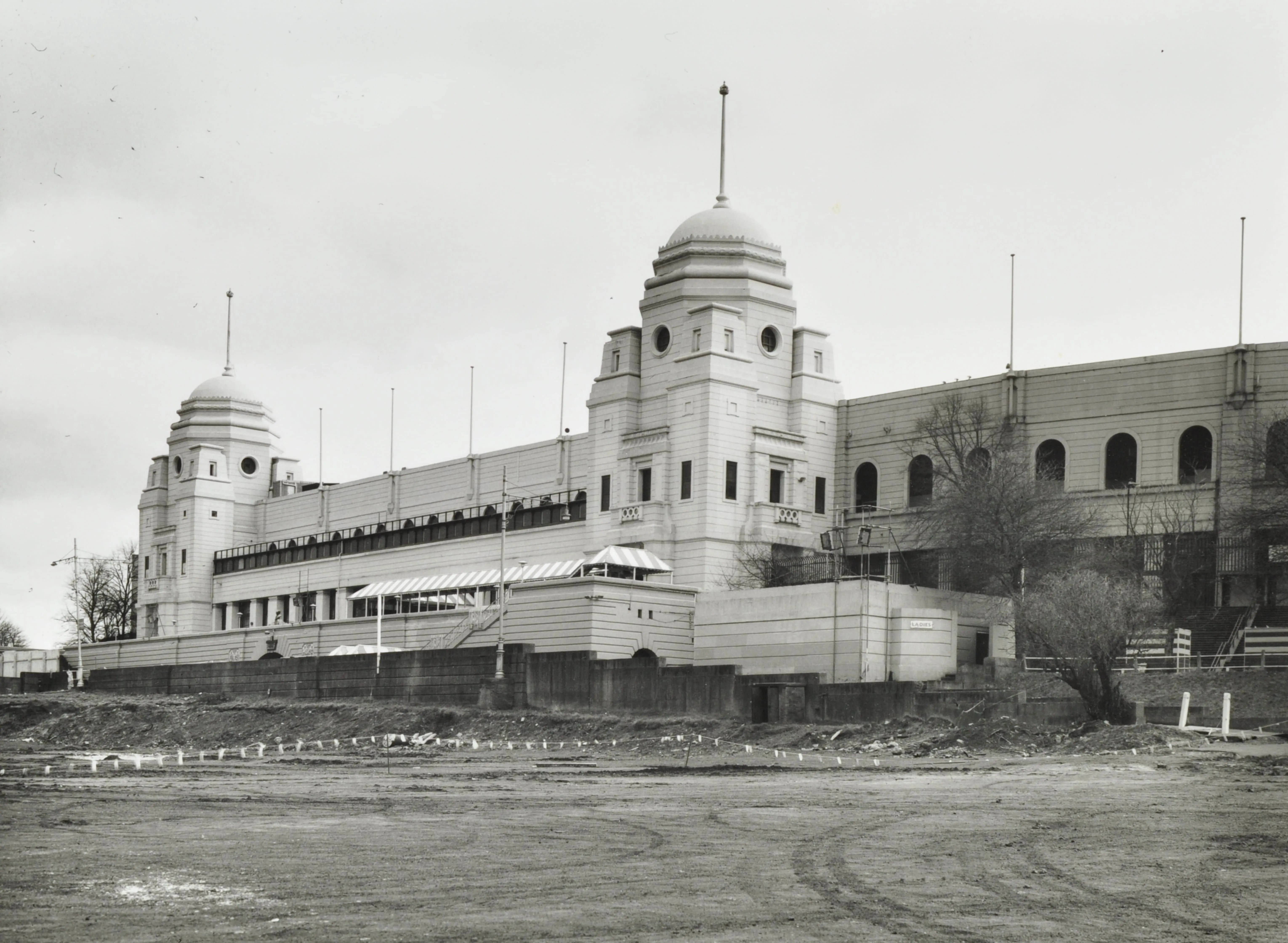
The twin towers of Wembley Stadium were recognisable the world over by the time it closed in 2000.
Wembley Stadium
Famed for its sporting fixtures, in its latter years it became just as well-known as a music venue, perhaps most famously hosting the Live Aid concert in 1985 to an international television audience of millions. For all its fame, Wembley Stadium came close to disappearing just a few years after construction.
Built in 1923 as the centrepiece of the British Empire Exhibition of 1924-5, it was conceived as ‘a great national sports ground’. Constructed in reinforced concrete, the stadium, designed by John Simpson and Maxwell Ayrton, was built by Sir Robert McAlpine in just 300 days and cost £750,000.
The British Empire Exhibition was a prominent example of a colonial exhibition. This continued the tradition of nineteenth-century exhibitions that were imperial in their motivation. Now we must seek to question the misrepresentation and exploitation that existed behind this through the lens of decolonisation.
Decolonising the archives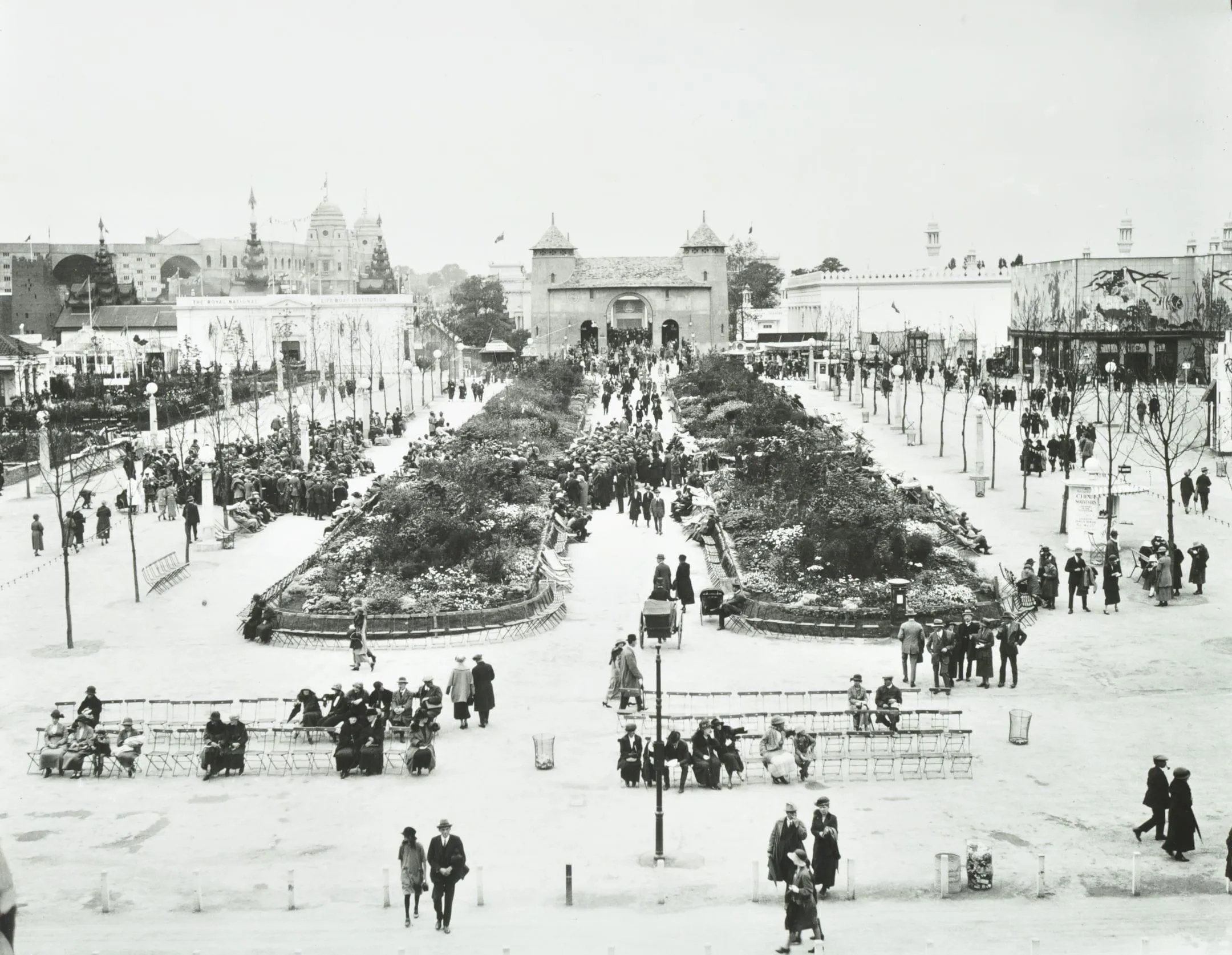
The FA Cup Final 1923
The Empire Stadium first opened for the 1923 FA cup final of football. Some estimates suggest 240,000 spectators came to see Bolton Wanderers play West Ham United (the official capacity was 127,000). During the Empire exhibition, the stadium was used for the opening ceremony, for an international scouting jamboree, as well as more sporting and other activities.
Perhaps most spectacularly, crowds were 'attacked' by the RAF in a display called 'London Defended'. Red painted 'enemy' aircraft fired blank ammunition at the assembled crowds before dropping bombs on a building erected in the centre of the pitch. Cheers broke out as the London Fire Brigade arrived to quench the flames, while anti-aircraft guns and searchlights drove off the dastardly attackers.
It was planned that the stadium would be demolished at the end of the British Empire Exhibition. However, it was saved for further use as a sporting venue and went on to host the 1948 Olympics and of course that famous 1966 World Cup final.
The twin towers were demolished in 2003 and replaced by a new Wembley Stadium in 2007.
Search the London Picture Archive
You can find more images of Wembley Stadium on the London Picture Archive.
Search the London Picture Archive