

'On the Greenwich Line' by Shady Lewis
January 2026 - 'On the Greenwich Line' by Shady Lewis
January's book group at TLA read 'On the Greenwich Line'. Shady Lewis is an Egyptian novelist, and this book was published in English translation in 2019. It centres around an unnamed protagonist working as a housing officer in a London borough, who must make decisions on whether vulnerable people are entitled housing. His life is disrupted when a friend from Egypt asks him to organise a burial for a Syrian refugee.
Deadpan humour
This is a darkly comic novel that divided the group. Readers described it as intriguing, funny and original, with deadpan humour a central feature. Our protagonist is a lonely man, who doesn’t feel at home in London, but who no longer feels at home in Egypt: “People like you and me will always be in between in this city. Neither here or there”. This sadness permeates the novel and his attempts to solve the problem of the Syrian refugee is his chance to be “any use to anyone”.
People like you and me will always be in between in this city. Neither here or there.
Local government
Some readers found the narrators’ experience in local government too negative, and the character “nauseatingly cynical” in the words of one attendee. Despite the reputation of Londoners, we found this view simplistic. But Lewis may be offering us a view of the hopelessness of the individual who must administer the punitive policies of the State – someone employed to help others simply cannot. Is our protagonist’s disconnection a result of the moral injury caused by his work?
Reminiscences of home
The telling of stories is fundamental to this novel. The story of Giyath, the Syrian refugee, is really the story of every refugee in their attempts to find a safe home. Our narrator’s reminiscences of home formed the strongest part of the novel for many readers, particularly the stories told by his grandmother about their life in Egypt.
Many readers felt the echoes of myths and parables in the novel. Our narrator is in a form of limbo, in exile, between countries and languages. The funeral is built up to be a moment of catharsis, but of course it isn’t, leaving us in limbo as well.
Archive sources
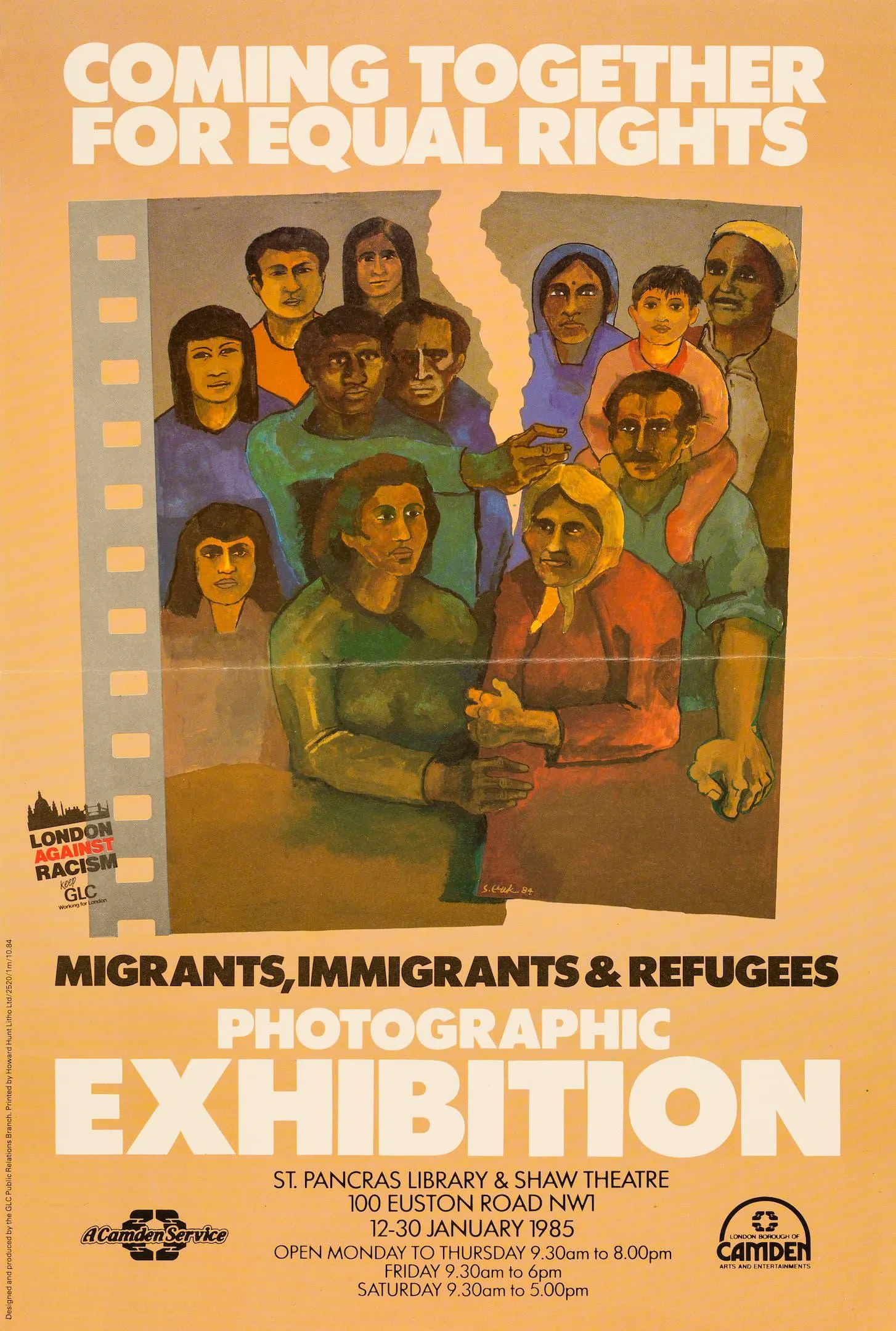
We looked at a presentation of documents relating to the response of London’s local governments to refugees seeking sanctuary from the period of the French Huguenots onwards. For example, follow the links in these document references for more information:
- COL/CHD/PR/05/01/008 - Distribution Made by The French Committee, 1697
- BBG/634/001/C - Registration forms relating to Belgian refugees, 1915