

James McNeill Whistler and London
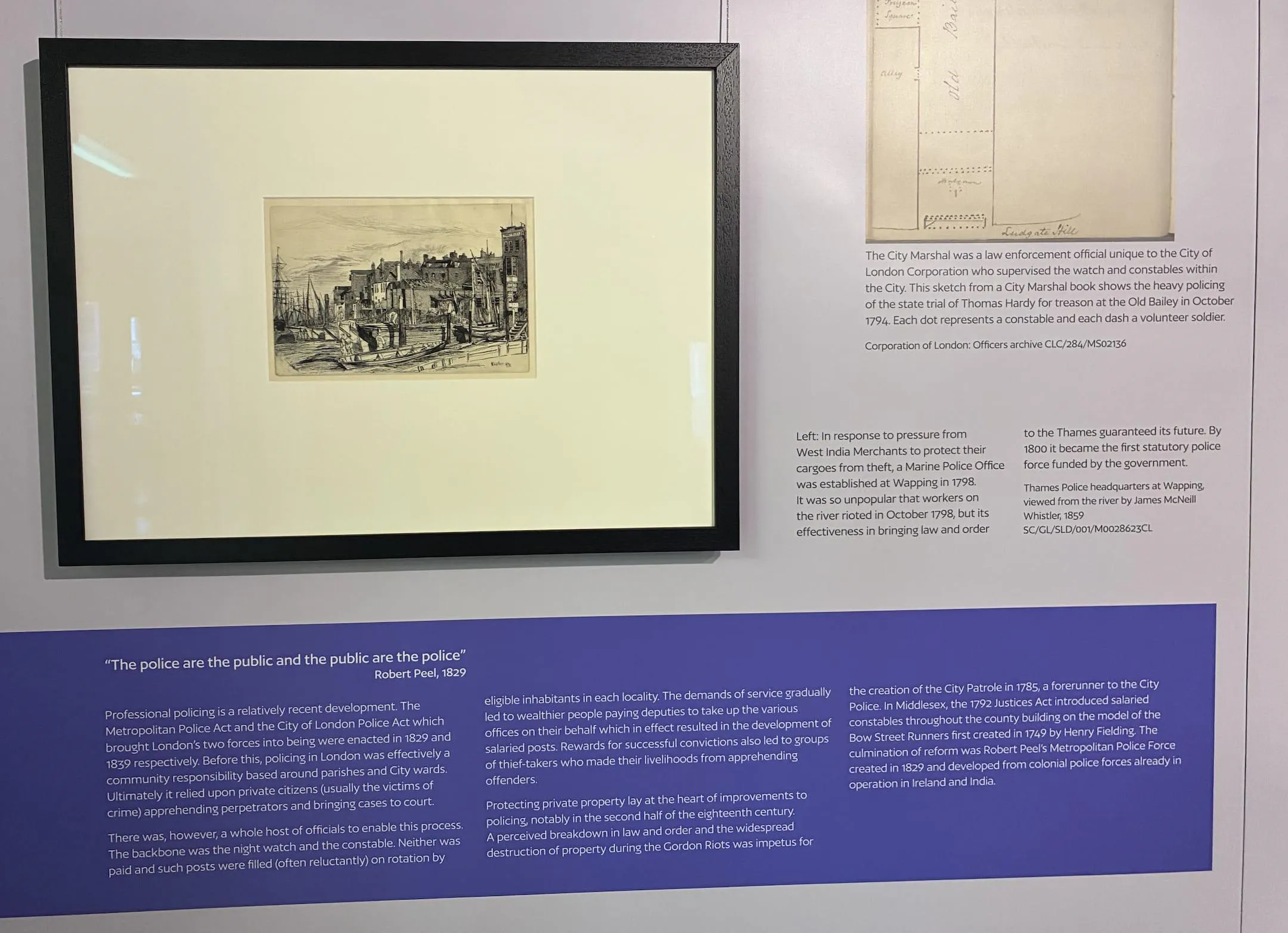
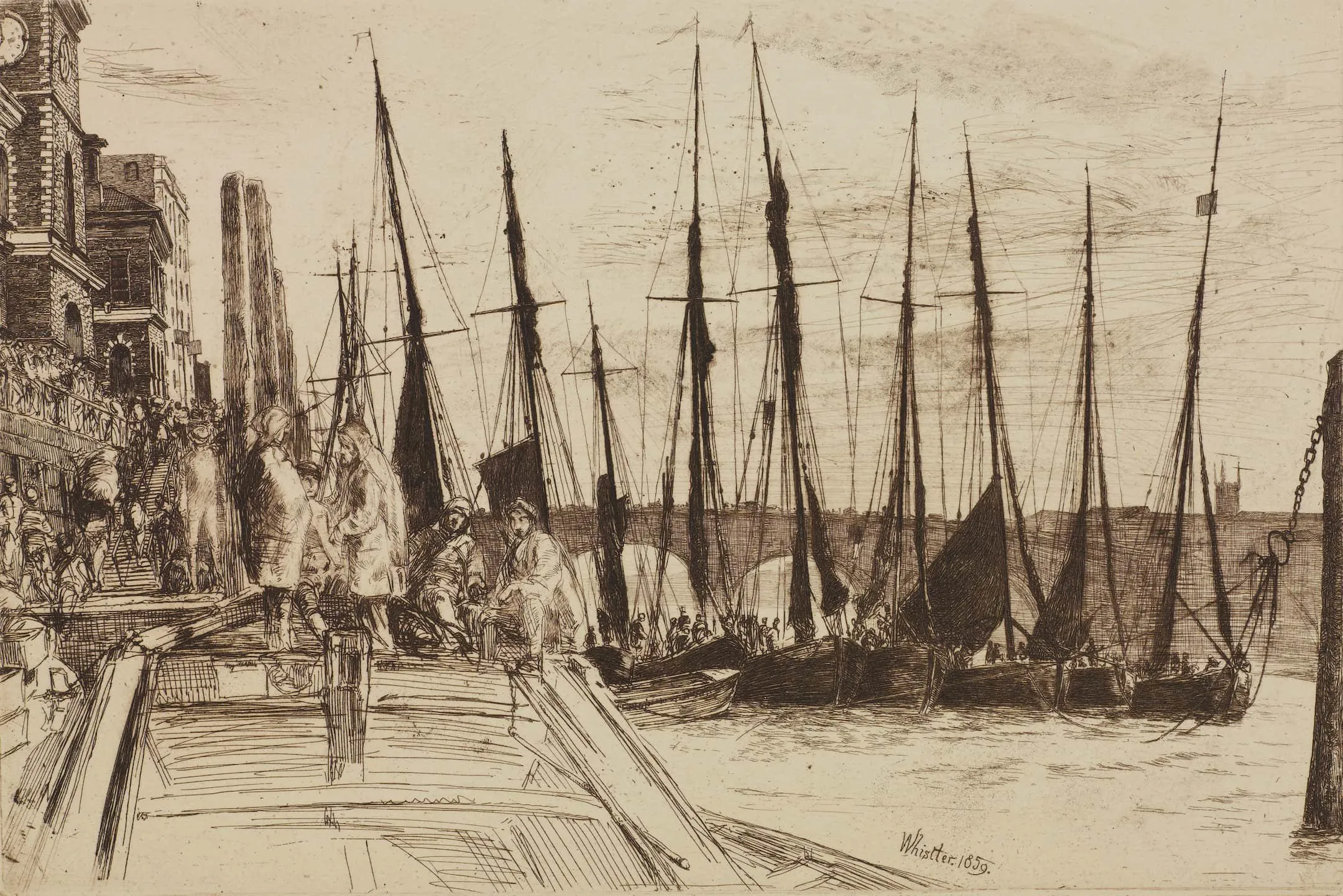
Our exhibition, ‘Londoners on Trial’ features an image by the artist James Abbott McNeill Whistler (1834-1903). It shows the Police headquarters in Wapping (at 255 Wapping High Street) viewed from the river as depicted in 1859. This was the year that the young American artist settled in London where he spent much of his professional life, making the city central to both his artistic development and reputation.
Victorian London
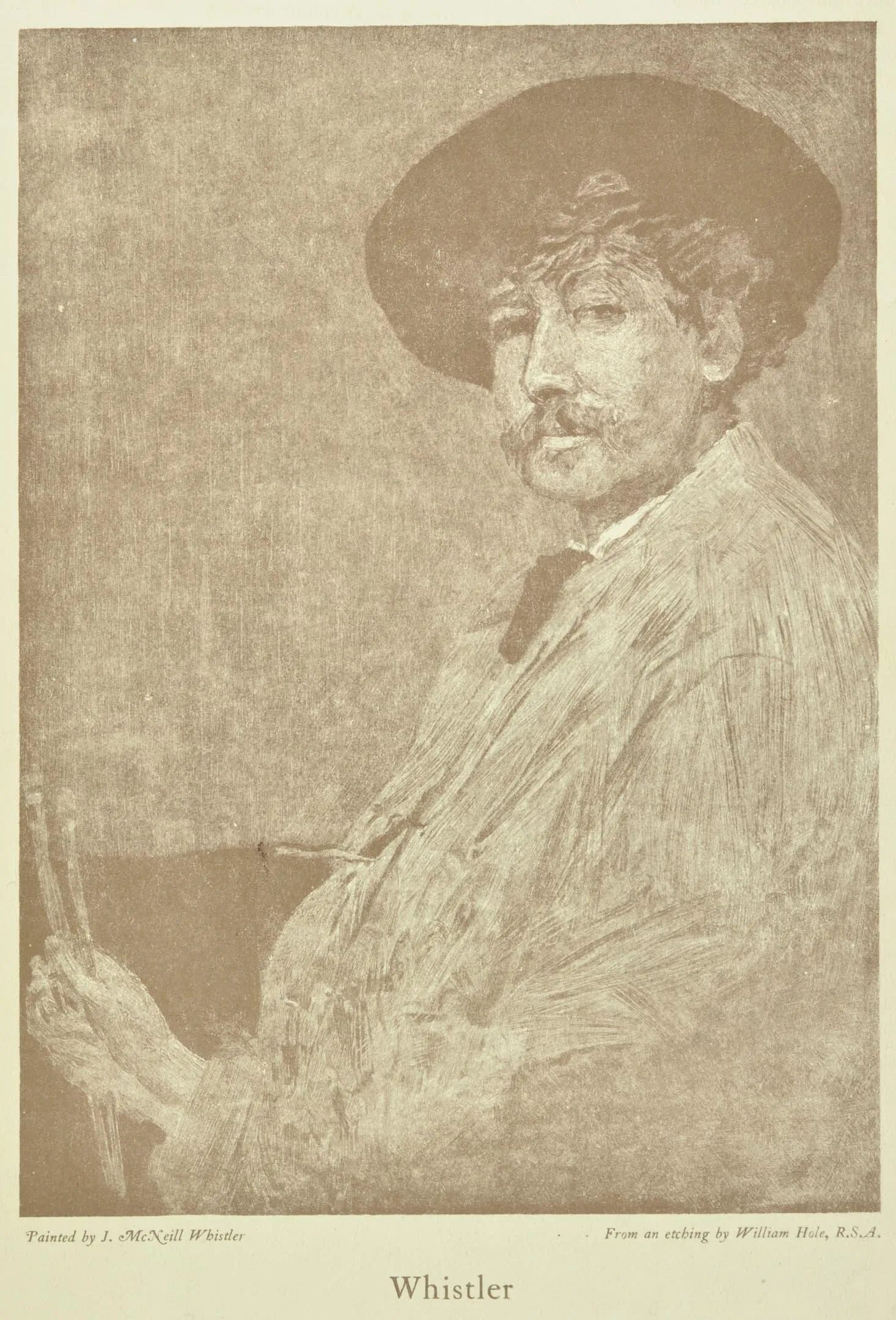
London in the mid‑Victorian period provided Whistler with a vibrant cultural environment, and he quickly became part of its artistic and intellectual circles, although he was often a controversial and unconventional figure and he took legal action against the critic John Ruskin for libel, following a review in 1877. Although Whistler won the case, the legal costs damaged him financially.
Residences
Post Office London Directories held at TLA show Whistler lived in and around the area of Chelsea, some of these addresses included:
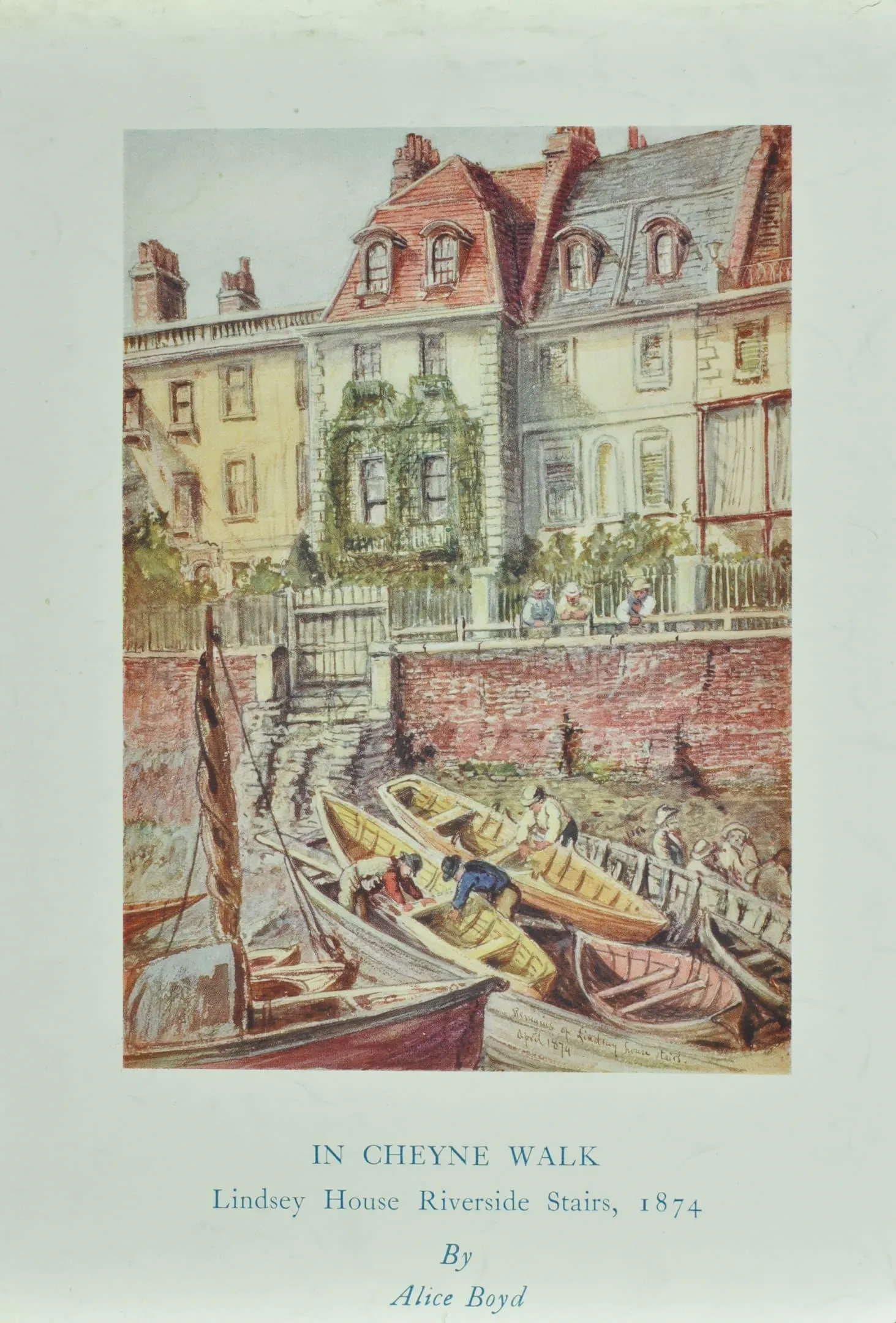
- 7 Lindsey Row (c.1863) and then number 2 (later renumbered 96 Cheyne Walk) from c.1866
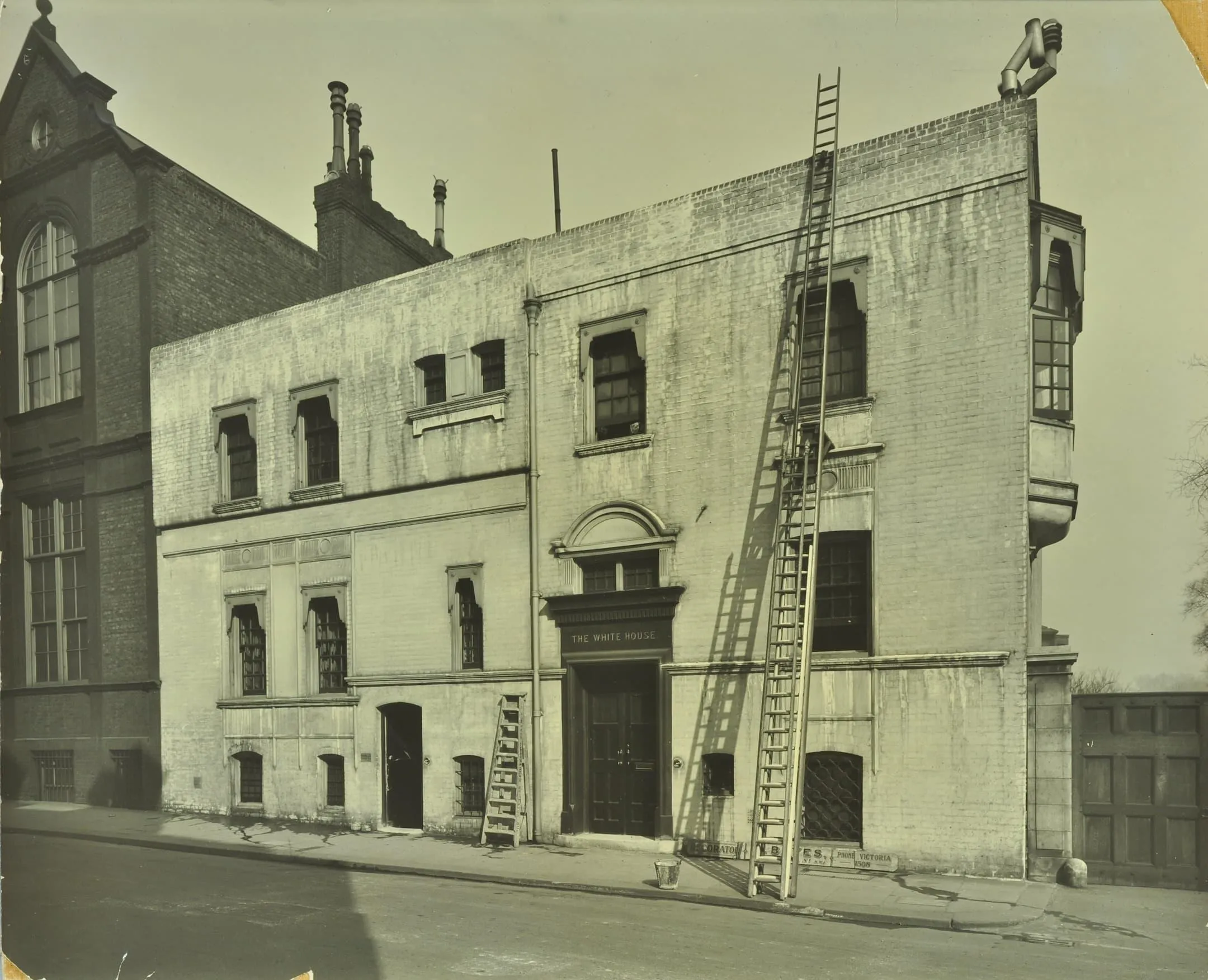
- 35 Tite Street, known as The White House – designed and built for him by Edward William Godwin in 1877. Whistler only lived here for one year 1878-1879 due to the case with John Ruskin
- 13 Tite Street in 1885
- 28 Tite Street in 1890
- 74 Cheyne Walk – his final residence
Drawn inevitably to the river, he fell in love with Chelsea Reach, at that time cheap and dilapidated but still picturesque before the building of the Embankment changed its character forever. In 1863 he established himself at number 7 Lindsey Row (now 96 Cheyne Walk), a house that formed the modest western end of a terrace, by then divided and fallen upon hard times, that had in the late seventeenth century been the single handsome riverside residence of the Earls of Lindsey. There he was immediately taken up and befriended by the bohemian coterie that gathered around Dante Gabriel Rossetti, who had taken the equally ramshackle Tudor House (16 Cheyne Walk) in the previous year.
The Aesthetic Movement
Whistler’s London career was also marked by his involvement in the Aesthetic Movement, which championed “art for art’s sake.” In 1876, Frederick Leyland commissioned Whistler to decorate a room in his home at 49 Princes Gate, near Hyde Park which became known as The Peacock Room. This was later removed and shipped the United States and is now in the Freer Gallery of Art in Washington.
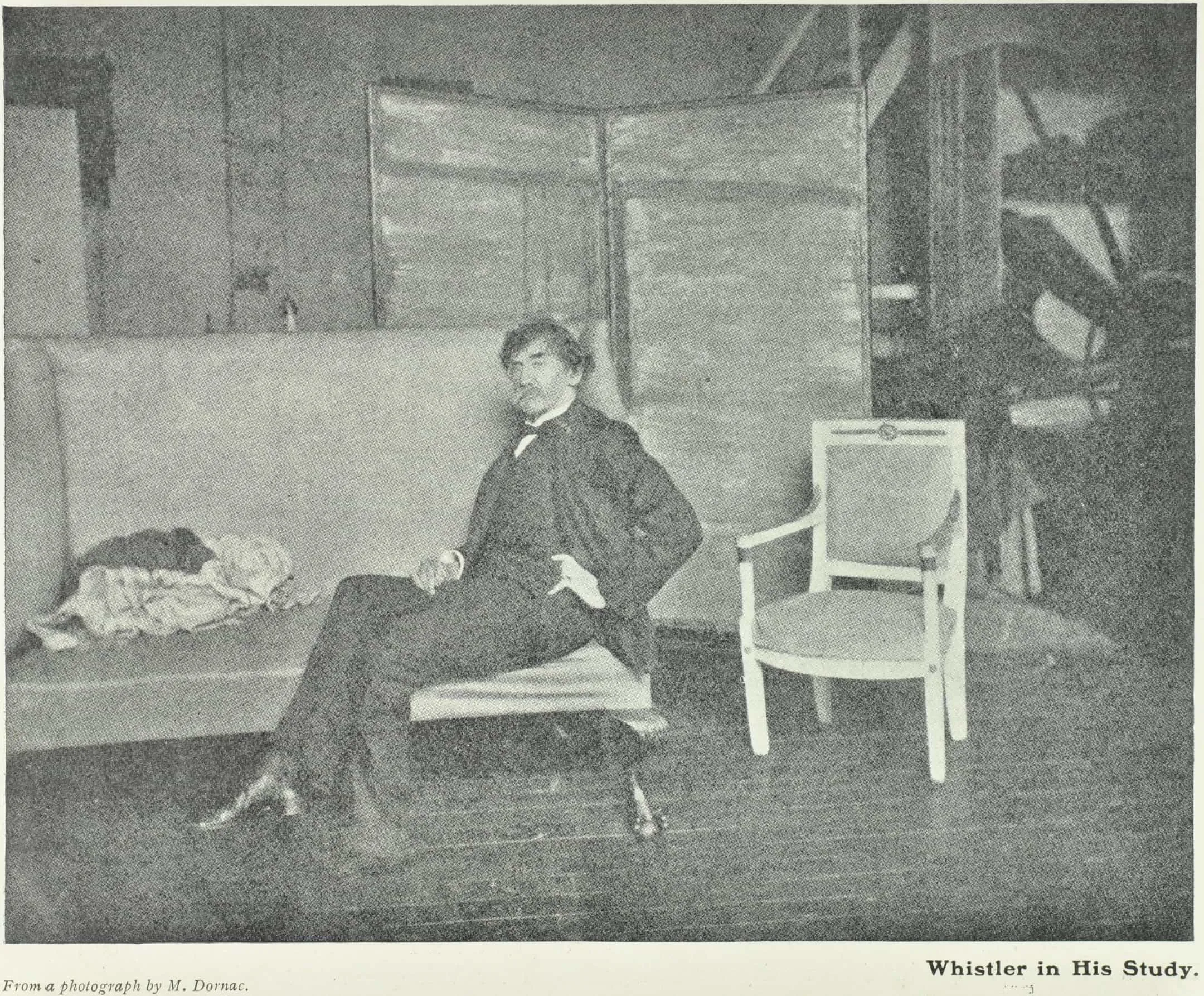
From his Chelsea home at The White House he cultivated a carefully constructed artistic identity, designing his interiors, exhibitions, and his personal image as part of his aesthetic philosophy.
The River Thames
Much of Whistler’s London work was inspired by the River Thames. His early etchings and paintings captured docks, warehouses, and river life with a realism that reflected the influence of French art. Whistler moved toward a more experimental and atmospheric style, producing his celebrated “Nocturnes” which were subtle, tonal depictions of the Thames at night with an emphasis on mood, light, and abstraction.
Search the London Picture Archive
Find more mages of London during the Victorian period on the London Picture Archive.
Search the London Picture ArchiveFind out more about Whistler
- Letter from James McNeill Whistler to Samuel Barnett: regarding staying at Saint Jude's cottage and the health of his wife, reference: LMA/4266/A/186 at TLA
- Whistler Archive at the University of Glasgow Special Collections
- James McNeill Whistler: The Etchings - A Catalogue Raisonné
- The Thames Set at London Museum