

Farmfield Reformatory: Women and Drunkenness in Victorian Society
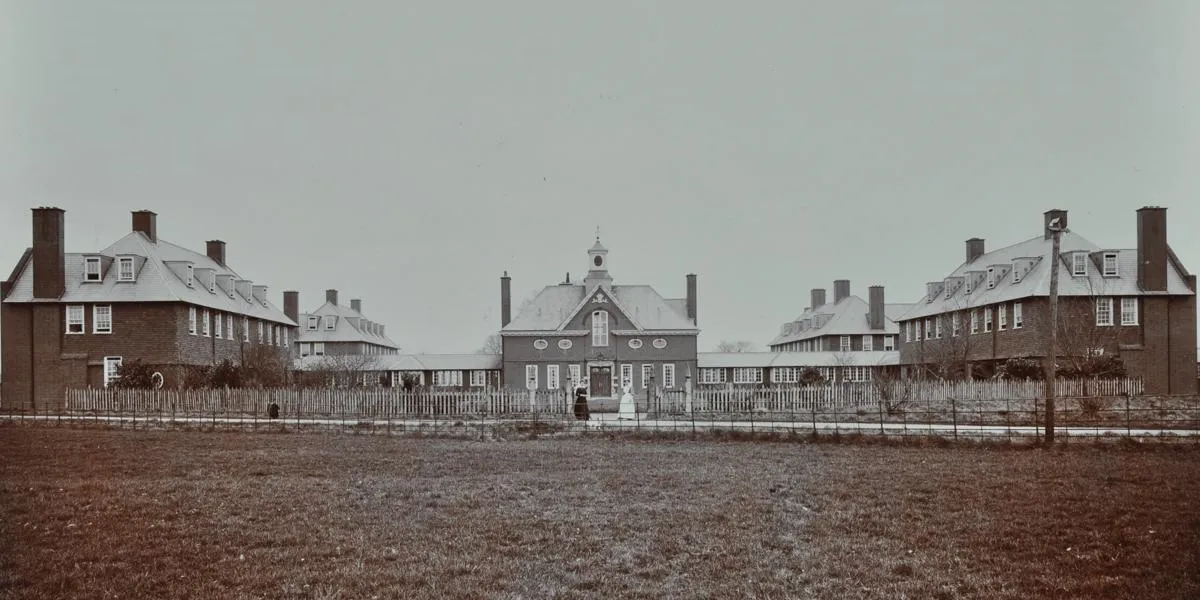
On the 2nd of August 1900, Farmfield Reformatory for Inebriate Women opened to receive its first patient. The London County Council (LCC) established the reformatory in response to the perceived crisis of habitual drunkenness amongst working-class women. Between 1900 and 1912, Farmfield Reformatory was a major participant in the short-lived medical and judicial experiment of rehabilitating women condemned as 'inebriate'.
Drunkenness and inebriety
Respectability in the Victorian period centred on the common virtues of diligence, temperance, and frugality. Regardless of social status, individuals were held personally responsible for upholding this social code of morals and manners that valued, at its heart, self-discipline.
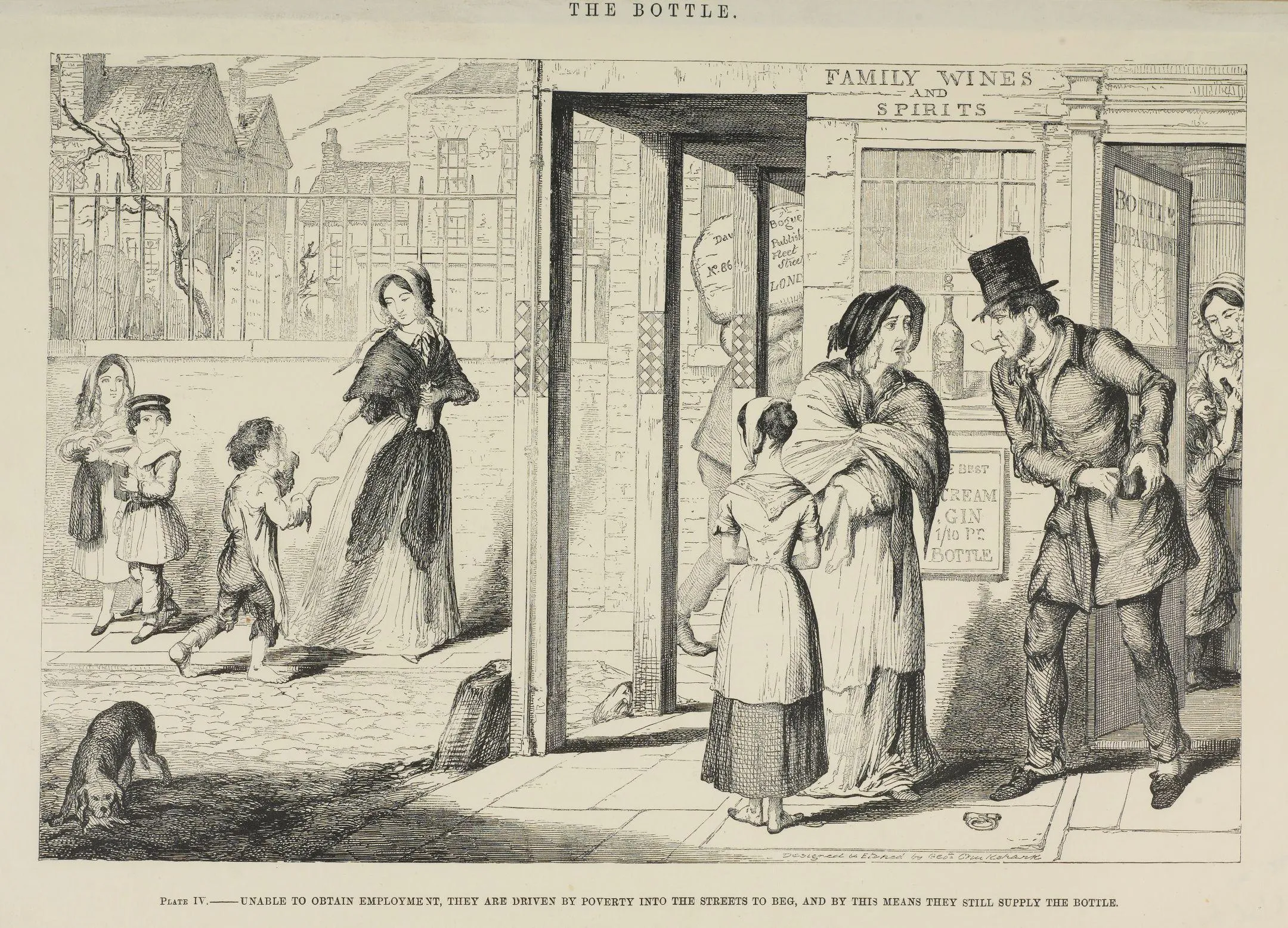
In direct opposition to Victorian morality, urban working-class drinking culture proliferated the streets of industrial towns and cities, and became the grounds of socio-political commentary and movements, such as the temperance movement. The stereotype of the drunkard threatened public order, but also the social and moral progress of society, and the disregard of common virtues meant to prevent the descent into crime, deviance, and social and financial ruin. Early nineteenth-century discourse conceived of drunkenness as an individual moral failing but, by the century’s end, social commentators invoked new medical terms of inebriety and the inebriate. This shift was driven by doctors who medicalised habitual drinking as a disease, and so introduced the potential for a cure.
However, social, political, and medical commentators never succeeded in delineating the causes behind drunkenness and continued to debate whether it was a vice, crime, sin or disease. How was drunkenness defined? How much alcohol needed to be consumed and at what intervals before someone could be classified as an inebriate? What was the boundary between vice and disease, and how could the former be diagnosed from the latter? Medical discourse that pathologised the condition was still rampant with moralisations. At Farmfield Reformatory, the first lady superintendent described its origins as a 'hereditary taint', or genetic predisposition, yet worked to instil self-discipline in her patients. The term 'inebriate' gained popularity but lacked a consistent medical definition and ultimately became synonymous with the terms habitual drunkard, chronic alcoholic, and dipsomaniac. Yet the idea of curing the disease of drunkenness persisted, driving political and legislative change.
The Inebriates Act
Under mounting political pressure, Parliament passed the 1898 Inebriates Act. This legislation empowered local authorities to establish and manage their own certified reformatories and confine those identified as habitual drunkards for up to three years, as an alternative to short prison sentences. As expressed by the chairman of the LCC Inebriates Act Committee from 1900 to 1901, the punishment was intended to be remedial rather than penal, and considered an act of humanity. Since alcoholism was perceived as a product of upbringing, genetics and the urban environment, it could be corrected through confinement and moral re-education within inebriate reformatories. The Inebriates Act Committee came under the purview of the LCC Public Health Department, reflecting the medicalisation of habitual drunkenness and its perception as a matter of public, rather than personal, interest.
Farmfield Reformatory
In 1899 the LCC purchased 374 acres of land in Horley, Surrey for £13,000 and refurbished the estate into Farmfield Reformatory for Inebriate Women. The reputation of Victorian mental asylums and workhouses as places of misery has persisted up to the present day, but initial accounts from the 1900-1901 LCC Inebriates Act Committee demonstrated a self-awareness of the dreary state of Victorian institutions, and a purposeful shift from a punitive to a more remedial environment.
Farmfield Reformatory consisted of two mansions to house staff and patients, a flower garden, a chapel, and a Home Farm where patients could grow fruit. The treatments of a simple, reformatory diet and all abstinence from alcohol were accompanied by the clean country air, removed from the industrial fumes of urban life.
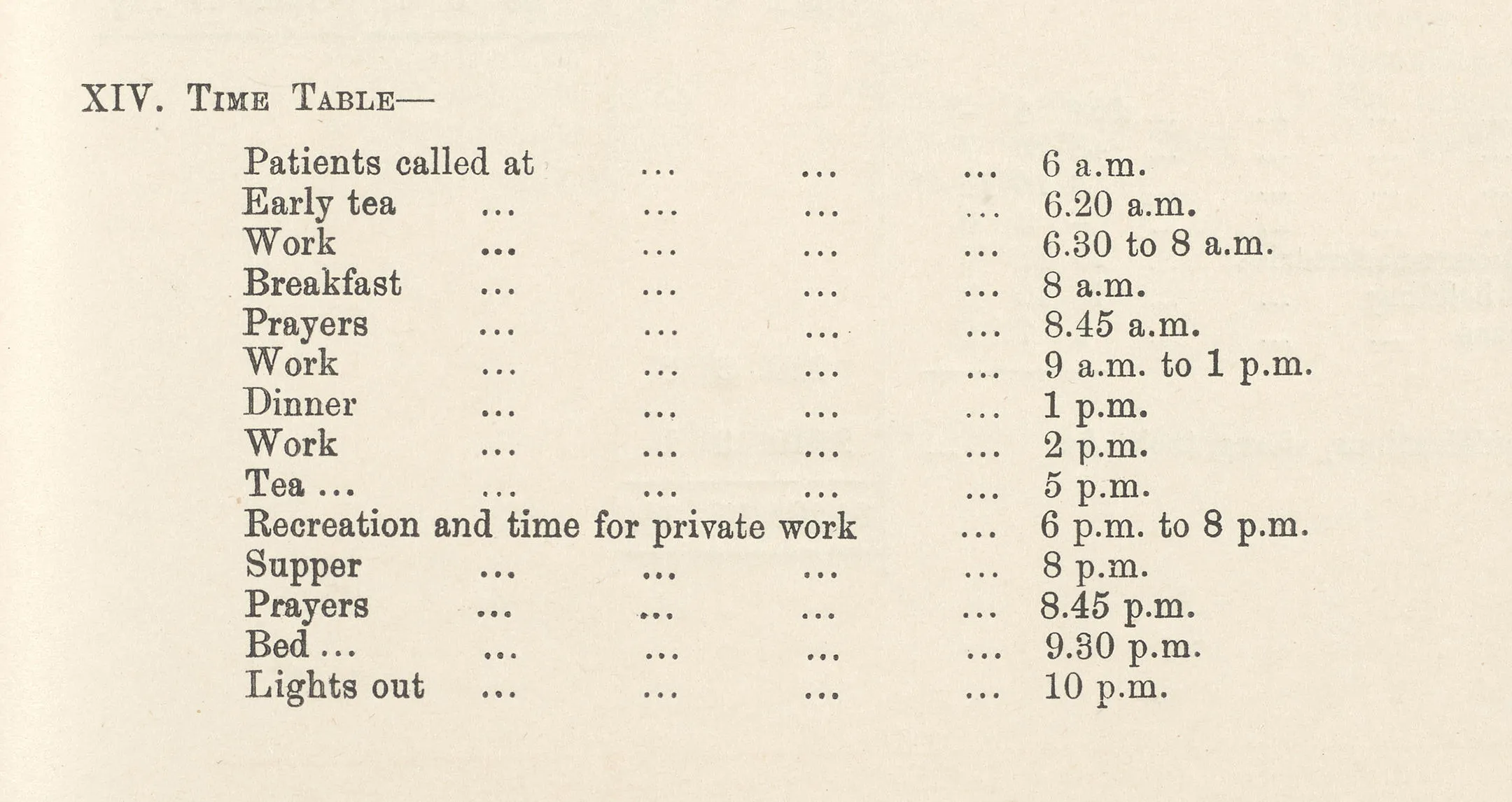
Patients’ time was strictly managed by the matron and other staff. Their daily timetable appeared in the report of the lady superintendent to the LCC’s Inebriate Committee:
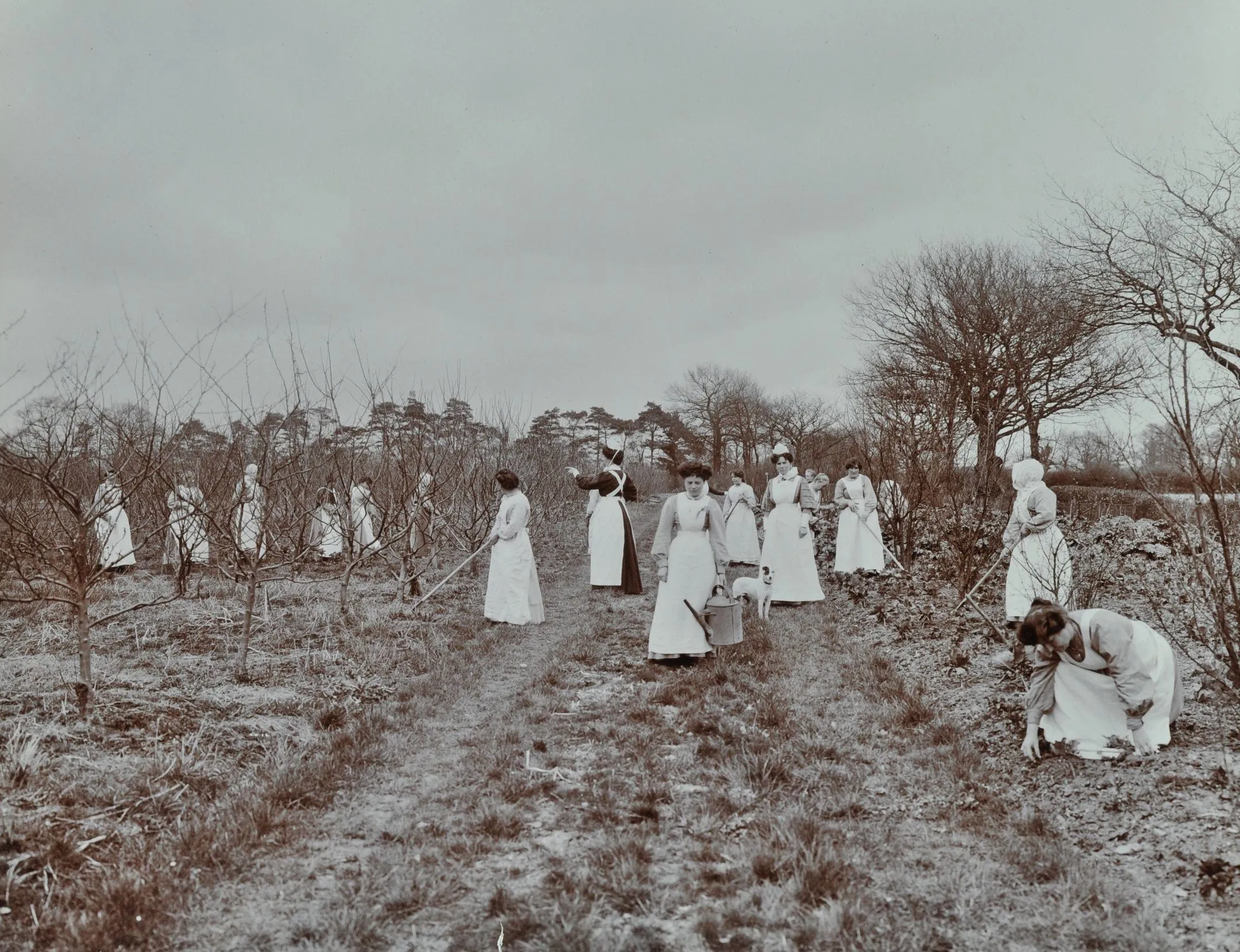
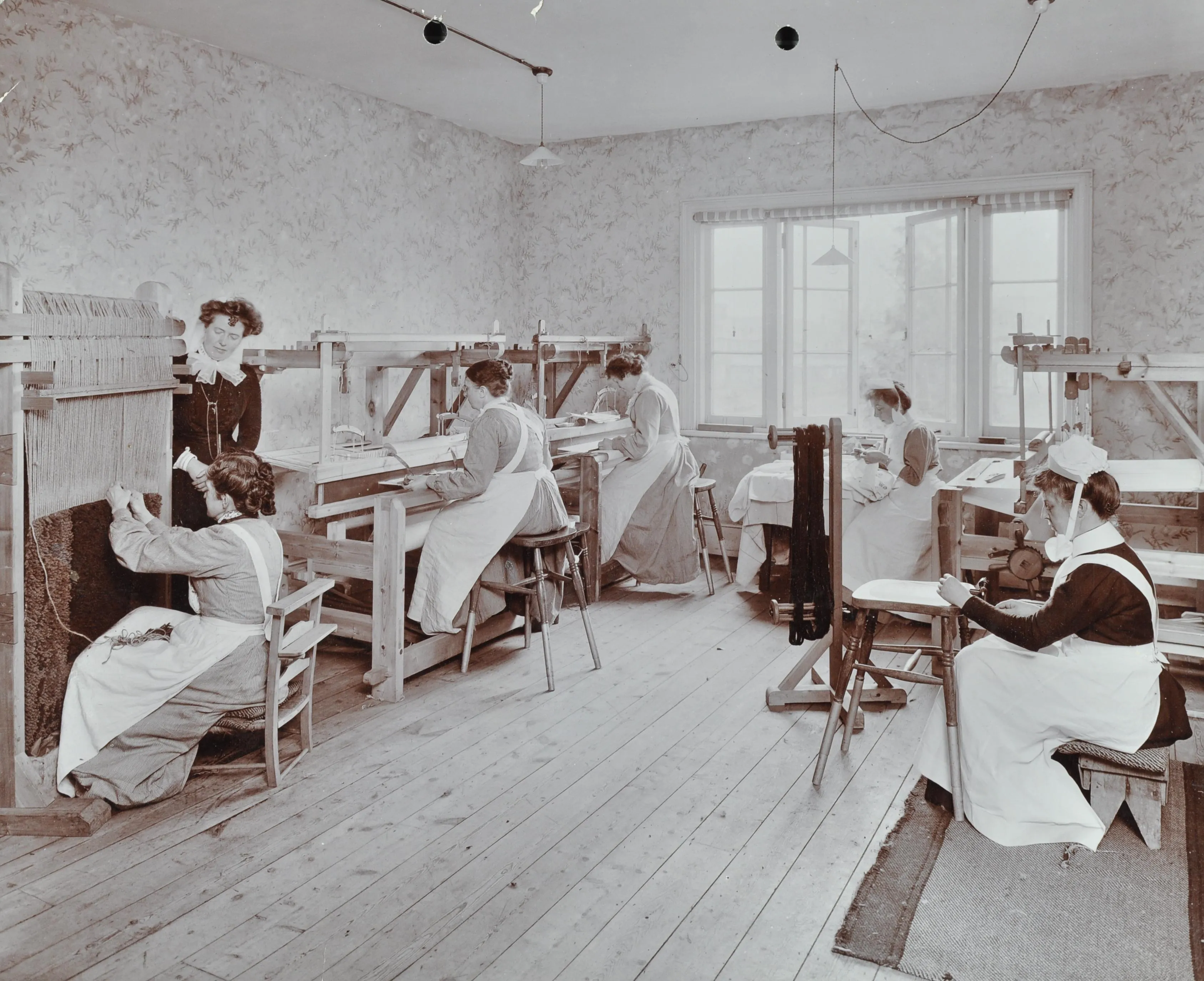
To instil discipline, patients were also put to work. This included housework, laundry, farm work, and making outfits for themselves, but also extended to include textile repairs and laundry for LCC schools. These activities were intended to prepare patients for life after their release, and allowed them to earn money, up to six shillings a week, based on work and good behaviour.
More disciplinary action could be taken against patients by relegating them to the 'punishment cell'. However, the superintendents across the Reformatory’s lifetime reported it as underutilised and preferred to refer patients that were uncooperative or unlikely to reform their behaviour to other locations to avoid disrupting more responsive patients.
Within Farmfield, women were held to rigorous standards and instilled with skills and self-discipline intended to reform their alcohol dependency. This was done in the hopes they lead lives in accordance with Victorian virtues once released from confinement back into wider society.
Women and drunkenness
The habitual drunkard of Victorian moral panic was an archetype that encapsulated the entire working-class, yet Farmfield Reformatory was reserved for women. The LCC Inebriates Act Committee stated that the provision for female inebriates prior to the opening of Farmfield was more pressing than male inebriates, as women were statistically more likely to be convicted for repeated drunkenness offences. However, the this discrepancy was not a reflection of moral degeneration in working-class women absent in working-class man; instead, it arose from the application of the Inebriates Act.
The 1900 metropolitan police courts records for those convicted three times of drunkenness offences amounted to 161 men in contrast to 253 women. However, arrests were at the discretion of the police, and convictions at the discretion of the court. Men were also assumed to earn the majority of the household’s income, which meant incarceration in a reformatory for two to three years would ruin his family. In contrast, the case histories of Farmfield’s patients recorded the occupations and children of women who had been confined, regardless of their necessary household contributions.
Drinking, so long as it did not devolve into habitual drunkenness or occur with other vices such as gambling, was perceived as an integral part of working-class masculinity and the pub as an important male space for socialisation. Victorian stereotypes of women as weak-willed and physically frail meant they were considered more susceptible to alcohol and 'worse drunks', and more likely to be a public nuisance. Women and alcohol were also closely associated with prostitution and petty crime, which made them greater targets for police arrests. While pubs were frequented by working-class women as well as men, women who freely traversed public spaces were judged as fallen, promiscuous, or addicted—and public drinking associated them with all three. Female inebriation was a source of overlapping Victorian anxieties around an overly self-indulgent working-class drinking culture, and women outside the domestic sphere.
The end of Farmfield Reformatory
As early as 1909, the LCC expressed concern over the mounting cost of maintaining patients at Farmfield Reformatory and the institution was finally closed in November 1915. Despite the good intentions of the Inebriates Act Committee and superintendent to cure the 'disease of inebriety' that they believed to plague these women’s lives, of the first 600 cases detained at Farmfield Reformatory, almost half relapsed following their release. Farmfield, like many inebriate reformatories, ended up a short-lived experiment that failed to survive the onset of the First World War. The Victorian virtue of self-discipline and the moral failing associated with habitual drunkenness, even once a more medicalised perspective took hold, meant that medical and political intervention failed to rectify the broader social and cultural circumstances behind working-class women’s drinking habits. Instead, women who failed to abide by Victorian social standards were isolated from their communities and the rest of society.
Search the catalogue
You can find out more about the collections we hold relating to Farmfield Reformatory by searching our catalogue.
Search the catalogue