

Curating ‘Londoners on Trial’

Whenever we launch an exhibition at TLA, the relief of installing the displays on time quickly dissipates as we begin the work of developing curators’ tours, events and talks to promote the content. The satisfaction of seeing the exhibition in its entirety, rather than working on its individual parts, is always a timely moment for us to reconnect with some of the ideas and thinking behind it. So, in this blog piece, as we reflect, we’d like to share some of these thoughts with you and present a broad overview of what’s on display.
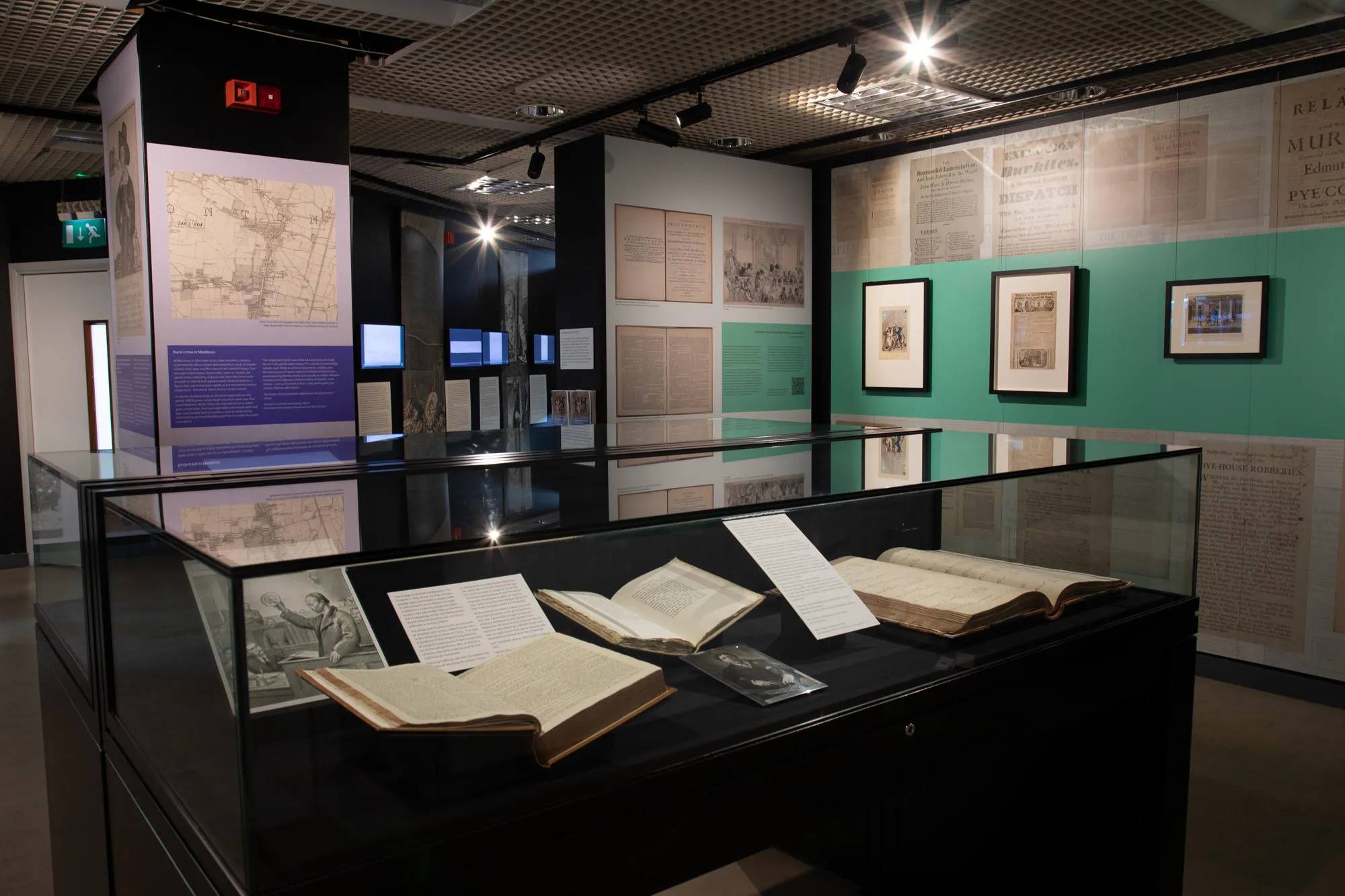
What do our audiences want?
A survey of our users carried out a few years ago rated ‘crime’ as one of the most popular subjects for visitors to TLA. It’s not surprising when you consider that court records constitute some of the biggest collections we hold here, covering pretty much 1000 years of London’s history. The ability of rulers to effectively administer justice was such an important aspect of good governance that it ensured the development of a large network of courts (criminal, civic and religious) with widespread jurisdiction over the lives of Londoners. It also produced a body of court records both voluminous and rich in equal measure.
But it’s not just the sheer volume of records which draws attention. People are fascinated by ‘true crime’. You’ve only to look at the most popular shows on streaming platforms like Netflix to see that crime related dramas and documentaries consistently top the charts. So, we knew that there would be interest in the content.
Challenges
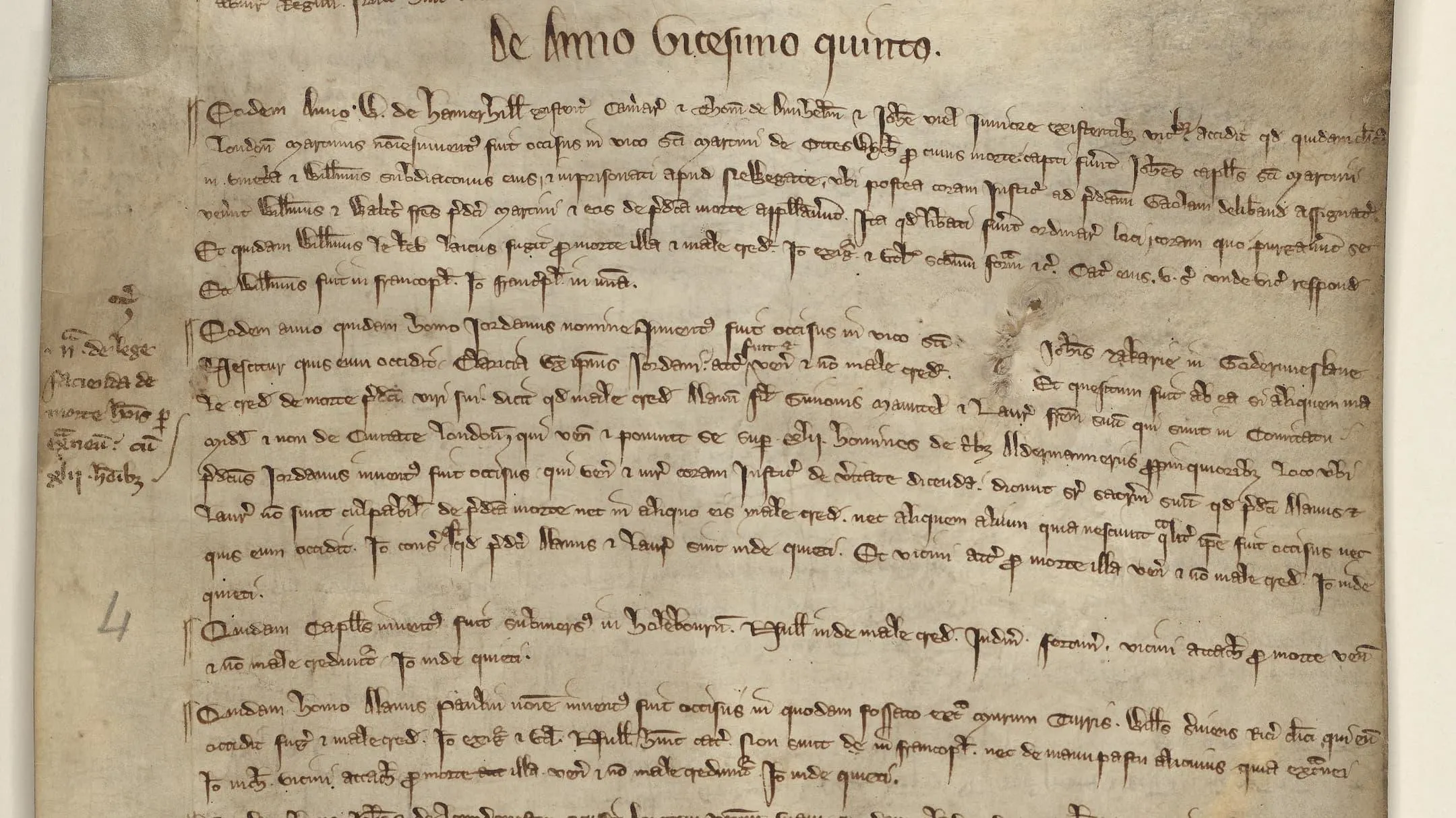
There were, however, a number of challenges. The vastness of the subject, the size of the collections and the many centuries they cover meant that choosing content was daunting (made harder by the compactness of our exhibition space too). It was hard to know where to begin. We wanted to showcase the breadth and richness of the records held here at TLA, but we felt we would not be able to do justice (no pun intended!) to the complexities of this history in a single exhibition. We had many discussions around what to focus on and how to frame our approaches to the subject.
The ‘crowd-pleasing’ aspect left us conflicted. We had to acknowledge that violence would sit at the very heart of the exhibition, perpetrated both by individuals and by the state. But we decided that we would avoid focusing on the salacious details of individual cases and respective punishments. We didn’t want to give yet more space to the likes of Jack the Ripper. Nor did we want the exhibition to be a forensic examination of how cruel humans have been to one another over the centuries.
Court as public spectacle
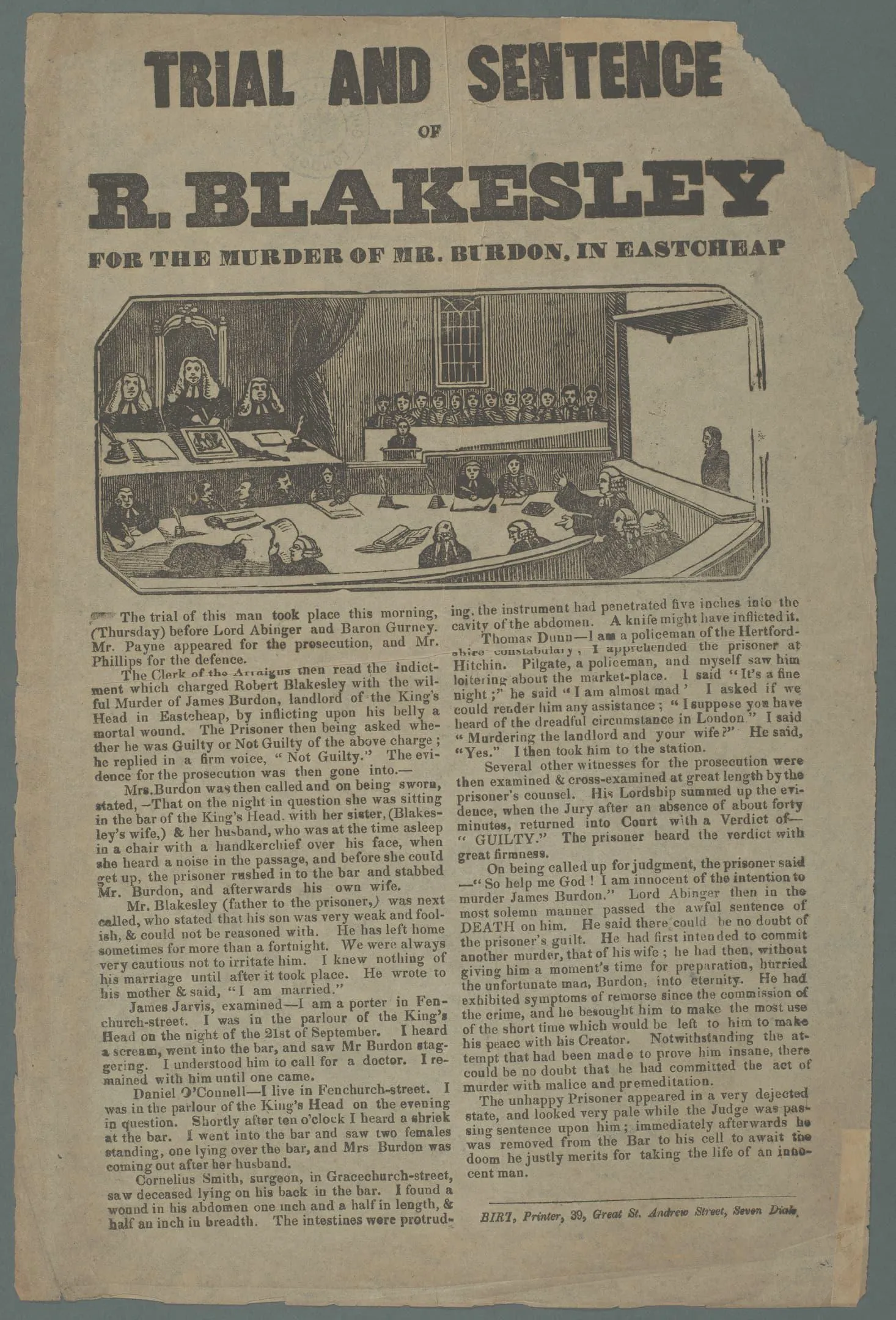
The public’s long-standing obsession with ‘true crime’ became central to our research. We decided to explore the idea of crime as entertainment because it became very clear to us that the phenomenon predates the Netflix generation by many centuries. In fact, the court as public spectacle and crime narratives as something to be consumed have been central to London life for many hundreds of years. Londoners were consumers, spectators and voyeurs as much as they were perpetrators, victims and participants.
So, 'Londoners on Trial' explores the reporting of crime as much as it focuses on the official court records. The idea that crimes had lives outside of the court room, beyond the immediate events. The exhibition looks at the ways published reports of crimes often embellished and sensationalised the facts, creating folk devils and heroes out of the protagonists. In this respect, you’ll see broadsides, newspapers and prints (including originals by Hogarth and Whistler) as well as court registers, indictments and prison records.
From the sixteenth century onwards a burgeoning print culture satisfied the public’s demand for lurid details. Reports of cases such as the Ratcliffe Murders in 1811, the trial and execution of Elizabeth Ross in 1832 and attacks by ‘Mohawk’ gangs in 1712 whipped up fear, panic and outrage. Far from being objective, many adopted a moralising stance, expressing social and political criticism of the crimes they depicted.
The proceedings of the Old Bailey
The printed proceedings of the Old Bailey feature throughout the exhibition. Published from 1674 onwards they offer verbatim journalistic accounts of trial proceedings, putting the reader inside the court room. Their question-and-answer format is perhaps the nearest we get to ‘hearing’ non-elite Londoners ‘speak’.
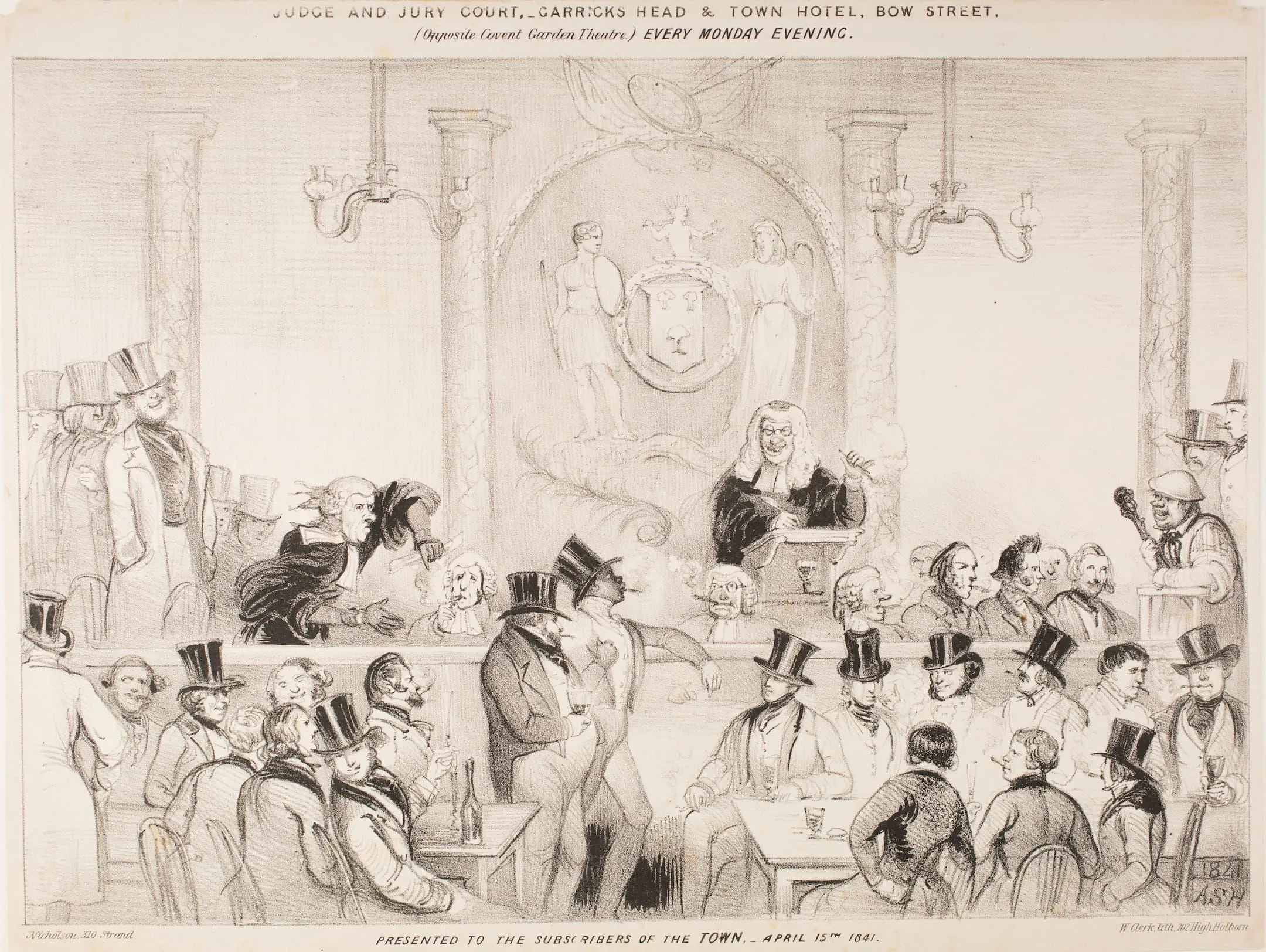
The idea of the court as theatre became fact in the 1840s when mock trials were regularly performed for entertainment at the Garrick’s Head and Town Hotel using the information from contemporary cases. In homage to this tradition, colleagues at TLA have taken on the roles of defendants, witnesses and court officials by reading transcripts from a few of the cases published in the proceedings of the Old Bailey.
Explore the recordings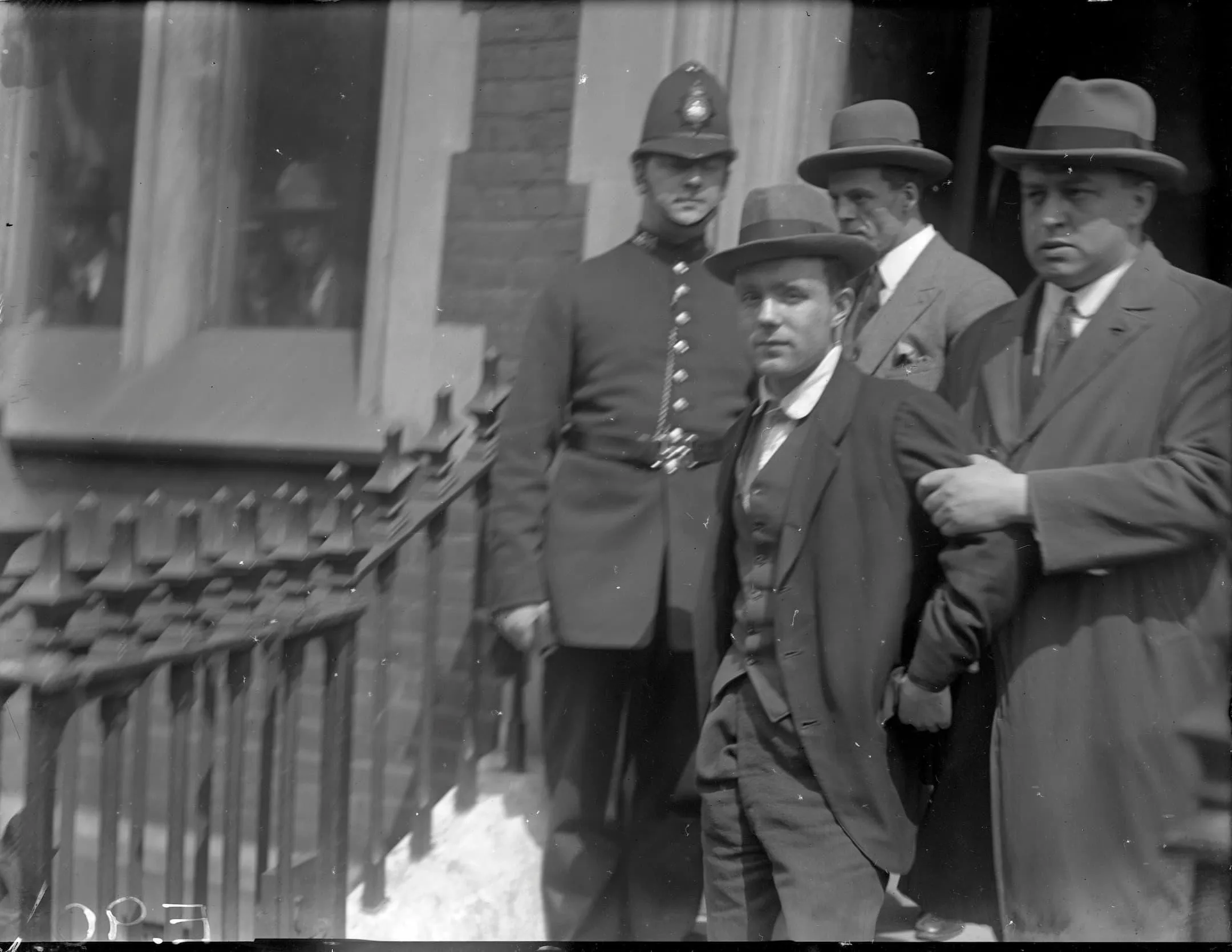
Photography
The arrival of photography introduced a new and more immediate means of capturing events as well as providing policing with new methods of surveillance and detection. We explore investigations around the Houndsditch Murders in 1910 and the reporting of the trial of Alexander Mason, accused of the murder of the taxi driver Jacob Dickey in 1923. Amazingly, the use of a daguerreotype of Martha Allen as evidence in a divorce case from 1848 provides us with the earliest photographic portrait in our collections.
The exhibition presents a range of stories from court records. Some are famous but the majority are everyday stories of Londoners. As sources for exploring daily life in London over the centuries, court records are unrivalled. Very few aspects of life in London did not fall into their scope. Londoners from all walks of life appeared in court as victims and perpetrators of crime, as witnesses, law enforcers, officials and petitioners.
A host of characters
Given the variety of court business and the long time periods involved, the examples presented can never be considered as representative and they are certainly not exhaustive. We’ve chosen cases which we hope are interesting on multiple levels and which reflect the complexity and multilayered nature of London society throughout the ages. You’ll discover fraudulent bakers from the medieval City, unruly apprentices, proprietors of nightclubs, pickpockets, highwaymen, celebrity criminals, revolutionaries and mutineers. Not to mention a whole host of law enforcement officials. But there’s always so much more to discover in our collections!
Some interesting themes emerge from the stories we have focused upon. The courts were places where individuals could obtain justice and where rights were upheld (notably those concerning property). But conversely, they were also places where rights were denied, where lives of Londoners were controlled, regulated and restricted.
Criminalisation of communities
Courts upheld dominant ideas of societal norms to the detriment of those who transgressed them. Many of the cases displayed show how groups of people were routinely criminalised as a result. Immigrant communities, gay people, women, trans people, political groups, sex workers and young people were targeted and stigmatised to varying degrees.
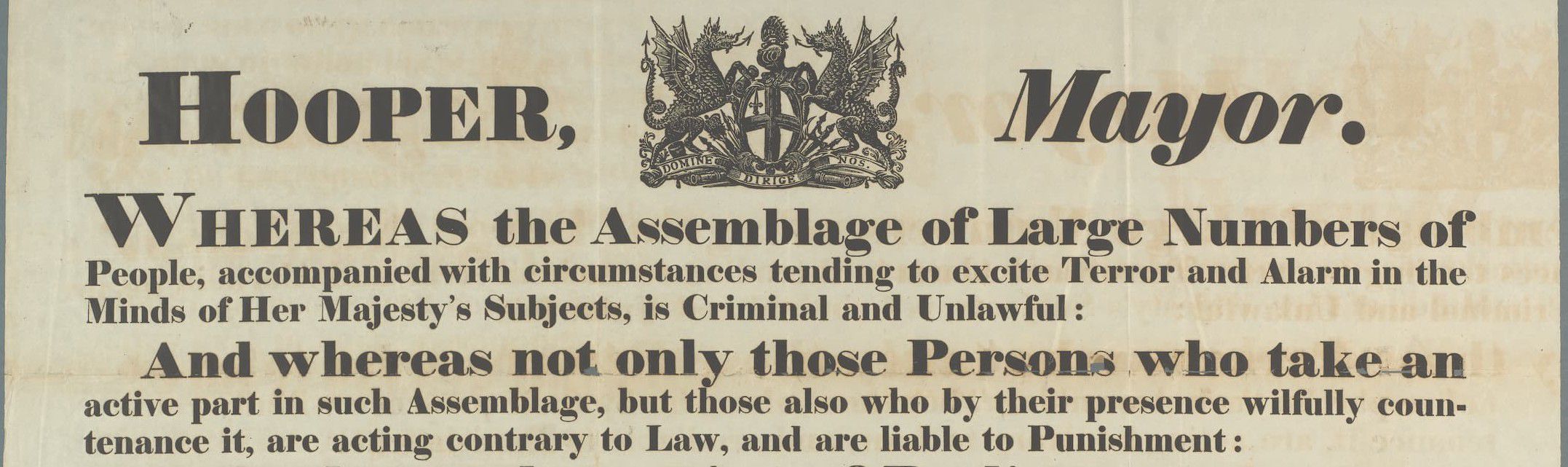
Our video displays examine the impact of the vagrancy acts on Irish communities in the nineteenth century, explore how women criminals transgressed established ideas of womanhood and look at the ways young people’s lives were regulated by the apprenticeship system. Restrictions to political protest and the criminalising of dissent in the eighteenth and nineteenth centuries are also considered. Sedition laws censored debate and restricted spaces for public meetings and assemblies, while the Aliens Act placed the burden of suspicion on immigrant communities.
Policing morals
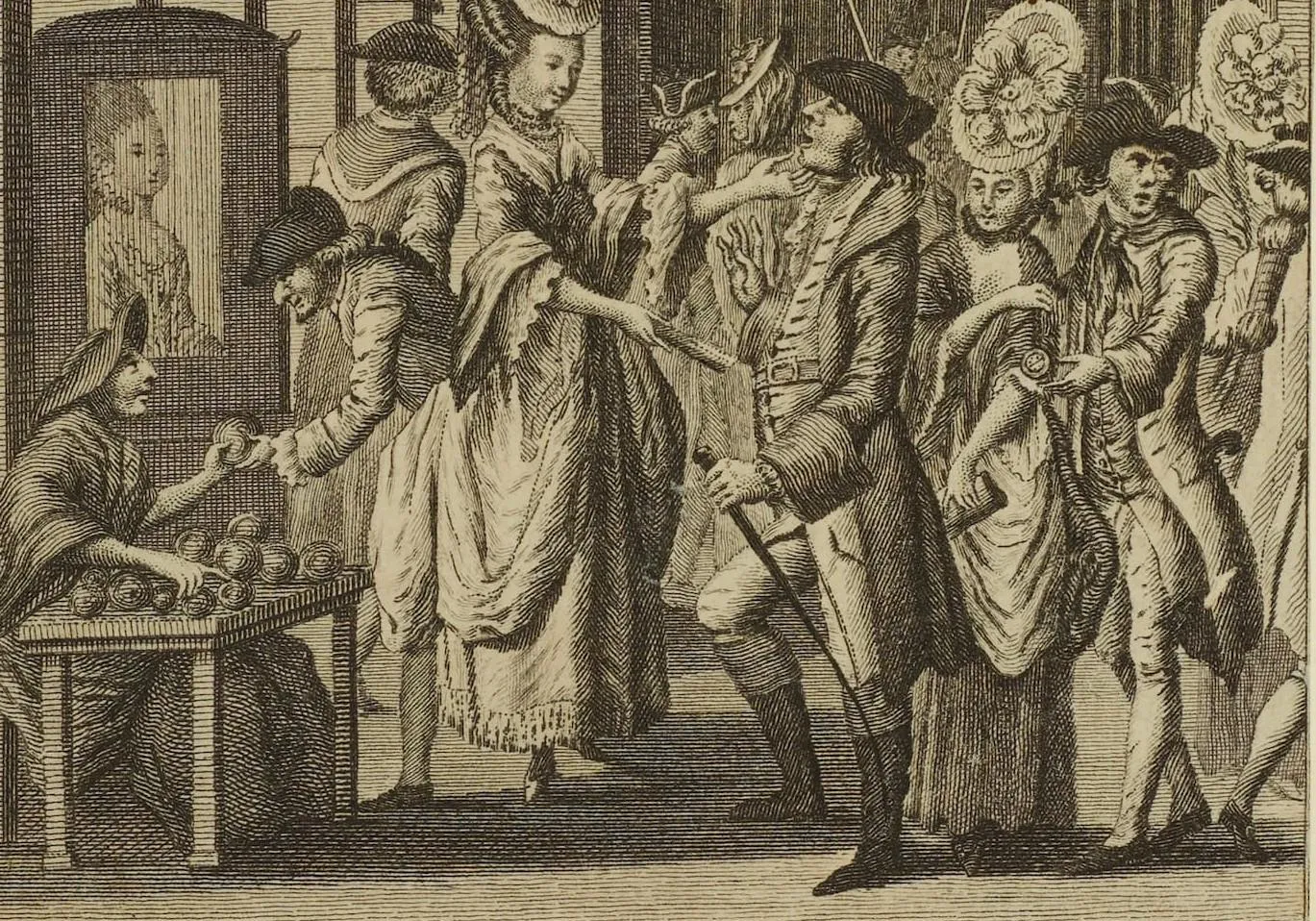
The way that courts were consistently used to publicly police morals over many centuries is evidenced by several of the cases featured. The trial of Eleanor Rykener at the Mayors Court in 1395, the censoring of Mary Frith (aka Moll Cutpurse) by the Bishop of London in 1612, convictions of gay men in 1707 by the Society for the Improvement of Manners, the sentencing of Oscar Wilde for indecency in 1895 at the Old Bailey and attempts to control Soho nightclubs in 1920s all suggest long held imperatives to define and regulate what was considered acceptable social behaviour. When we consider that many of these cases were private prosecutions we start to see how the records of the courts can tell us a great deal about London society throughout the period.
So, come and visit 'Londoners on Trial' at The London Archives to discover more. The exhibition is free and runs until 25 February 2027.
Find out more