C.H.Matthews
Here we explore the work of the Victorian watercolourist Charles Henry Matthews (1820 - ?).
Biography of a Victorian artist
The engraver and watercolour artist C. H. Matthews (1820 - ?) had an interest in the landscape of North London. The scenes he principally depicted were in Hackney, Highbury, and Islington but other examples around the City and Westminster are also to be found.
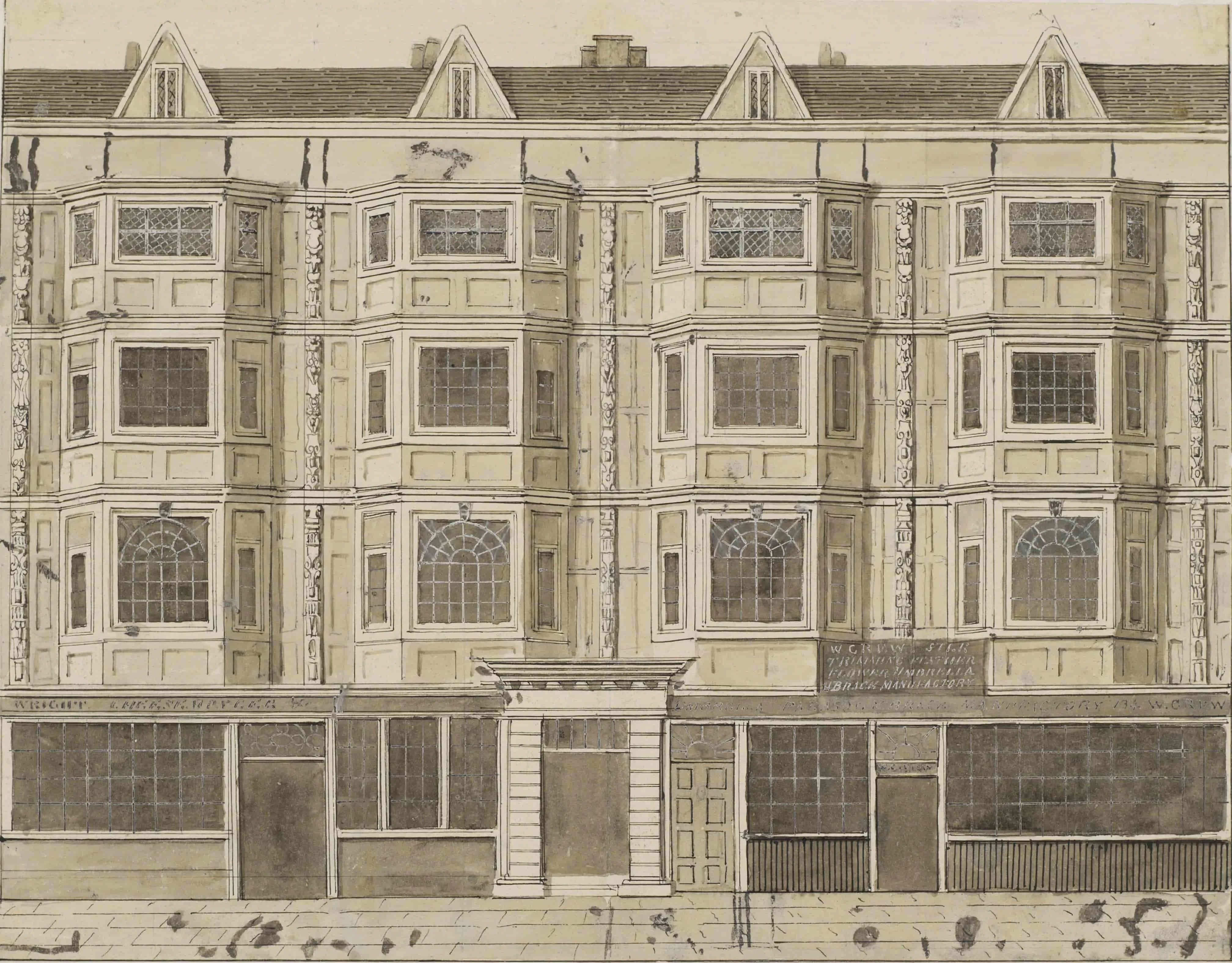
Charles Henry Matthews was born on 5 February 1820 and baptised on 27 February at St Botolph’s, Aldersgate. He lived at Aldersgate Street Buildings with his parents John and Louisa. It has not been possible to trace a certain year of death for Matthews as he disappears after the 1861 census and no substantial work is made after this period.
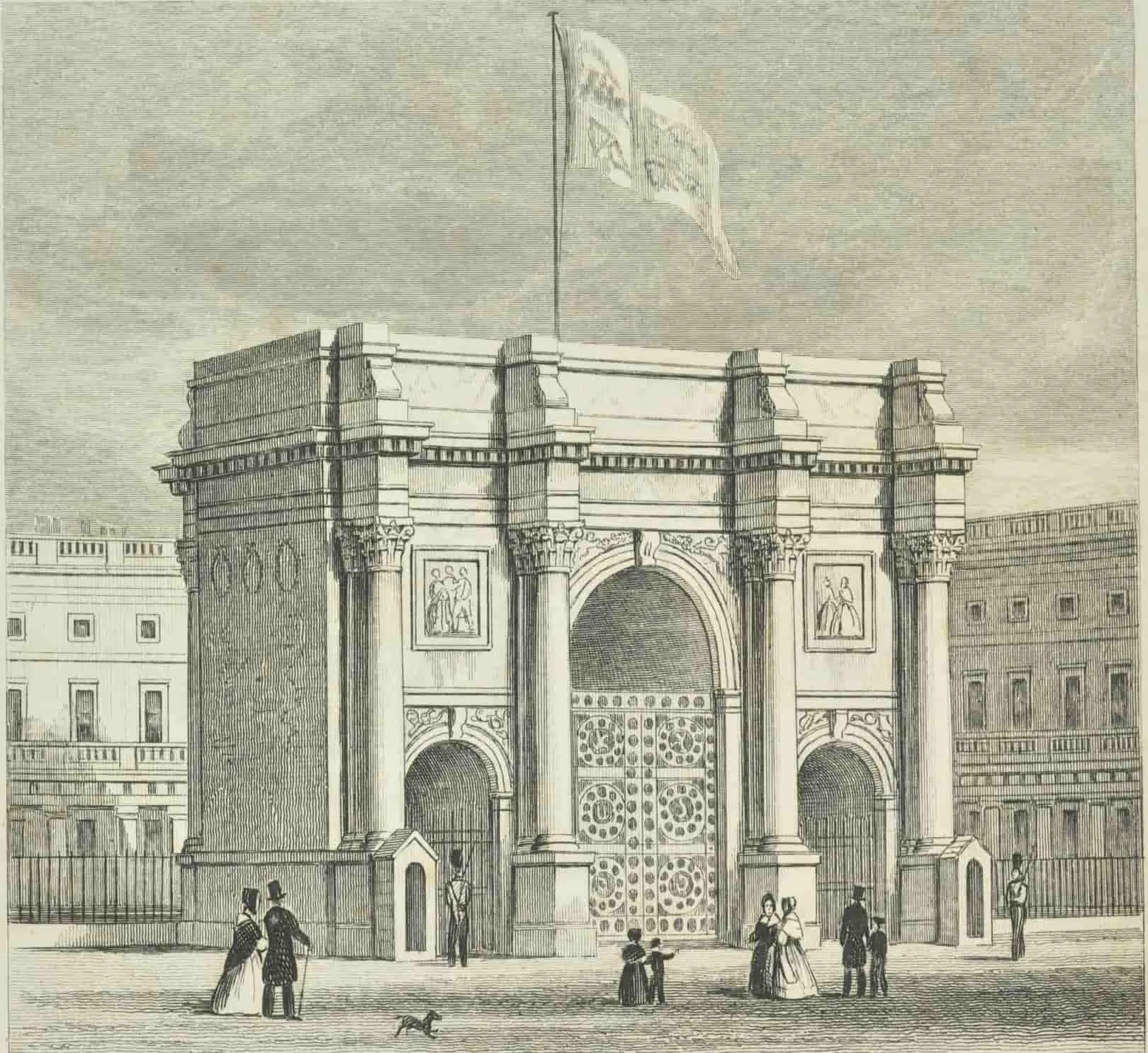
His career appears to have begun in engraving as he is credited with re-producing the work of T.H. Shepherd, including subjects such as Marble Arch, Buckingham Palace and Regent Street in Dugdale’s 'England and Wales Delineated' (1838-43).
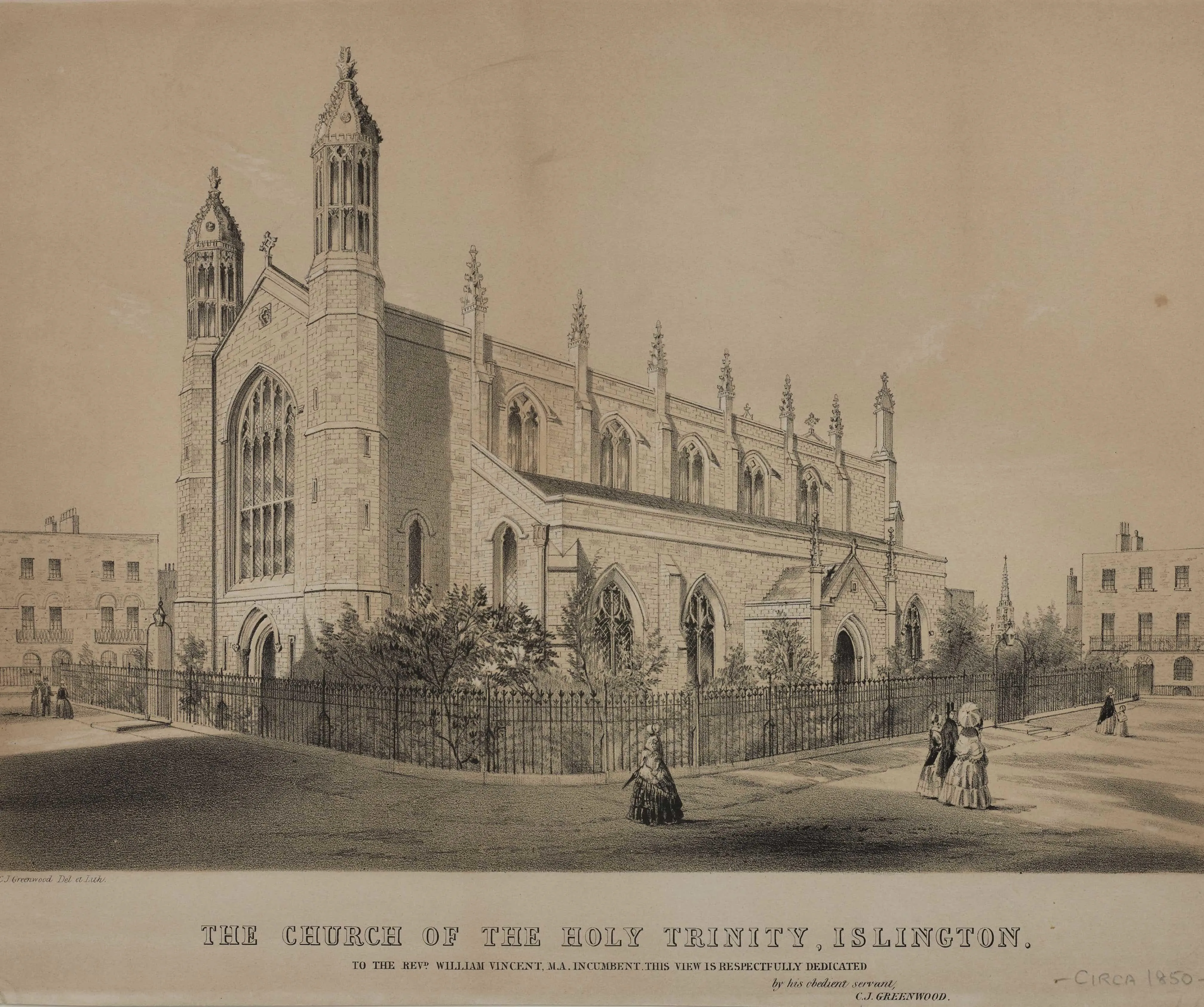
In 1846 he married Maria Yeman at Holy Trinity, Cloudesley Square, Islington when he was living at 55 Penton Street. This address was close to the Regents Canal and the White Conduit House which he had fondly captured in his drawings. The area to the north was still quite rural with dairy farms and fields.
On Islington Hill, a conduit supplied water at this location on the junction of Barnsbury Road and Dewey Road. Matthews lived nearby in the 1840s but imagines this area at an earlier point in its history. The tavern at White Conduit House is thought to have opened on the day of Charles I execution in 1649. It became a popular destination in the eighteenth century for well-dressed families in the City which is demonstrated in his depiction of the Long Room. Note the man at the window smoking a long pipe.

By 1851, Matthews was residing at 7 Gordon Street (Islington East) with their children Charles, Maria and Mary. There is a hint that he lived at Hackney Road in 1858 as his name is on the carriage in a watercolour of Paradise House, 'C H Matthew Artist Hackney Road 1858'. This was originally known as ‘The Back Road to Upper Street’ until it was renamed in 1822 and the Paradise Mansion House was demolished in the 1830s.
There were two additions to the family on the next census in 1861 with Henry and Louisa at 84 Britannia Terrace, Shoreditch.

The dates of execution of the works are variable and can only be taken as a rough estimate by the original cataloguer, unless Matthews has specifically dated the work.
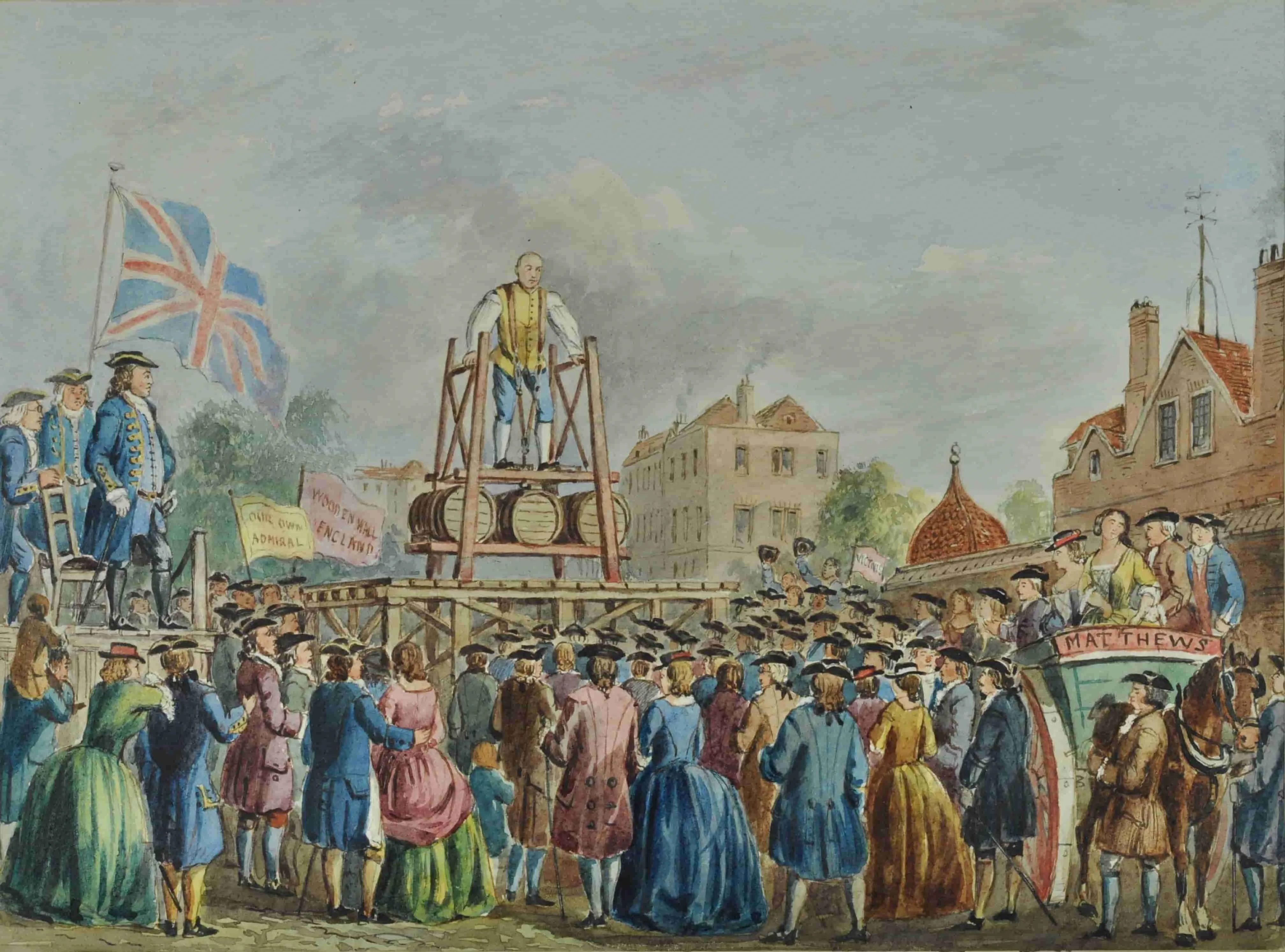
His work often looks back to a previous era and depicts subjects from the eighteenth century, one such example is of the strongman Thomas Topham. In his watercolour, Topham stands on a wooden stage with three barrel of water weighing around 600kg which was to be lifted using a strong rope over the shoulders. This was to celebrate the taking of Porto Bello by the Admiral Edward Vernon in 1839. The admiral was present at the event.
The London Picture Archive
Explore more of the work of C H Matthews on the London Picture Archive gallery dedicated to the artist.
Search the London Picture ArchiveA Market for Nostalgia
During the period that Matthews was studying London, the landscape was being rapidly developed. Previously, mapmakers such as Richard Horwood in the 1790s were reflecting a new city back to the people to help them find their place in it.
Matthews was looking at a semi-rural London and presented idyllic versions of the Cityscape, capturing its social history in a scene. We might ask, how accurate was it as a representation of the time and how does this translate into the popular imagination about an historical era? Were this depictions a sentimental longing and nostalgia for a past that was fast disappearing? This could be said to be inevitable following industrialisation: a need to preserve something of this lost world. But we must heed caution when imposing categories, as these would not necessarily have existed in the mind of the artist.
A selection of works
Here we present a selection or works by C H Matthews:
Waterfront at Night, Islington
The viewpoint of the artist is likely to have been by the New River, Canonbury Grove looking towards St Mary, Islington.

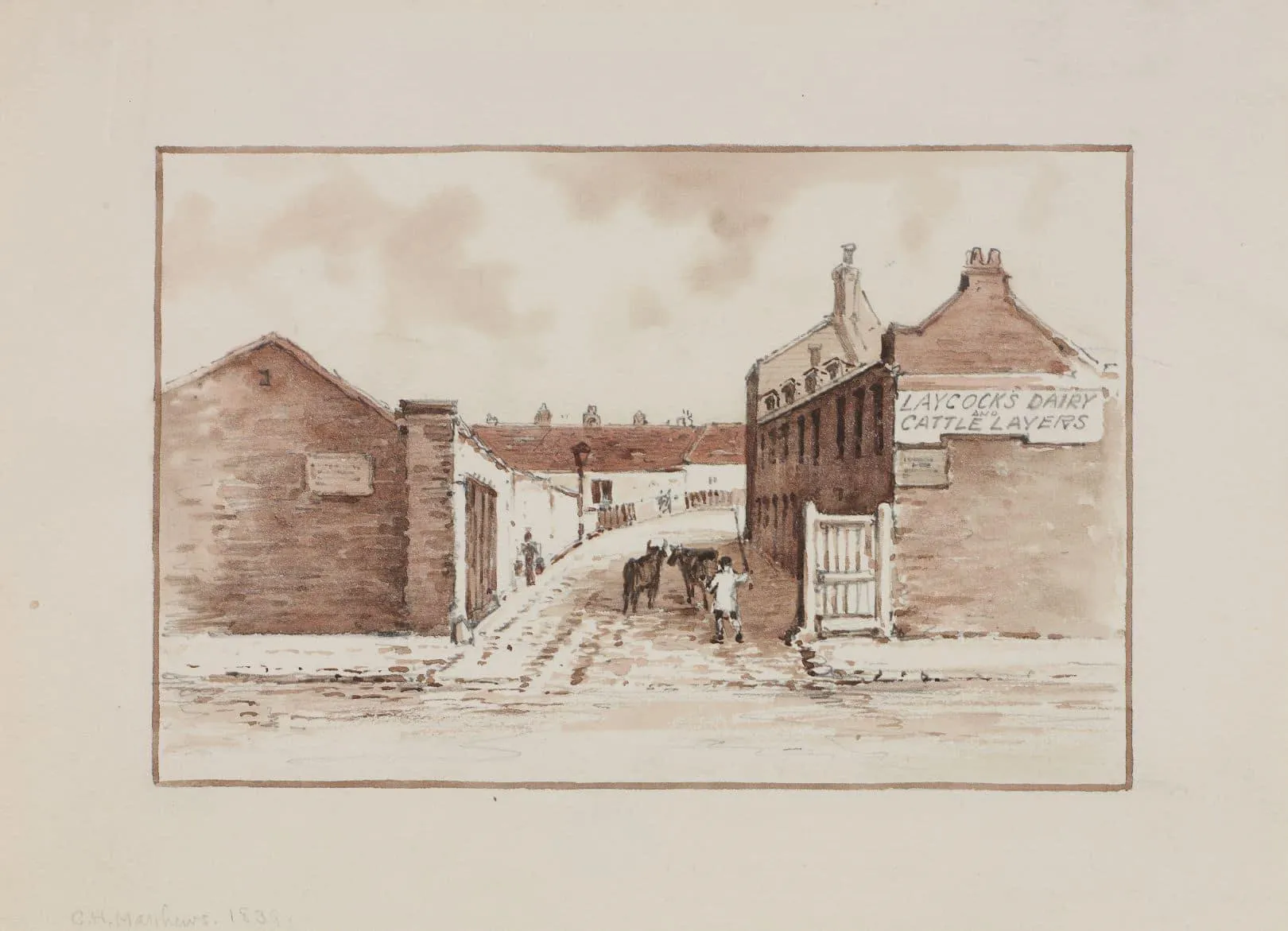
Laycock’s Dairy, Islington
Laycock’s Lairs (or layers as noted in this image) were just off Liverpool Road and Park Street, behind where Highbury Station Road is today. The lairs were open fields where livestock could rest and be fed after being transported by drovers from other parts of the country. Laycock Street and Laycock Green are nearby.
Richard Laycock was a major player in livestock and by 1810 most small dairy farms had been superseded by him as well as Samuel Rhodes in Islington. Laycock’s dairy provided milk for London up until the 1860s.
Laycock had several hundred acres of lairs by 1820 on the New River Company’s land and he was the last agricultural tenant, his land was later turned over to brickmaking. Sometimes salesmen would purchase cattle from the lairs before they got to Smithfield.
Duval's Lane, Holloway
Duval's lane was named after Claude Duval (1643-1670) who was known to have robbed travellers between Highgate and Islington and was hanged at Tyburn. Duval’s Lane stretched out of Holloway and became Hornsey Road where Duval is said to have lived. This was an area that was notorious for highwayman.
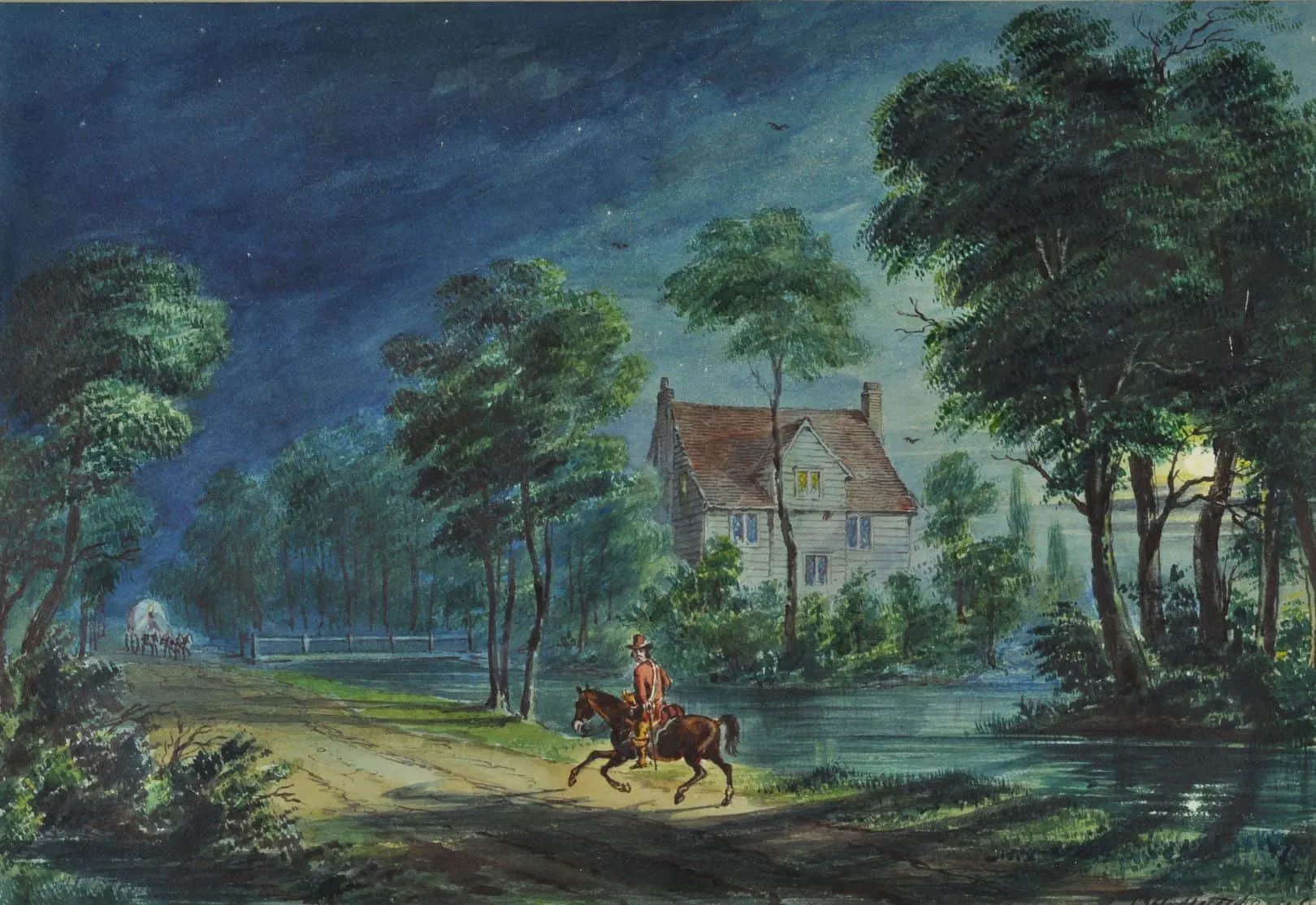
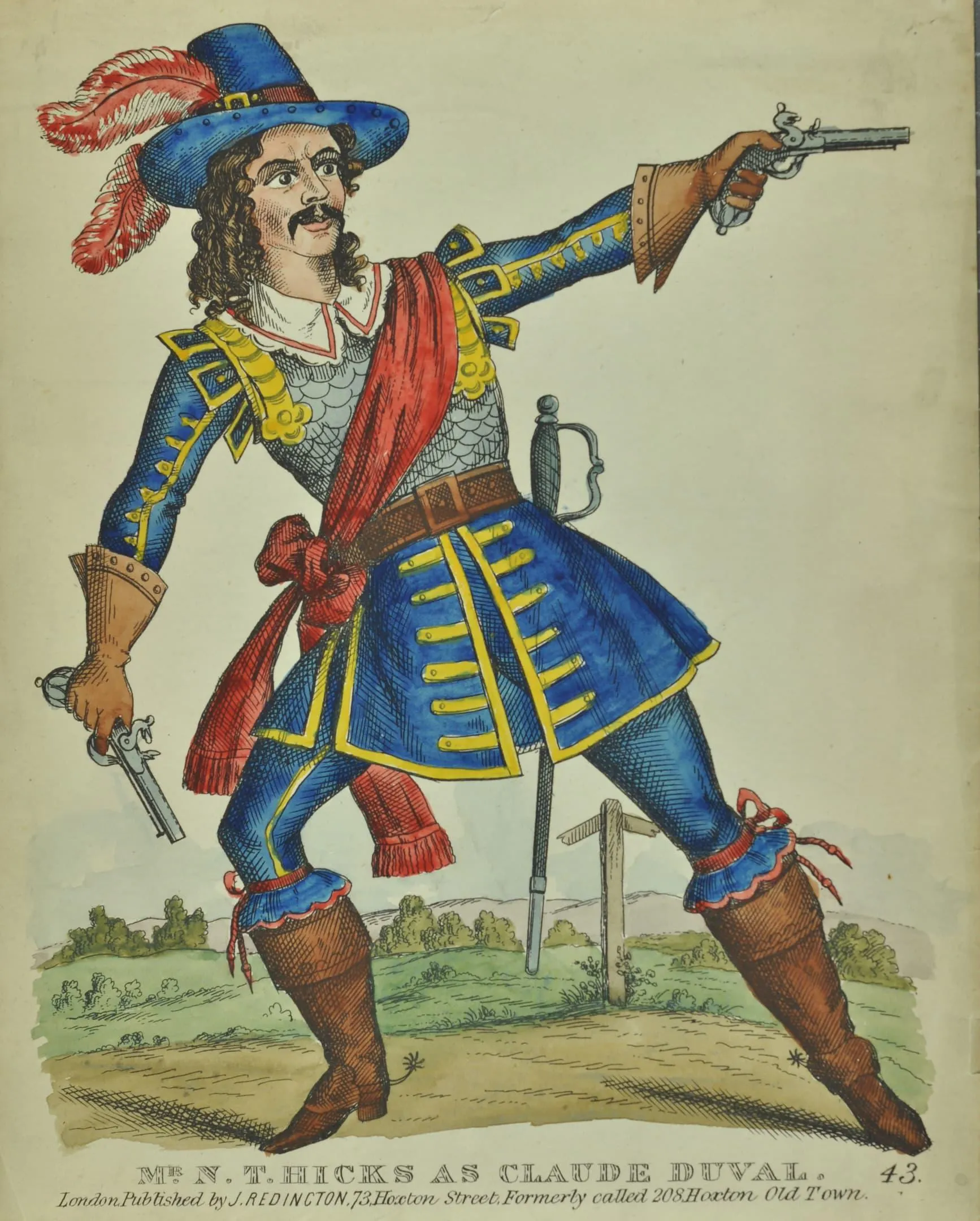
Is this him on horseback acknowledging us with an animated look as the coach advances? If we compare with another artist impression of Duval, as played in a theatre production by the melodramatic actor Newton Treen Hicks, we can see the similarities in clothing. The production: ‘Whitefriars, or the Days of Charles the Second’ was performed at the Surrey Theatre in 1844 and is likely to have been a character that Matthews was aware of. The painting of the scene by Matthews could also be a back drop to the stage production.