

John Anthony: A Chinese Londoner
It is often the case that the more you look at something, the more you find. A probate document from 1815 relating to a Chinese sailor which we displayed in our 'Unforgotten Lives' exhibition in 2023, inspired the curatorial team to explore further. Our research led us to the fascinating life of John Anthony who features in our 'Londoners on Trial Exhibition'.
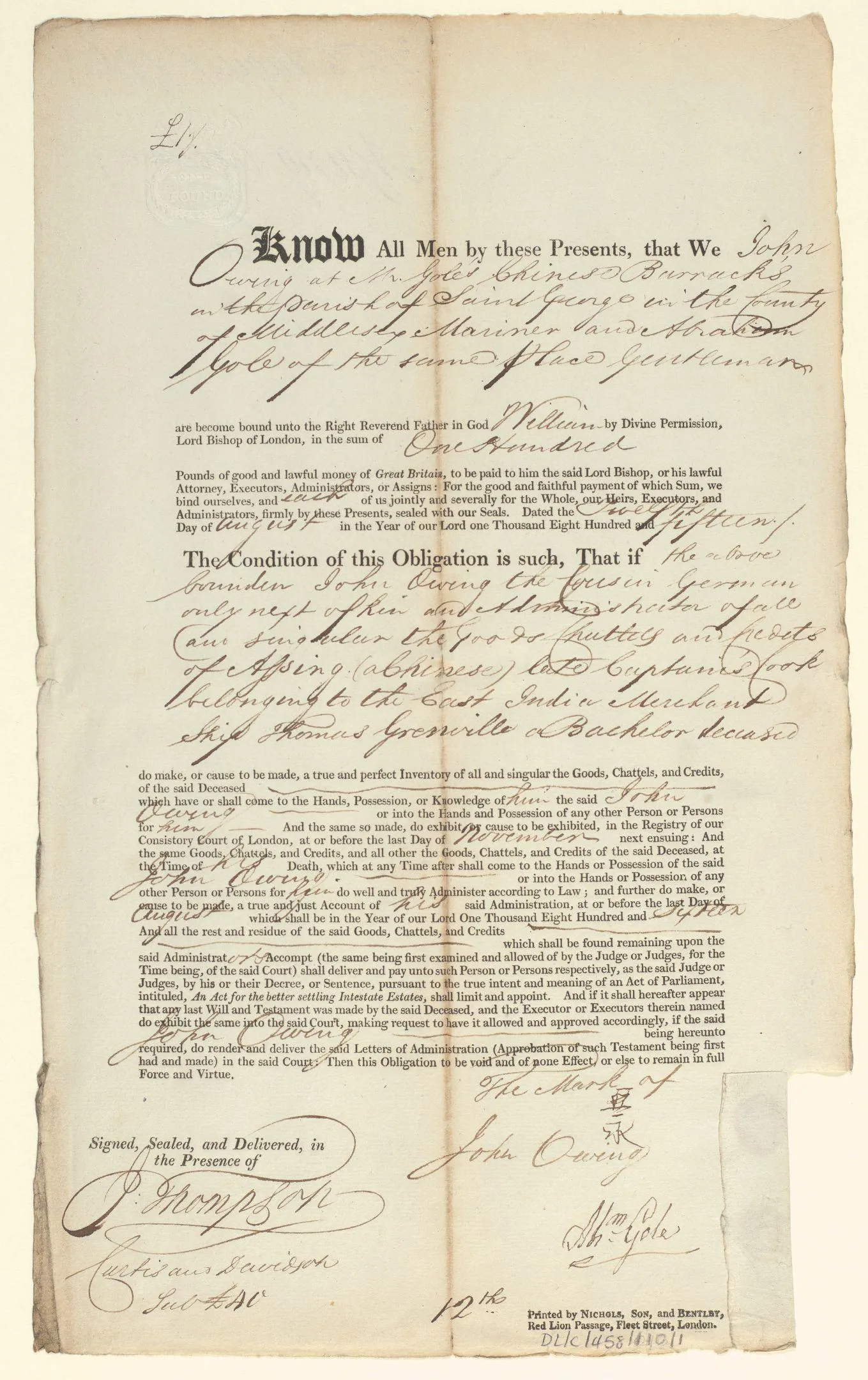
Where our research began
Amongst the records of the Consistory Court of the Diocese of London is a probate document from 12 August 1815 for a Chinese man called Assing. He is described as a ship’s cook, working for a Captain on the East India Company ship the ‘Thomas Grenville’. The document tells us that Assing has died whilst in London and it authorises his relative, a man called John Owing, to sort out his possessions.
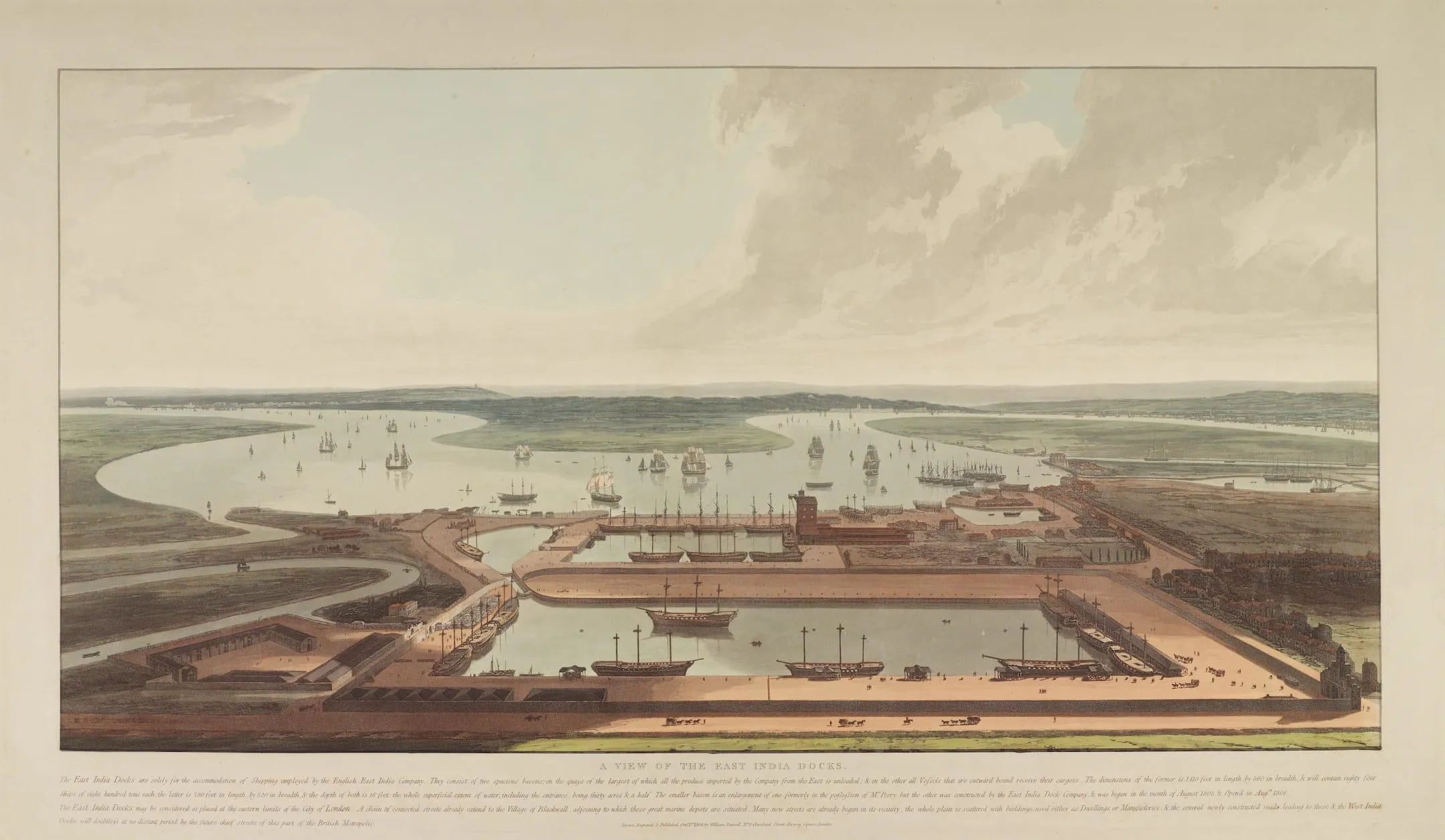
We know nothing of Assing’s life, but his death in London was not an uncommon fate for East India Company sailors. These men, commonly known as ‘Lascars’, were essential to London's maritime trade, ensuring that a continuous passage of ships laden with precious cargo travelled across the globe from Britain's colonies.
East India Company Sailors
The term 'Lascar' became widely associated with sailors from the Indian subcontinent, particularly with East Bengal, but the term could apply to seamen from East Africa, Yemen, Southeast Asia and (in this case) East Asia.
Conditions on ships were poor. Work was hard, wages low and sailors were often treated badly. But crucially, many sailors were in effect stranded in London, sometimes for months at a time awaiting passage back home, without sufficient money or lodgings. In theory, the East India Company was responsible for their welfare, but in practice many were left destitute to fend for themselves without any means of survival.
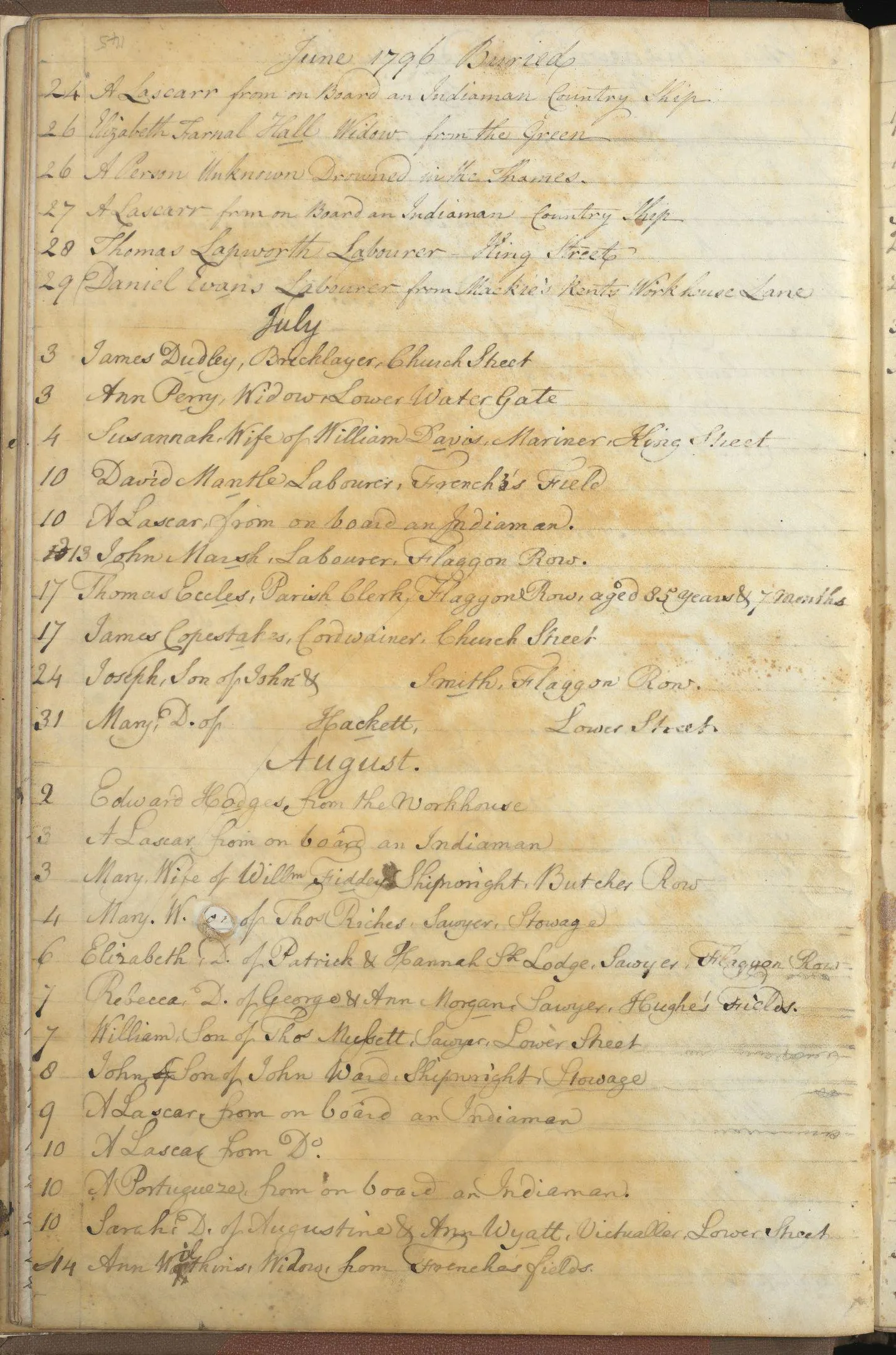
Their plight had already been brought to the attention of the public in the late eighteenth century. Media reports drew attention to the number of impoverished East India Company sailors stranded in London. Burial registers from parishes close to the Port of London such as St Nicholas Deptford record multiple deaths of sailors in the mid-1790s. Few are named, each being described simply as a ‘lascar’ from on board an ‘East Indiaman’ ship and rarely do we know anything about the circumstances of their deaths.
The Strangers' Home
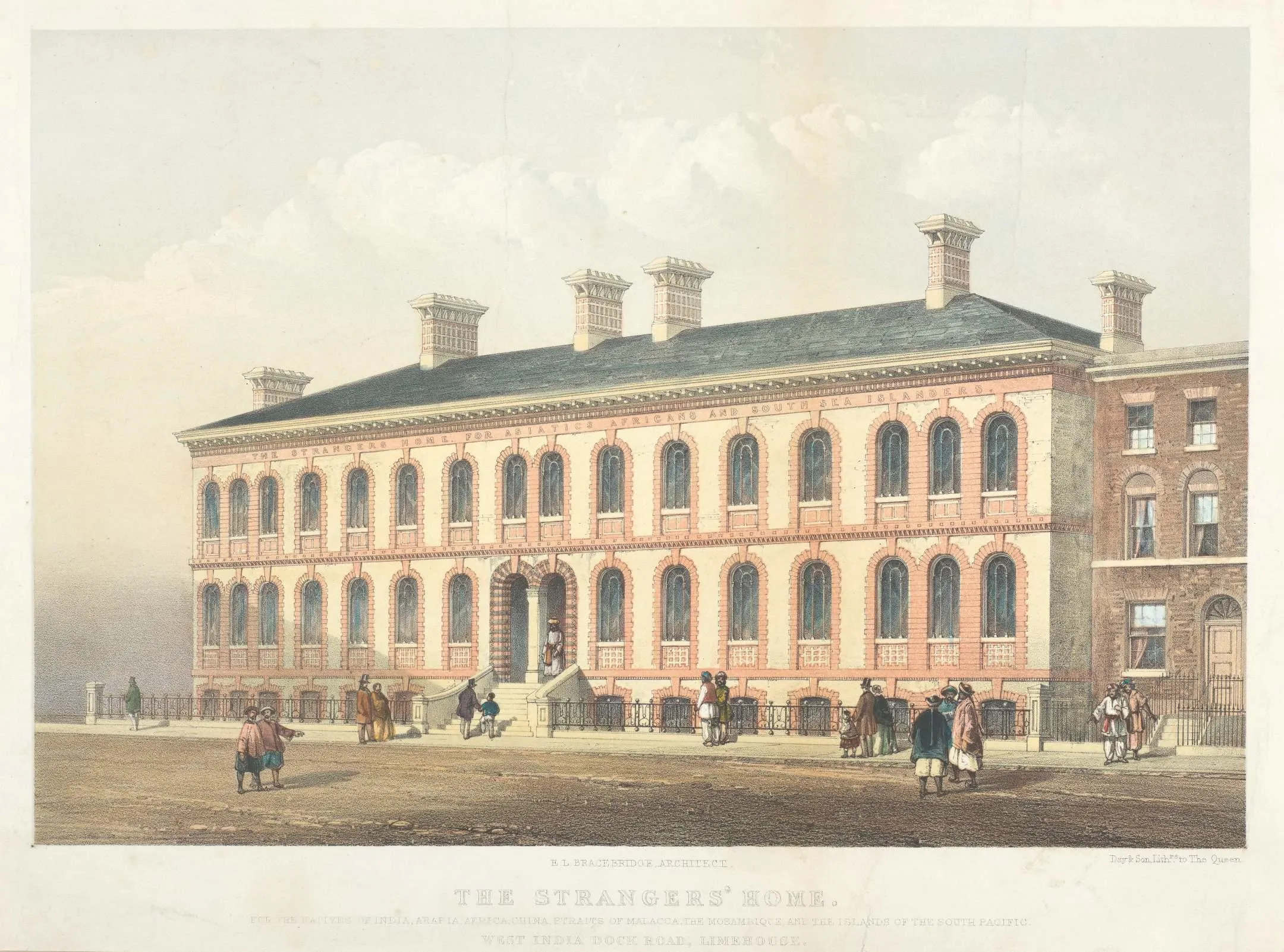
It wasn’t until the 1850s that institutions were set up to provide welfare for these sailors. For example, ‘The Strangers’ Home for Asiatics, Africans and South Sea Islanders’ was founded in West India Dock Road, Limehouse to provide lodgings for unemployed and destitute sailors awaiting return passage on ships in 1856. Before then, the situation relied upon privately run lodging houses.
John Owing and Abraham Gole
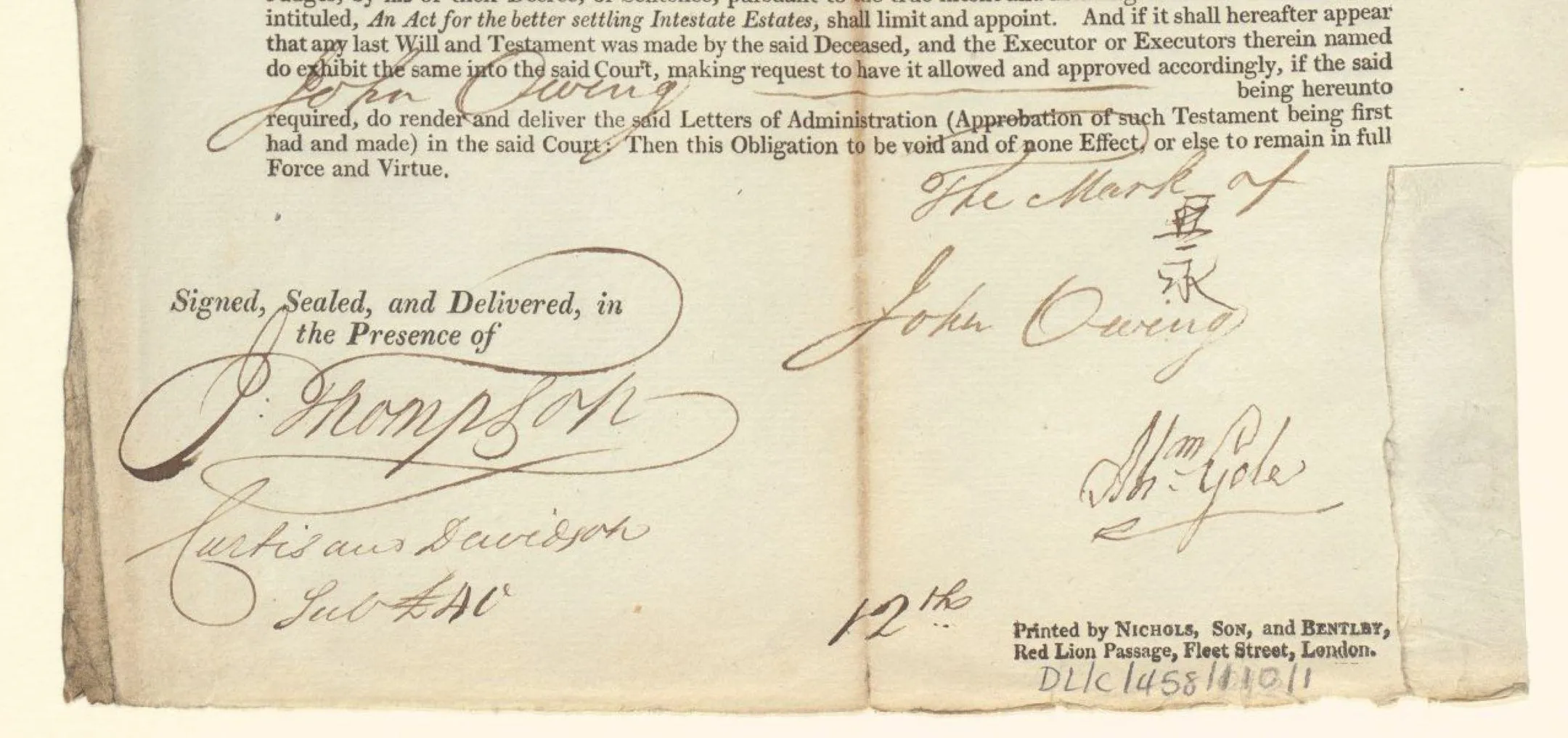
If we return to the probate document, there are a few interesting things to note. The first is that John Owing signs his name in Chinese characters. Although the Clerk writes ‘The Mark of’, thereby suggesting illiteracy, he is probably unaware that John Owing can clearly write in Chinese.
We also see that the document is signed by a man called Abraham Gole and that John Owing’s place of residence is given as ‘Gole’s Chinese Barracks’. It is this information that leads us to our protagonist.
Abraham Gole had a contract with the East India Company to run a lodging house for Chinese sailors in St George in the East. The Gole family had been running the business for many years and a decade before, Abraham’s business partner and brother-in-law had been one John Anthony, a man with an extraordinary backstory.
Old Bailey Sessions Book
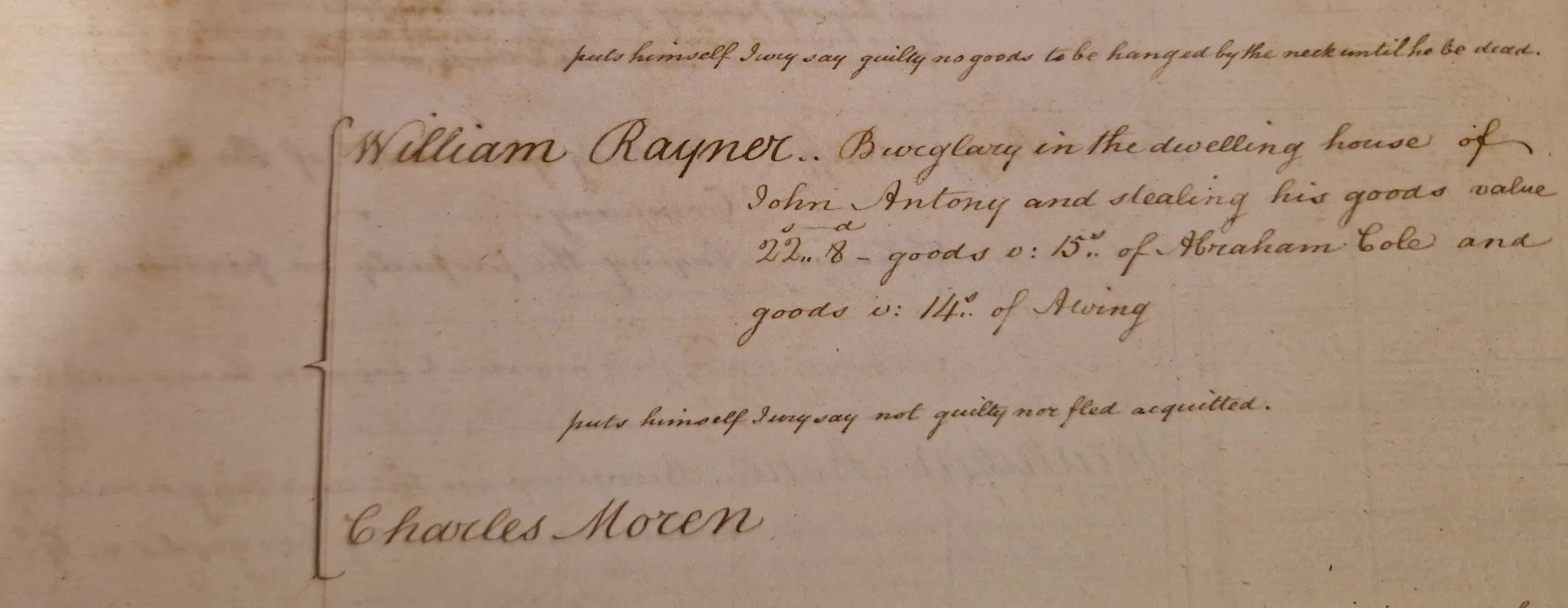
Much of what we know about John’s life is taken from court records. John Anthony first appears at the Old Bailey in 1800 as the victim of a burglary at his property in Shadwell. William Rayner and Charles Moren are accused of stealing the property of John Anthony, Abraham Gole and Awing. Rayner is found guilty and sentenced to death. Moren is acquitted.
John appears at the Old Bailey to give evidence. The verbatim accounts of these cases were captured by journalists and published as the Proceedings of the Old Bailey and glimpses of John’s life appear in the answers he gives to the questions put to him in court.
For example, we learn from the trial in 1800 that John was living at 4 Angel Gardens, Shadwell. John himself states:
I am employed by the India Company to take care of the lascars who come over here; I rent this house and employ Awing to take care of the house and of the men
You can read a full transcript of the trial at The Old Bailey Online.
A later case from December 1804 gives us more information. Ann Alsey and Thomas Gunn are accused of stealing from a man called Erpune, who is described as ‘a native of China’.
These court records provide our first confirmation that John Anthony is himself Chinese. They tell us that John is attending court as an interpreter, translating to and from Chinese for the court officials.
In presenting to the court his credentials for doing so, he provides further details about his life. John tells us he left China at the age of 11 and has been in England “since the American War backwards and forwards”, originally working as a sailor. He says he now runs a business providing lodgings for East India Company sailors in Shadwell.
The presence of both John and Erpune at the Old Bailey on 5 December 1804 is clear evidence of the longstanding diversity of London’s populations. But the case also shows that the courts took seriously the cultural backgrounds of the people who appeared there.
Swearing oaths
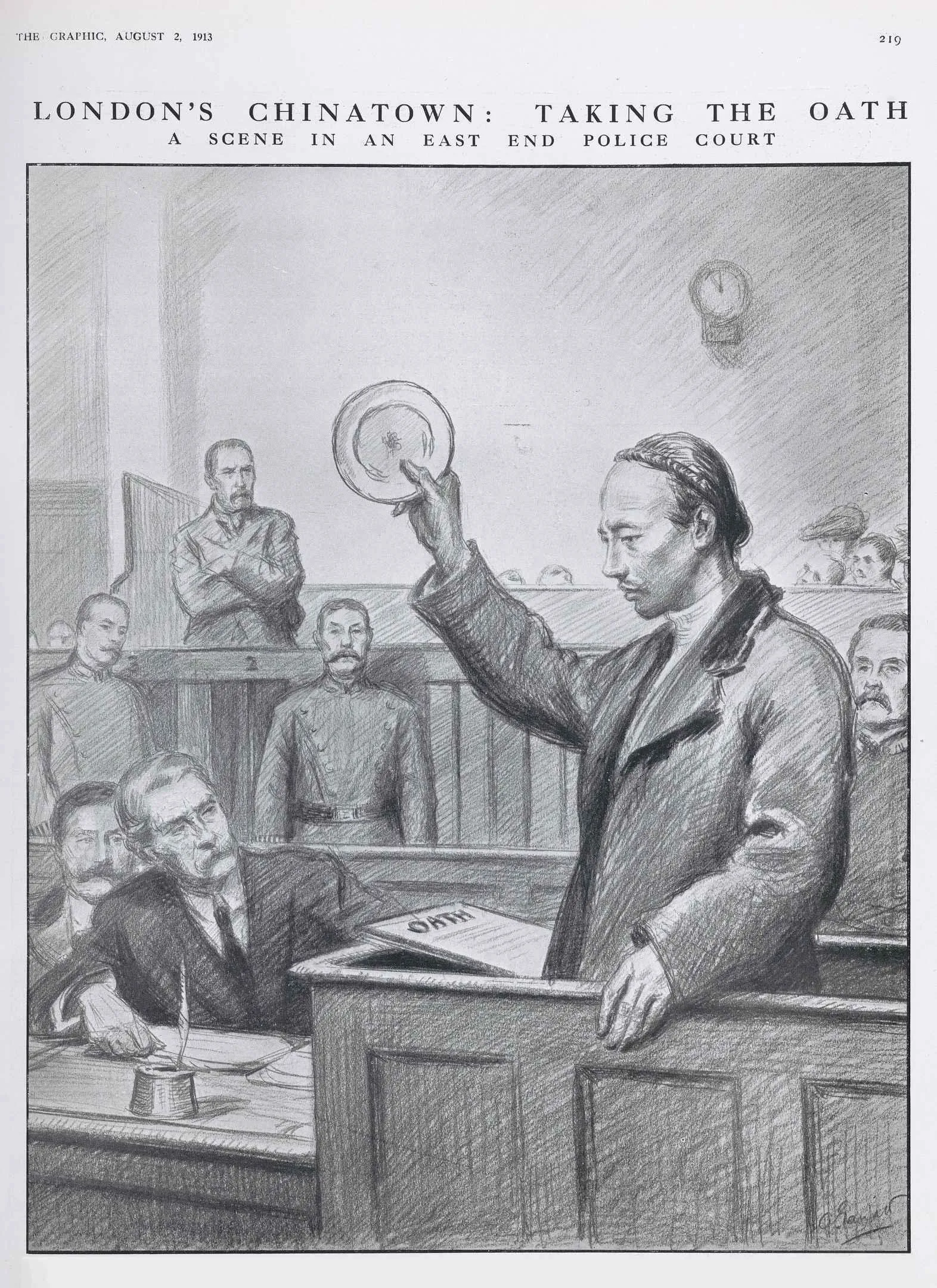
Chinese people were permitted to swear oaths in police courts according to the legal traditions in China. The court officials ask John to explain the process of swearing of oaths in China. He explains:
they break a saucer, and then they are told, your body will be cracked as that saucer is cracked, if you do not tell the truth
You can read a full transcript of the trial at The Old Bailey Online
That John Anthony became a person of some standing is evidenced by the fact that he had an obituary published in the Gentleman’s Magazine when he died in August 1805. In it we discover that John had amassed a fortune running the business. He had a country-house at Hallowall-down, Layton in Essex as well as property in Shadwell and the obituary tells us that he was the first Chinese man to become naturalised as a British citizen (a process involving obtaining a very costly private act of Parliament).
Remarkably, it also states that he was so well known that some 2000 people (including “all the Chinese in town”) attended his funeral on 6 August 1805 at St Paul Shadwell. Both his baptism and burial are recorded in the parish registers of St Paul Shadwell (reference: P93/PAU3/4/1 and P93/PAU3/36) and John’s marriage to Esther Gole on 11 June 1799 can be found in the register of All Hallows, London Wall (reference: P69/ALH5/A/008/MS05089/002). John’s will was proved at the Prerogative Court of Canterbury.
Conclusion
John’s life is both typical and extraordinary, mirroring the historic complexity and diversity of London life. By the end of the eighteenth-century, London was a global city at the heart of a growing Empire. Many aspects of life in the capital were products of these colonial connections and London was immeasurably enriched as a result. The diversity of its populations, the grandeur of its buildings, the wealth and power of its institutions and businesses, the richness of its cultures and the availability of daily commodities were intimately linked to empire.
John embodied these times. Born in China, he crossed the globe aged just 11 years and joined the East India Company as a sailor. He travelled to America and back upon numerous occasions before settling in east London and making his home (and fortune) there.
His life appears astonishing, but frustratingly we actually know so little about it. After more than two centuries, and with just the bare bones tantalisingly presented in the archives, we can only wonder at the experiences (and hardships) he must have had. Yet, one suspects the crowds attending his funeral in St Paul Shadwell in August 1805 might have been wondering a little too.