

Dick Turpin: Romanticising the Highwayman
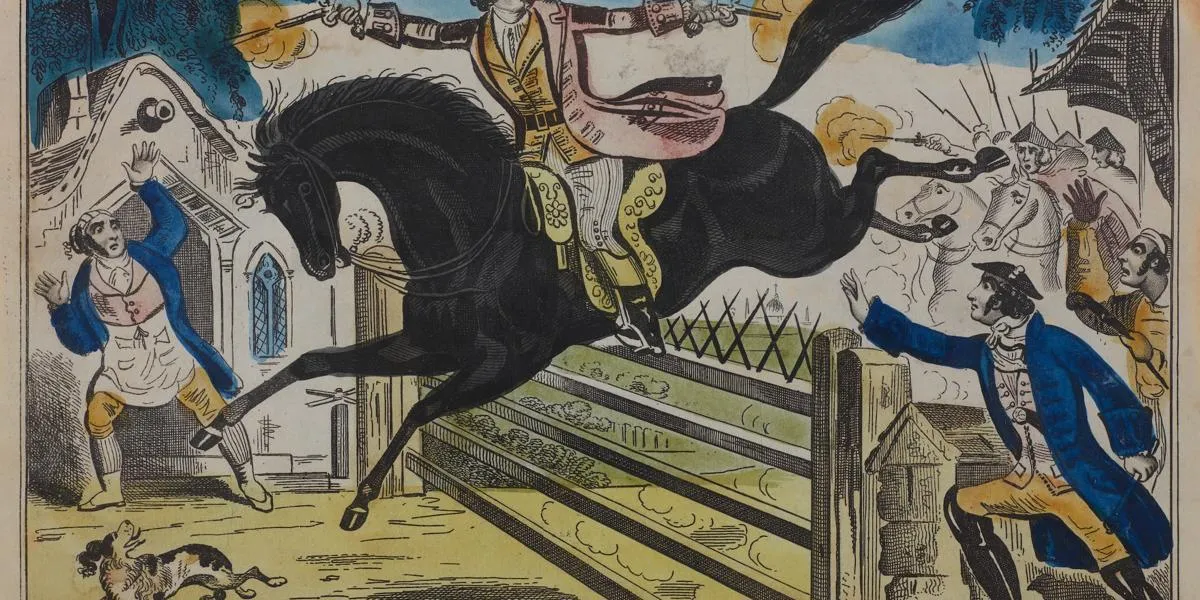
Richard Turpin
Richard Turpin (baptised, 21 September 1705 – 7 April 1739) famously known as ‘Dick Turpin’ was born in Hempstead in Essex and was the son of a butcher and innkeeper. The dashing highwayman figure has captured the imaginations of generations since he committed his crimes but in reality he was a violent robber. Here we investigate how that image came about.
Highwaymen
A highwayman made a living by robbing travellers on the roads that connected London with the rest of the country. Busy routes across areas such as Hounslow Heath, Finchley Common, Blackheath, and the roads around Epping Forest were favoured locations because wealthy merchants, lawyers, landowners, and stagecoaches regularly passed through them. Highway robbery became profitable as travel increased during the eighteenth century.
With a pistol in each hand, and his bridle in his teeth, Turpin passed boldly on. His fierce looks - his furious steed - the impetus with which he pressed forward, bore down all before him...But Dick kept steadily on. He coolly calculated the height of the gate; he looked to the right and to the left...he spoke a few words of encouragement to Bess; gently patted her neck; then struck his spurs into her sides, and cleared the spikes by an inch.
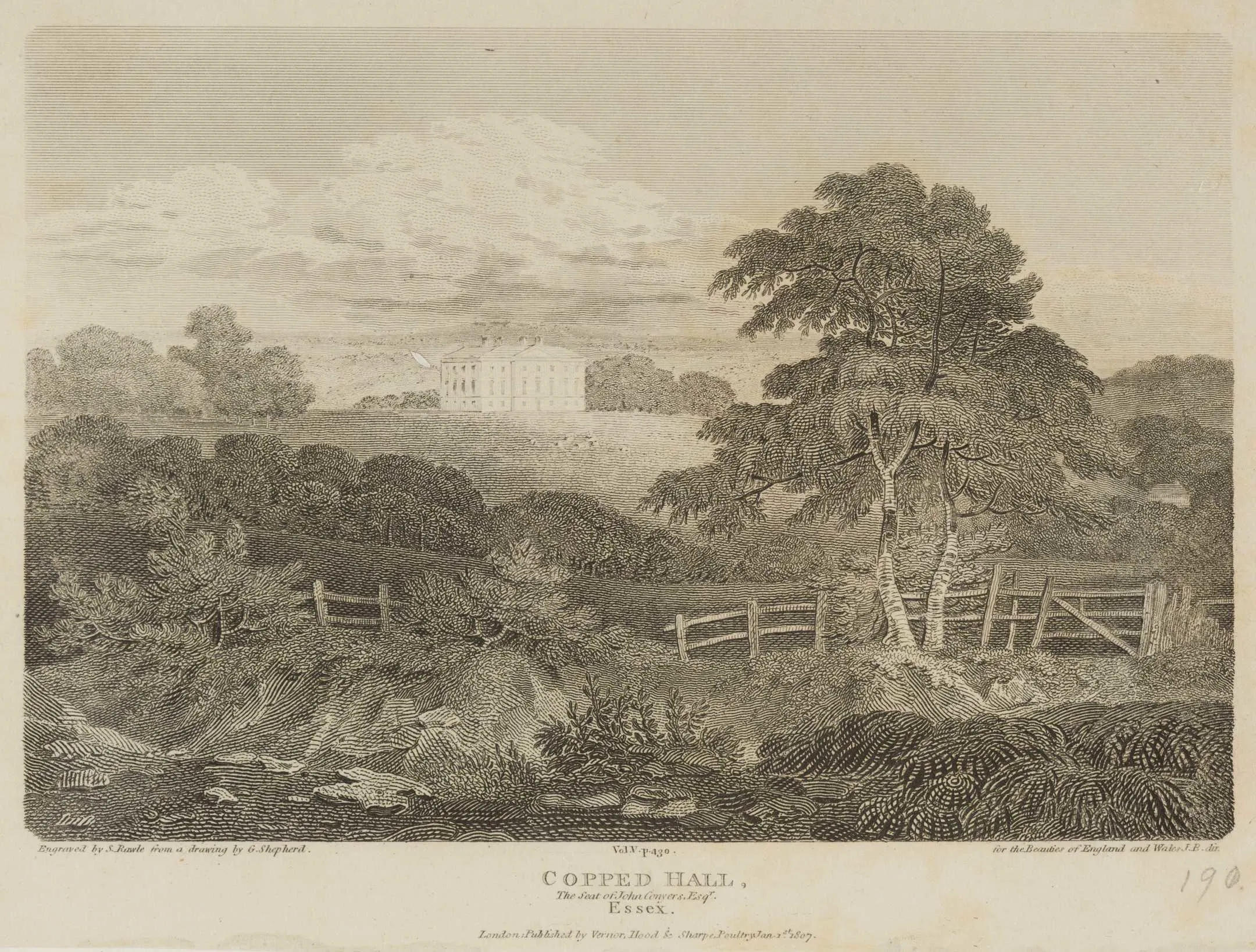
In John Croumbie Brown's 'Epping Forest' (1883), he writes about the supposed site of Turpin's hiding place near Loughton Camp where he would ambush unsuspecting passers-by:
Turpin's Cave is as much one of the exhibitions of Epping Forest as Turpin's Oak is of Finchley Common, and who shall begrudge to the admirers of each, in these unromantic and prosaic days, the indulgence of their tastes?
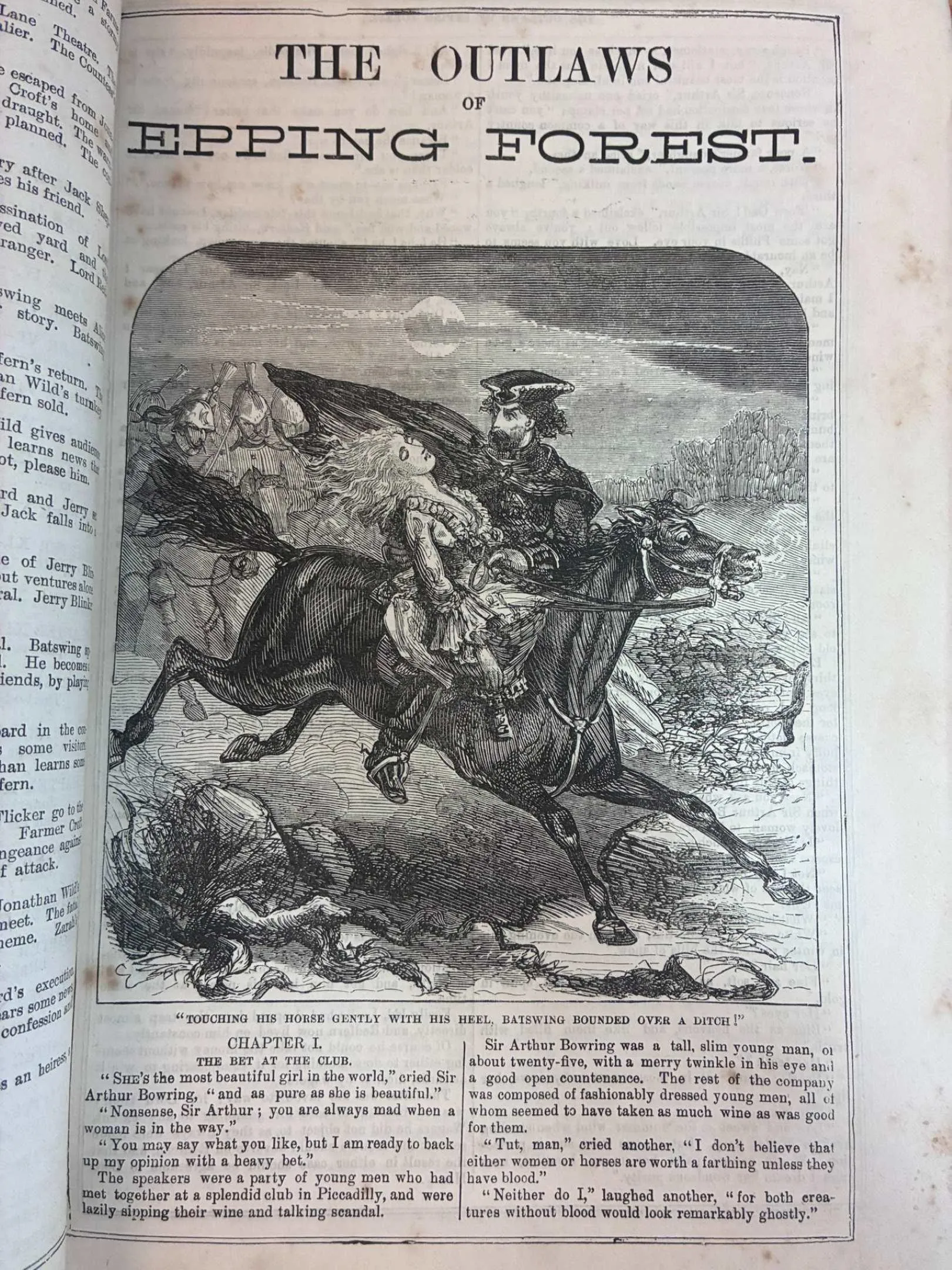
Another publication that romanticises the figure of the highwayman is, 'The Outlaws of Epping Forest', published by Hogarth House. It was an illustrated penny dreadful originally in 25 penny parts. It was later collected into a volume (reference: CLA/077/F/02/001). This serial fiction was melodramatic in its tone.

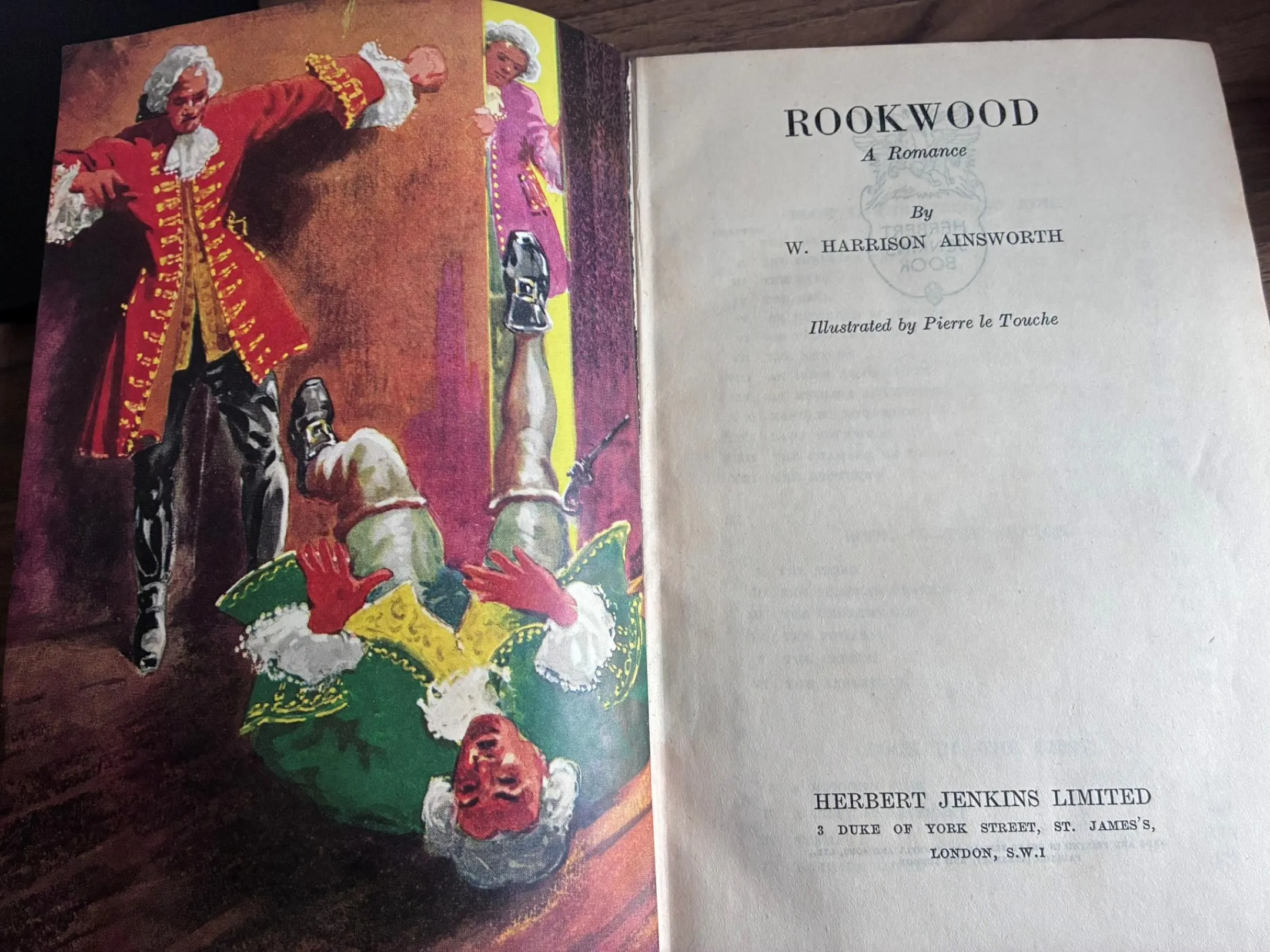
'Rookwood' by W.H. Ainsworth
Perhaps the most likely reason that Dick Turpin's character became imbued with romanticism was due to an 1834 Gothic romance, penned by the author William Harrison Ainsworth, called 'Rookwood' set in England in 1737. Its main plot concerns the inheritance of the fictional Rookwood Place and the fortunes of the Rookwood family, while Turpin's adventures form a major secondary narrative under his pseudonym "Palmer". In real life, Turpin used the name John Palmer when he was evading the law following his horse-stealing scheme in Yorkshire.
Zadie Smith brought Ainsworth back to public consciousness in her historical novel, ‘The Fraud’ (2023). Smith reimagines the world around him in Victorian London and revisits Ainsworth as a myth-maker and how nineteenth-century writers shaped public understandings of history, just as 'Rookwood' helped transform Dick Turpin from an eighteenth-century criminal into a folk hero.
"The cave!" cried Dick, rubbing his hands; "I delight in a cave. Tom King and I once had a cave of our own at Epping, and I'll have another one of these fine days. A cave is as proper to a high-tobyman as a castle to a baron."
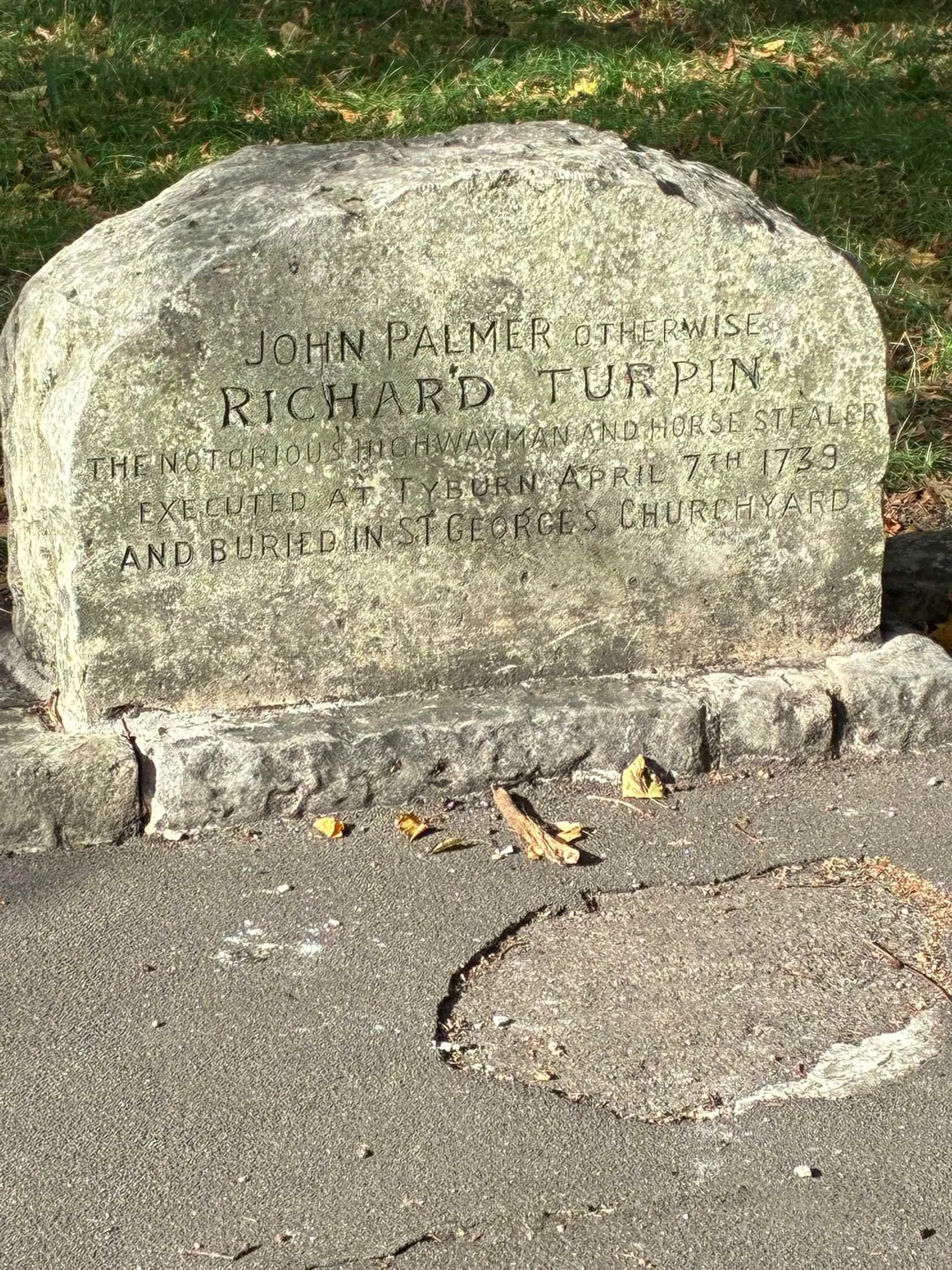
Turpin died in Yorkshire on 7 April 1739 by hanging and his coffin was purportedly laid out in the Blue Boar pub in the cellar. There's a coffin there to this day in a typical 'themed-pub' display. His grave is in St George’s Churchyard off George Street and Lead Mill Lane in Fishergate, York, but there is debate about whether his body is actually in the grave.
Nineteenth-Century Entertainment
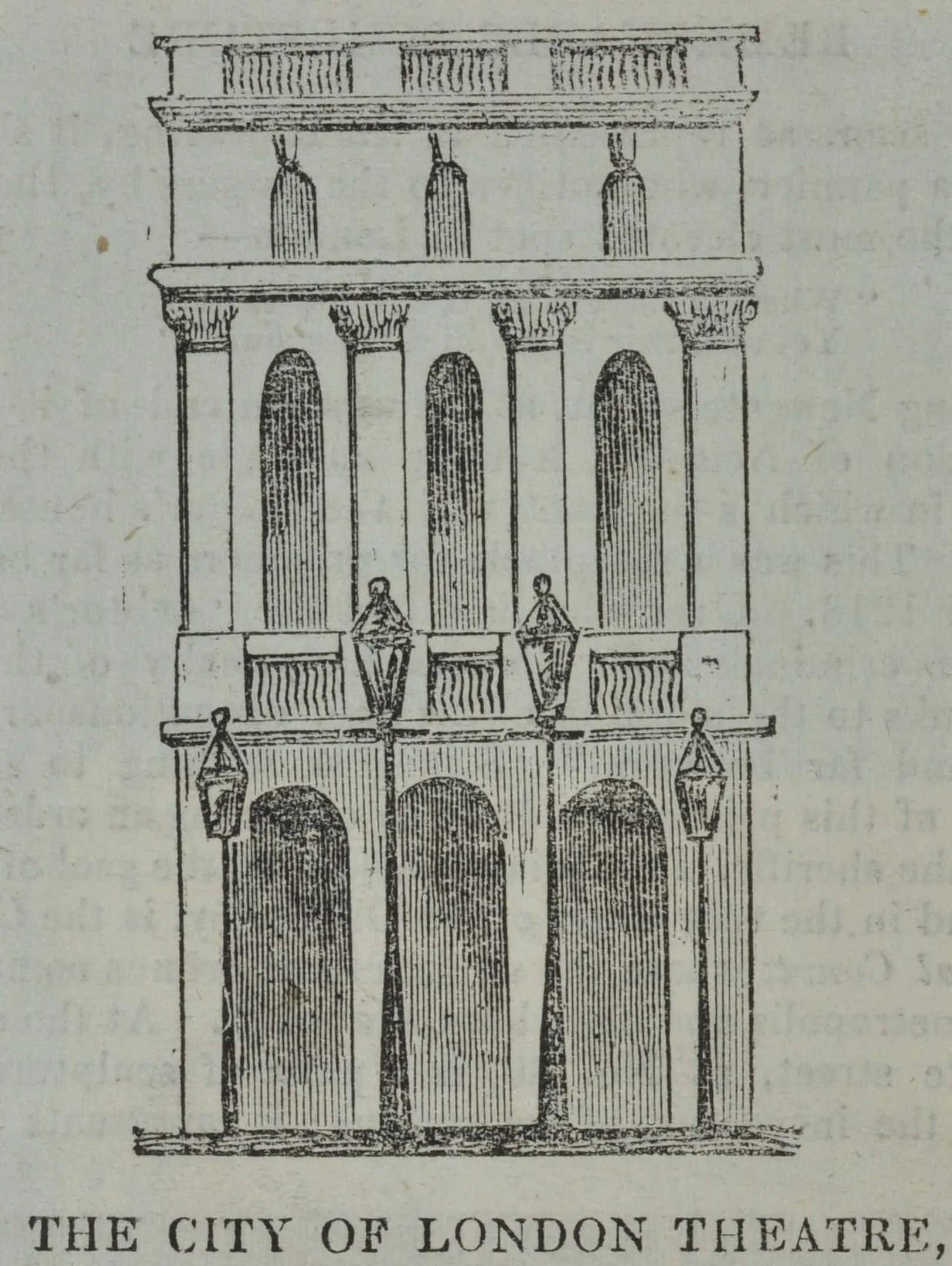
Dick Turpin was a popular burlesque and melodramatic subject in the theatre of the late Victorian period. Contemporary burlesques included works such as Little Jack Sheppard (1885), while Turpin regularly appeared in melodramas, pantomimes and toy-theatre adaptations derived of Ainsworth's 'Rookwood' and related highwayman stories. The first dramatic depiction of Turpin on stage was in an 1840 adaptation by George Dibdin Pitt of 'Rookwood' and was staged at the City of London Theatre, at Norton Folgate, Shoreditch. The play was also known as: 'Rookwood; or, Turpin’s Ride to York' and 'Rookwood: A Romantic Drama, in Two Acts'.
Melodramas helped cement the idea that Turpin was a romantic outlaw and he became a stock dramatic character in London theatre, pantomime and travelling shows. A production of 'Dandy Dick Turpin' at the Grand Theatre, Islington, 1889 had a Miss Fannie Leslie playing the part of Turpin.
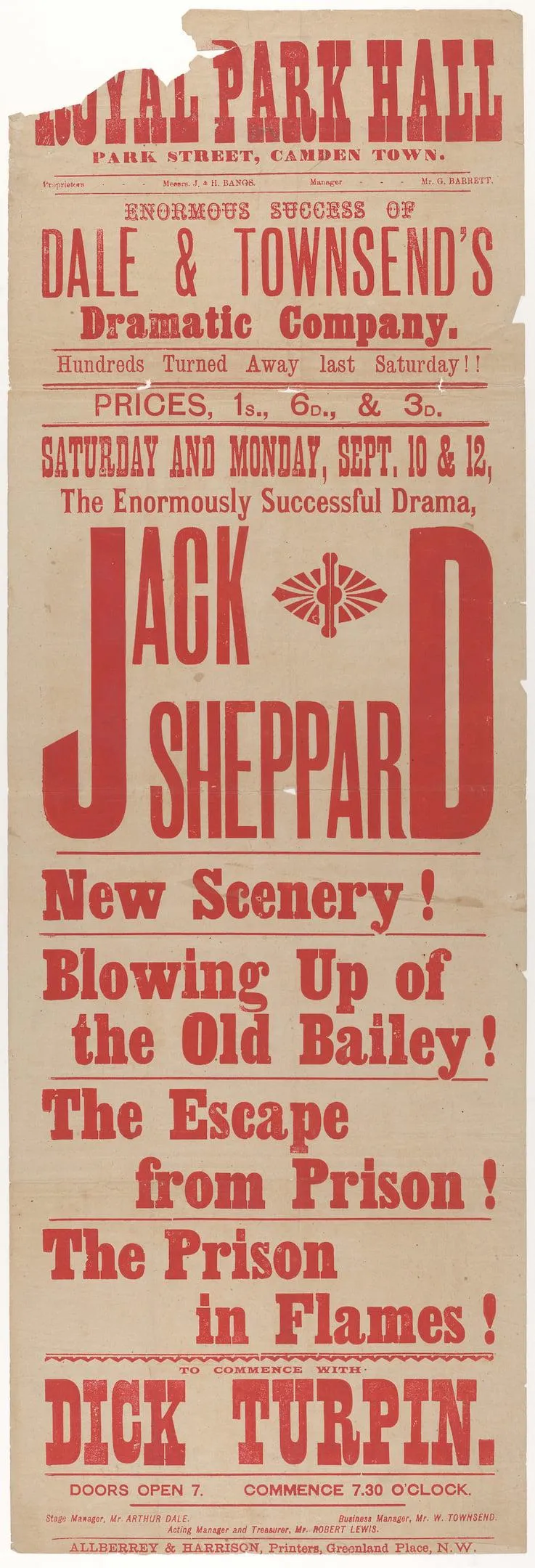
In the collection at TLA is a playbill that has both the 'Jack Sheppard' and 'Dick Turpin' production produced by Dale and Townsend - reflecting the appeal of the rogue criminal in the 1880s. The playbill formed part of a Middlesex Sessions Music and Dancing Licensing file application for the Royal Park Hall, Park Street, Camden.
Popular Culture
The romanticising of the figure of Dick Turpin perpetuated into twentieth and twenty-first-century culture, with the song by Adam and the Ants, 'Stand and Deliver' (1981) and in the line, "I'm the dandy highwayman" and in Stuart Leslie Goddard's (Adam Ant) whole adoption of the look.
London Weekend Television devoted a drama series to 'Dick Turpin' (1979-1982) starring Richard O'Sullivan. More recently in 2024 'The Completely Made-Up Adventures of Dick Turpin' with Noel Fielding in the star role has been available for streaming on Apple TV.
Londoners on Trial
Our free exhibition explores the history of law and order in London, uncovering the stories of London’s criminals, victims and law enforcers from the medieval period to modern times.
Londoners on Trial exhibitionAudio Trials
You can listen to a dramatisation of a trial from 1781 on John Buckley and Thomas Shenton who were indicted at the Old Bailey for highway robbery.
Audio Trials